







What is the Claude Office Suite?
Just as its IPO roadshow kicked off, Anthropic announced a significant push into workplace productivity software on November 10, 2026. This new suite of tools aims to embed its powerful AI, Claude, directly into daily business operations, positioning
it as a direct competitor to giants like Microsoft 365 and Google Workspace. The expansion includes several new applications: Claude Sheets for spreadsheets, Claude Whiteboards for collaborative brainstorming, and Claude Meetings, an agent that can join video calls to take notes and summarize action items. The strategy is clear: instead of just being an intelligent assistant that users copy and paste from, Anthropic wants Claude to be the environment where work gets done.
From Prompt to Spreadsheet with Claude Sheets
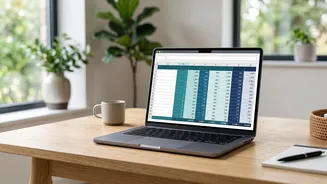
The standout feature of this new suite is Claude Sheets, a tool that allows users to create and edit spreadsheets using simple, natural language. Instead of manually setting up columns, rows, and formulas, a user can simply ask Claude to 'create a campaign tracker for Q4' or 'build a hiring budget for the marketing team'. Claude will then generate a file complete with relevant tabs, formatting, formulas, and even drop-down menus. The tool is designed for collaboration; team members can work within the same file simultaneously, and Claude outlines every change it makes, creating a clear audit trail. This feature is currently in beta and available to all paid subscribers of Claude's services.
Ambition vs. Reality: How It Stacks Up
While the idea of a prompt-driven spreadsheet is compelling, Anthropic is candid about the tool's current limitations. An Anthropic product leader described Claude Sheets as a 'fairly basic' offering not yet intended for complex financial modeling. For heavy-duty tasks, users can export their files to .xlsx or CSV formats to use in more powerful applications like Microsoft Excel or connect to platforms like Airtable and Smartsheet. This move puts Anthropic in a complex relationship with its own backers and rivals. Microsoft, a major investor in Anthropic, saw its stock dip after the announcement, highlighting the competitive tension. The move directly challenges Microsoft's Copilot for Excel and Google's AI-powered features in Sheets.
The Broader Strategic Play
The launch of an office suite is a strategic pivot for Anthropic, moving it from a pure AI model provider to an enterprise software company. By owning the productivity layer, Anthropic can gather more context about how users work, making its AI models more valuable and deeply integrated into enterprise workflows. This expansion also includes Claude Data (a renaming of the former Dashboards beta) for querying company databases and enhanced 'connectors' that allow users to embed and interact with third-party apps like Adobe, Atlassian, and Salesforce directly within Claude. This creates a more unified workspace, reducing the need for users to constantly switch between different applications.
What This Means for the Future of Work
Anthropic's move signifies a major trend: the 'consumerization' of data analysis. Tools like Claude Sheets lower the barrier to entry, allowing team members without deep spreadsheet expertise to create trackers, budgets, and simple models quickly. This can free up time for more strategic work. However, it also raises questions about data accuracy and the potential for over-reliance on AI for critical business decisions. While Claude Sheets may not replace Excel for financial analysts anytime soon, its strength lies in its speed and ease of use for the countless 'quick-and-dirty' spreadsheets that drive daily business. It marks a clear step toward a future where interacting with complex software becomes as simple as having a conversation.