






Beyond Just Grams of Protein
We’re often told to focus on the number of grams of protein in our food. But what if 20 grams from one source isn’t the same as 20 grams from another? The crucial difference lies in 'protein quality'. This refers to two things: a protein's amino acid
profile and its digestibility. Your body needs 20 different amino acids to function, nine of which are 'essential' because you must get them from food. A 'complete protein' contains all nine in the right amounts. Digestibility, meanwhile, measures how well your body can break down the protein and absorb those amino acids. A protein source might be high in grams, but if your body can't access those nutrients, its benefit is limited.
The Old Standard: PDCAAS
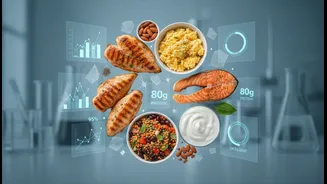
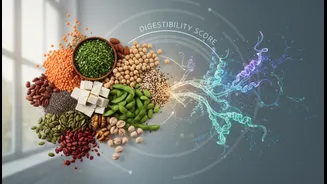
For decades, the go-to method for measuring protein quality has been the Protein Digestibility-Corrected Amino Acid Score, or PDCAAS. Adopted by the World Health Organization (WHO) and FDA in the early 90s, this score compares a food's amino acid profile to human needs and corrects it for digestibility. The score runs from 0 to a maximum of 1.0. A score of 1.0 indicates that, after digestion, the protein provides 100% of the essential amino acids your body requires. Animal-based proteins like eggs, whey, casein, and chicken breast, along with soy protein isolate, typically score a perfect 1.0. Many plant-based proteins, however, score lower. For example, chickpeas score around 0.78, while lentils and peas are in a similar range.
The New Contender: DIAAS
Science, of course, evolves. The PDCAAS method has limitations. One major critique is that its scores are 'capped' at 1.0, meaning a protein that is extremely high quality gets the same score as one that just meets the requirement. It also measures digestibility from fecal samples, which can be less accurate because it doesn't account for what happens in the small intestine, where most amino acid absorption occurs. To address this, experts at the UN's Food and Agriculture Organization (FAO) proposed a new method in 2013: the Digestible Indispensable Amino Acid Score (DIAAS). DIAAS measures the digestibility of each individual amino acid at the end of the small intestine, providing a more precise picture. It also isn't capped, allowing it to better differentiate between high-quality proteins.
Making Sense of the Scores
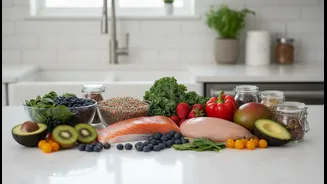
So, what does this mean for your plate? For the average person, it’s not about memorising scores but understanding the principle. A higher score generally means your body can more efficiently use that protein. Animal proteins tend to score higher because they are complete proteins and are easily digested. Most plant proteins are 'incomplete,' meaning they are low in one or more essential amino acids. This is why a vegetarian or vegan diet requires a bit more thought to ensure all nutritional needs are met. For example, to get the same amount of usable protein as from a high-scoring source like chicken, you might need to eat a larger quantity of a lower-scoring source like beans.
Building a Complete Protein Plate
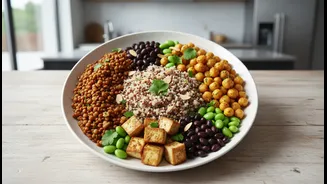
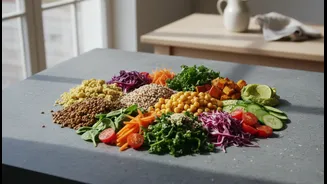
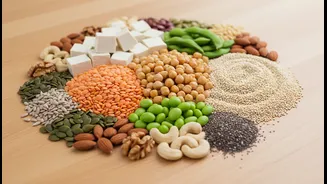
This is where the concept of 'protein combining' becomes incredibly useful, especially in the context of an Indian diet. You don't need to eat animal products to get complete proteins. By pairing different plant-based foods, you can create a meal with a full amino acid profile. The classic example is rice and beans (or dal and chawal). Grains like rice are low in the amino acid lysine but high in methionine, while legumes like lentils are the opposite. Eaten together, they complement each other perfectly. Other powerful combinations include hummus (chickpeas and sesame) with whole-grain pita, or peanut butter on whole-wheat bread. You don't even need to eat them in the same meal; consuming a variety of plant proteins throughout the day is effective.
Why Scores Aren't Everything
While these scores are a valuable tool for nutrition science, it’s important not to become obsessed. A food's overall nutritional value is more than just its protein score. Plant-based foods that have lower protein digestibility scores, like lentils and chickpeas, are nutritional powerhouses packed with fibre, vitamins, minerals, and phytonutrients that are crucial for long-term health. Fibre, for instance, can slightly lower protein absorption, which is reflected in the score, but its benefits for gut health and disease prevention are immense. A varied diet that includes a wide array of protein sources—both plant and animal-based, according to your preference—is the best strategy for overall wellness.