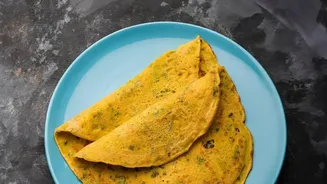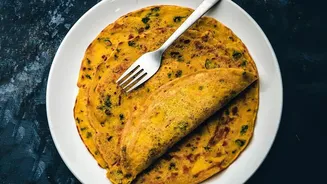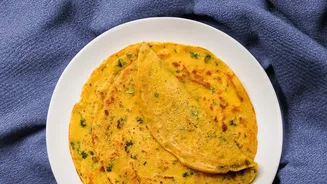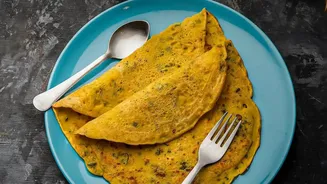


What Exactly Is a Moong Dal Chilla?
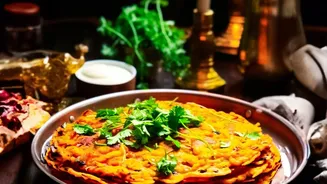
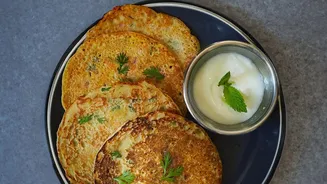
At its heart, the moong dal chilla is a savoury pancake, or crepe, made from a batter of ground split mung lentils (moong dal). Unlike many other Indian breads or pancakes, it is naturally gluten-free and doesn't require any flour. The soaked lentils are
blended with spices like cumin, fresh ginger, and green chillies to form a smooth, pourable batter. This is then cooked on a hot pan, much like a dosa or a traditional pancake, until golden and slightly crisp. Often known as 'puda' in Gujarat, it's a staple in many Indian households and a popular street food, especially in North India.
A Nutritional Powerhouse in Disguise
Don't let its simple appearance fool you; the moong dal chilla is packed with nutritional benefits. Moong dal is an excellent source of plant-based protein, which is essential for muscle repair and keeps you feeling full for longer. This makes it an ideal choice for breakfast to power your day, a light lunch, or even a post-workout meal. The dish is also rich in dietary fibre, aiding digestion and promoting gut health. With a low glycemic index, it provides a steady release of energy without causing sharp spikes in blood sugar, making it a great option for those managing their sugar levels.
Crafting the Perfect Batter
The secret to a great chilla lies in the batter. Start by rinsing yellow moong dal thoroughly and soaking it for at least three to four hours, though even a shorter soak of one to two hours can work if you're short on time. Once soaked, drain the dal and blend it with ginger, green chillies, and a little water until you achieve a smooth but not watery consistency. The ideal batter is thick yet pourable, similar to a pancake batter. You can use it immediately as no fermentation is required. Just before cooking, mix in spices like turmeric, salt, and perhaps some asafoetida (hing).
Tips for a Crisp, Street-Style Chilla
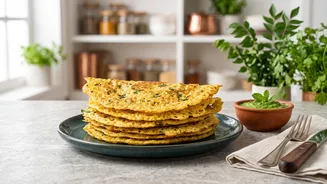
To achieve that signature crispy texture found at street-side stalls, a few tricks can make all the difference. First, ensure your pan (a non-stick or cast-iron tawa is ideal) is properly preheated. A simple test is to sprinkle a few drops of water; if they sizzle and evaporate immediately, the pan is ready. For an extra crunch, some cooks add a tablespoon of rice flour or semolina (sooji) to the batter. Spread the batter thin by pouring a ladleful in the centre and spiraling outwards. Be patient and let the chilla cook until the edges start to lift and turn golden brown before flipping.
Endless Variations and Fillings
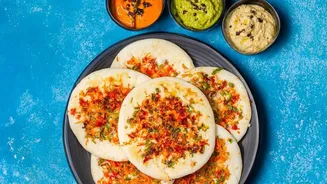
While a classic chilla is delicious on its own, served with mint chutney or a dollop of yoghurt, the variations are endless. You can mix finely chopped onions, tomatoes, capsicum, and fresh coriander directly into the batter for a vegetable-packed version. For a more substantial meal, use the chilla as a wrap. Popular fillings include spiced crumbled paneer (cottage cheese), grated carrots, sautéed spinach, or even a mix of corn and black beans. A cheese-stuffed chilla is a favourite among kids and adults alike, melting into a rich, savoury delight.