




What Was Just Tested?
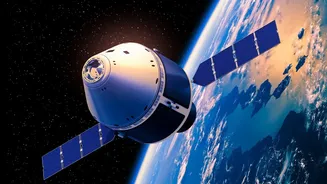
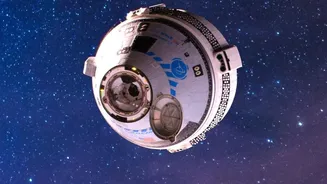
The Indian Space Research Organisation (ISRO) recently conducted what is known as an Integrated Air Drop Test (IADT). In these carefully controlled experiments, a simulated Crew Module, weighing nearly five tonnes, was lifted to an altitude of several
kilometres by an Indian Air Force Chinook helicopter and then dropped. The purpose was to test the complex sequence of parachutes that must deploy perfectly to slow the module down from high speed to a gentle splashdown velocity. This test simulates the final, and perhaps most critical, phase of the entire mission: the safe return and recovery of the astronauts. It’s a joint effort involving not just ISRO but also the Indian Air Force, Navy, Coast Guard, and DRDO, highlighting the national importance of the mission.
The Science of a Safe Landing
Bringing astronauts back from orbit is a high-stakes affair that relies on a precisely choreographed sequence. The Gaganyaan’s deceleration system doesn't just use one type of parachute; it uses a whole family of them. The process begins after the Crew Module re-enters the atmosphere. First, smaller Apex Cover Separation parachutes deploy to jettison the protective cover over the main parachute compartment. This is followed by drogue parachutes, which are designed to stabilise the fast-moving capsule and provide the initial stage of deceleration. Once the module is sufficiently slowed and stable, three massive main parachutes, each about 25 metres in diameter, are deployed to provide the final braking. This multi-stage system is essential because a single large parachute would be torn to shreds if deployed at high speeds. The goal is to reduce the module's velocity to a manageable speed for a safe splashdown in the ocean.
Why This Milestone Is Crucial
For any human spaceflight mission, there is virtually no margin for error. While robotic missions can tolerate certain risks, missions involving human lives demand near-perfect reliability. The landing and recovery phase is fraught with challenges, and a failure in the parachute system could be catastrophic. That's why ISRO is conducting thousands of tests on every component of the Gaganyaan mission. Recent tests have also validated other key safety features, such as the Crew Module Up-righting System, which uses inflatable bags to ensure the capsule remains upright after splashing down in the sea. Another test confirmed the clean separation of the service module before re-entry. Each successful evaluation, like the recent air drop tests, builds confidence in the robustness and reliability of the overall design, proving that the systems will perform as expected when the astronauts' lives depend on them.
What Are the Next Steps for Gaganyaan?
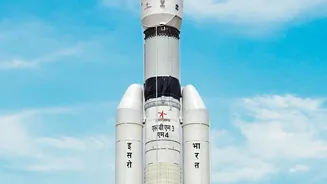
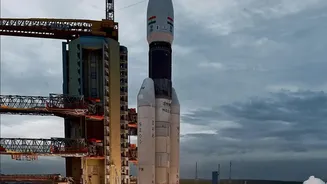
With the landing systems undergoing rigorous validation, ISRO is continuing its methodical preparations for the main event. The broader Gaganyaan programme includes a series of uncrewed test flights before any astronaut makes the journey. The first of these, the G1 mission, is targeted for the last quarter of 2026 and will be a full-dress rehearsal without a crew. This uncrewed flight will carry Vyommitra, a half-humanoid robot, to validate the performance of the life support systems and other critical technologies in a space environment. Following the G1 mission, more uncrewed flights are planned to ensure every aspect of the mission is perfected. Only after ISRO is completely satisfied with the performance and safety of the entire system will it proceed with the first crewed mission, which aims to send three Indian astronauts to an orbit of 400 kilometres for three days.