






For India's business communities, Diwali is more than a festival of lights; it's the most sacred time for financial beginnings. But while the goal is universal prosperity, the rituals observed in Western India are anything but uniform.
The Shared Foundation: Worshipping Wealth
Across Western India,
particularly among the enterprising Gujarati and Marwari communities, Diwali night is synonymous with Lakshmi Pujan. This ceremony, dedicated to the goddess of wealth, is the bedrock of all commercial festivities. Business premises are cleaned and decorated, welcoming divine blessings for the year ahead. However, this shared reverence for prosperity is where the similarities end and the fascinating distinctions begin. The core difference lies in the timing of the New Year and the specific rituals tied to financial bookkeeping.
The Gujarati Way: Chopda Pujan and Bestu Varas
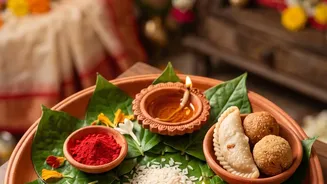
For the Gujarati business community, the most significant financial ritual is Chopda Pujan, which takes place on Diwali itself. 'Chopda' refers to traditional accounting ledgers. This ceremony involves sanctifying new account books before Goddess Lakshmi, Lord Ganesha, and Goddess Saraswati, marking the closure of the old financial year and the auspicious start of a new one. The first pages are inscribed with auspicious symbols like the Swastika and the words 'Shubh' (auspicious) and 'Labh' (profit).
Crucially, the Gujarati New Year, known as Bestu Varas, is celebrated the day after Diwali. This day marks the official start of their new year, Vikram Samvat. Families and business associates greet each other with 'Saal Mubarak' (Happy New Year), forgive past debts, and foster goodwill for the commercial year ahead. While Chopda Pujan happens on Diwali, the new financial year truly commences with Bestu Varas.
The Marwari Method: A Focus on Diwali Day
The Marwari business community, hailing predominantly from Rajasthan, also performs a puja for their account books, but the terminology and emphasis can differ. While some also use the term Chopda Pujan, it is often known as Sharda Pujan (worship of Saraswati, the goddess of knowledge) or Bahi-Khata Pujan (worship of ledgers). Like their Gujarati counterparts, this ritual happens on Diwali day and involves sanctifying new ledgers to seek blessings for the upcoming financial year.
A key distinction is that for most Marwaris, Diwali itself marks the beginning of the New Year for business purposes, without a separate New Year's Day celebration immediately following it in the same way as the Gujarati Bestu Varas. The focus is intensely concentrated on the Lakshmi Pujan on Diwali night as the primary event for ushering in financial prosperity. The rituals are centered on closing old accounts and starting afresh on the most auspicious night of the year.
Symbolism in Practice: Ledgers, Laptops, and Legacy
The core difference in rituals reflects a subtle divergence in philosophy. The Gujarati tradition formalises the New Year as a distinct day of social and commercial renewal (Bestu Varas), separating it slightly from the religious intensity of Diwali night. The Chopda Pujan on Diwali is the preparatory step for this new beginning. In contrast, the Marwari tradition tends to integrate the financial new start more directly into the main Diwali Lakshmi Pujan, making it the singular, pivotal moment for both spiritual and material reset.
In modern times, these traditions have adapted. With the rise of digital accounting, many businesses now worship laptops and hard drives instead of physical 'Chopda' ledgers. Yet, the essence remains unchanged: a symbolic act of purifying one's financial dealings and invoking divine partnership for the year's ventures. These rituals are not just about superstition; they are about discipline, hope, and community reinforcement.