


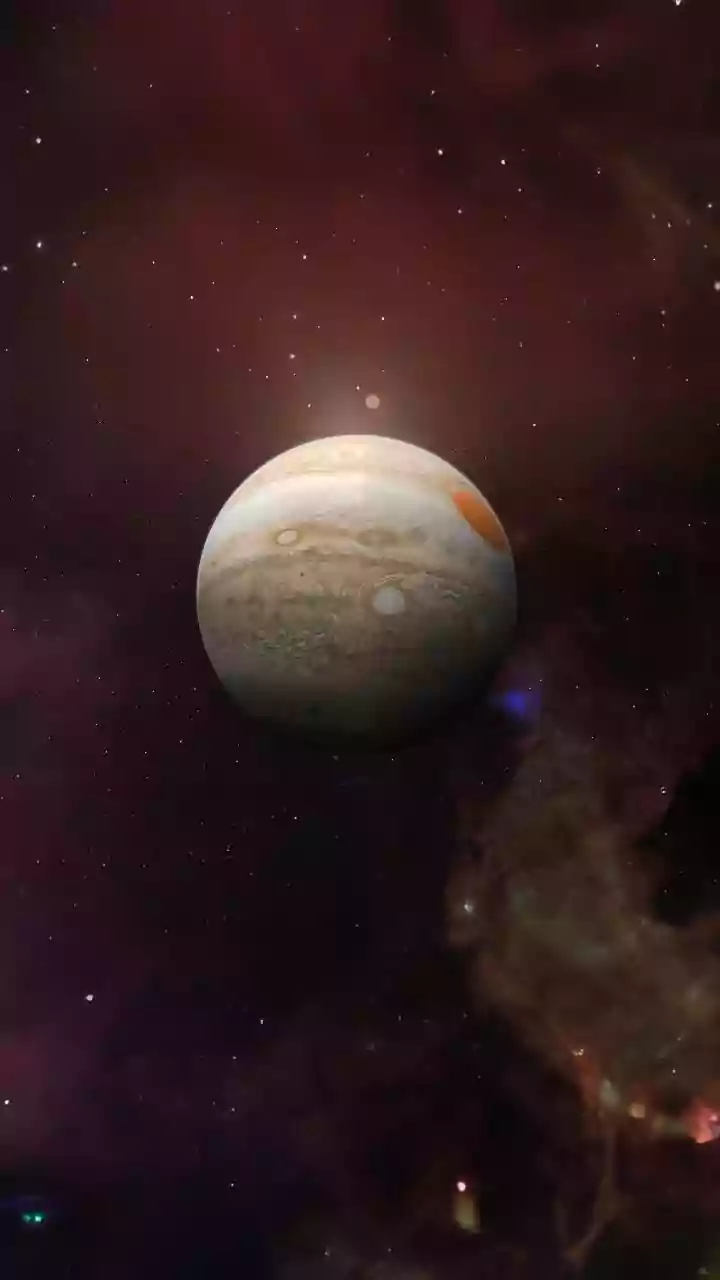



Breaking Down the Old Barriers
For generations, taking up astronomy as a hobby meant facing significant hurdles. The initial investment in a quality telescope could be substantial, but the financial barrier was often the easiest to overcome. The real challenge lay in the knowledge
required. Beginners had to learn to navigate the night sky using dense star atlases, understand complex coordinate systems, and master the mechanics of aligning a telescope in the dark. This steep learning curve, combined with the increasing problem of urban light pollution, could make the hobby feel intimidating and inaccessible, leaving many would-be astronomers admiring the sky from afar without ever truly diving in.
A Planetarium in Your Pocket
The single biggest game-changer for amateur astronomy is the rise of stargazing apps. Applications like Stellarium Mobile, Star Walk 2, and SkyView Lite use your phone's GPS and compass to create a real-time map of the sky. You simply point your phone towards a bright object, and the screen displays exactly what you're looking at, whether it's the planet Jupiter, the star Sirius, or the Andromeda Galaxy. These apps use augmented reality (AR) to overlay constellation art, star names, and deep-sky object labels directly onto your view of the night sky. For beginners, this technology removes the guesswork entirely. Instead of struggling to match a printed chart to the sky, you now have an interactive guide that instantly identifies what you are seeing and provides a wealth of information about it.
Smarter Telescopes, Simpler Viewing
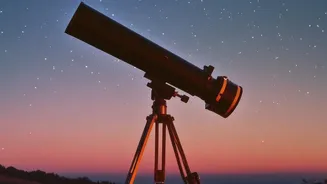
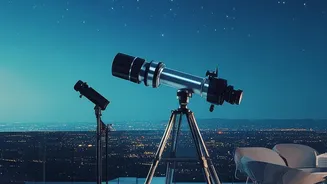
Beyond just identifying objects, mobile technology is now integrating directly with telescopes themselves. Many modern telescopes are designed to connect with smartphones, a feature that dramatically simplifies setup and operation. Apps like Celestron's SkyPortal or the powerful SkySafari can automatically align a compatible telescope and guide it to thousands of celestial objects with just a few taps. This 'Go-To' capability used to be the domain of expensive, computerized systems, but it's now accessible to beginners. This technology, sometimes called a 'smart telescope', handles the difficult task of finding faint objects, allowing the user to focus on the most important part: observing. It's a revolutionary step that eliminates one of the most frustrating aspects of the hobby for newcomers.
Capturing the Cosmos on a Budget
Astrophotography, the art of photographing celestial objects, was once a highly technical and expensive pursuit. Mobile technology is rapidly changing that. The cameras on modern smartphones are powerful enough to capture impressive images of the Moon, planets, and even some brighter deep-sky objects, often with just a simple adapter to hold the phone to the telescope's eyepiece. Specialised apps like NightCap Camera enable the long exposures needed for low-light conditions, while others can stack multiple video frames to produce clearer, more detailed images. Planning apps like PhotoPills help aspiring photographers determine the precise location and time to capture events like a rising supermoon or the Milky Way core. This has opened up a creative outlet that allows even casual observers to capture and share their own stunning images of the cosmos.