







A New Space Race Fueled by Startups
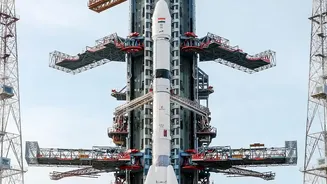
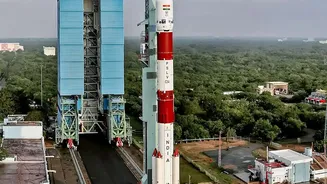
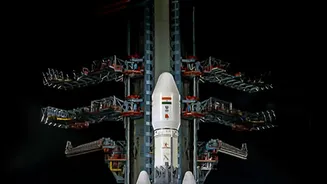
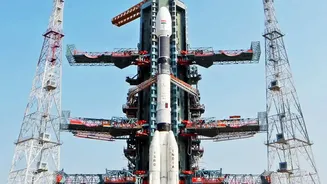
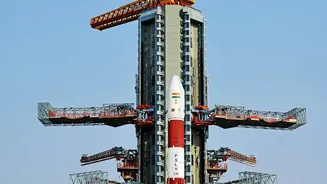
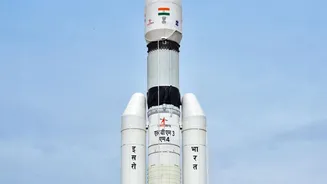
India's space journey is entering a thrilling new phase. For decades, the Indian Space Research Organisation (ISRO) was the sole custodian of the nation's celestial ambitions. Today, the landscape is transforming into a broad-based space economy, powered
by a surge in private enterprise. The number of active space startups has skyrocketed, with companies like Skyroot Aerospace, Agnikul Cosmos, and Pixxel making headlines for developing everything from private launch vehicles to advanced satellite constellations. This boom was catalysed by landmark government reforms in 2020 that opened the sector to private participation, aiming to let ISRO focus on deep space research while private players handle commercial opportunities. The goal is ambitious: to grow India's share of the global space market from its current 2% to nearly 10% in the coming years, expanding the domestic space economy from around $9 billion to a projected $44 billion by 2033.
The Capital Conundrum
While innovation is plentiful, a significant hurdle remains: funding. Space-tech is a capital-intensive industry with long development cycles and high risks. Many Indian startups struggle to secure the large, late-stage investments needed to scale their operations from proof-of-concept to commercial viability. Domestic venture capital funds are often wary of the long gestation periods and large cheque sizes required, creating a funding gap, particularly for rounds exceeding $10-15 million. This forces startups to look overseas for the substantial capital needed to build, test, and qualify hardware before generating significant revenue. To accelerate, they need access to a deeper pool of global capital that is comfortable with the unique risk profile of the space industry.
Opening the Doors to Foreign Investment
Recognising this need, the Indian government has progressively liberalised its Foreign Direct Investment (FDI) policy for the space sector. Aligning with the Indian Space Policy 2023, the updated rules are designed to attract significant global investment and expertise. The policy now allows up to 100% FDI in the manufacturing of space components and subsystems via the automatic route, requiring no prior government approval. For more sensitive areas, the policy uses a tiered approach. Up to 74% FDI is automatically allowed for satellite manufacturing and operations, while launch vehicles and spaceport development can receive up to 49% automatically. Investments beyond these caps require government approval. This calibrated approach aims to balance the need for foreign capital and technology with national security interests, making it easier for Indian companies to partner with global players.
The Potential Windfall for India
Increased foreign capital offers more than just money; it brings a cascade of benefits. It can facilitate crucial technology transfers, helping Indian firms bridge gaps in areas where they still rely on imports, such as space-qualified solar cells and other advanced components. Access to global investors also brings mentorship, strategic guidance, and entry into international supply chains. This influx of capital and know-how can help Indian firms upgrade their manufacturing to meet global aerospace standards, making them more competitive. By combining foreign investment with India's cost-effective and highly skilled engineering talent pool, startups can offer satellite fabrication and launch services at a fraction of Western market costs, fundamentally altering global competitive dynamics. Government bodies like the Indian National Space Promotion and Authorization Center (IN-SPACe) are further supporting this by facilitating investments, technology transfers, and providing access to ISRO's facilities.
Navigating the Path to Global Leadership
While the promise is immense, the path isn't without challenges. Attracting and retaining experienced talent in highly specialised fields like propulsion and satellite systems engineering remains a key issue. Furthermore, a clear regulatory framework, including a dedicated national space law, is still needed to provide greater certainty for businesses and investors. However, the direction is clear. The government is not just relying on FDI; it has also established domestic support mechanisms, including a ₹1,000 crore Venture Capital Fund and a ₹500 crore Technology Adoption Fund to bolster early-stage startups. The liberalised FDI policy is a critical piece of this larger strategy, intended to provide the rocket fuel for India’s most promising space ventures. With strategic investment, Indian startups won't just be participating in the global space economy—they will be in a position to help lead it.