




A Flood of Cosmic Proportions
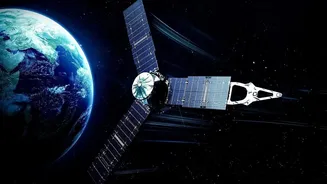
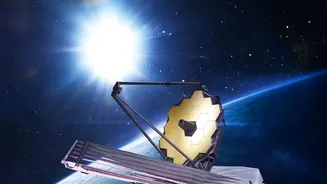
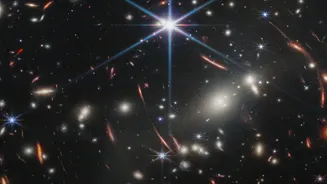
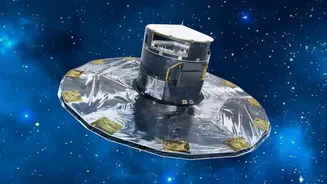
Humanity's journey into space has resulted in an astronomical amount of data. A single six-month expedition to the International Space Station can produce around a million photos. Telescopes like the James Webb and the now-retired Kepler have generated
archives so vast that it would be impossible for scientists to manually sift through them. And the floodgates are opening even wider; NASA anticipates that by 2024, it will have collected 250,000 terabytes of data from new missions alone. This cosmic deluge presents a major challenge: hidden within these petabytes of images, light curves, and sensor readings could be the discovery of a new exoplanet, signs of a developing solar storm, or clues about the origins of our universe. The problem is no longer just about collecting data, but about analyzing it quickly and effectively.
AI as a Scientist's Co-Pilot
This is where artificial intelligence comes in. For NASA, AI is not about replacing human scientists but augmenting their abilities. Think of it as a tireless digital co-pilot, capable of scanning for patterns and anomalies that the human eye might miss. For decades, the agency has used AI in some form, such as for the autonomous driving of Mars rovers like Perseverance, which makes its own navigation decisions on terrain no human has ever seen. But now, it's applying modern machine learning and foundation models to the core task of scientific analysis. A recent initiative announced in July 2026, called the Genesis Mission, will apply advanced AI to over 150 petabytes of accumulated data to speed up discovery. The goal is to reduce analysis timelines from years to just days.
From Exoplanets to Earthly Benefits
The applications are already proving revolutionary. An AI system called ExoMiner analyzed data from the Kepler Space Telescope and successfully identified 301 previously overlooked exoplanets. Other AI models are being trained to predict cosmic events, analyze gravitational waves from massive celestial collisions, and even monitor the health of spacecraft in real-time to predict system failures. The benefits also extend back to Earth. In partnership with companies like IBM, NASA has developed AI foundation models that analyze Earth-observation data. These tools can help track changes in land use, monitor natural disasters by spotting damage from hurricanes, and predict crop yields, turning space data into actionable insights for our planet.
An Open-Source Approach to Discovery
Crucially, NASA is committed to an open-source science approach. Rather than developing these powerful tools in secret, the agency is making many of its AI models publicly available. For example, a geospatial AI model developed with IBM, known as Prithvi, has been released on the open-source platform Hugging Face. This allows researchers, universities, and even commercial entities around the world to use and adapt these powerful tools for their own work. This strategy of democratizing access to AI aims to accelerate discovery on a global scale, fostering a more collaborative and inclusive scientific community and maximizing the return on investment in space exploration.
The Next Frontier for AI and Space
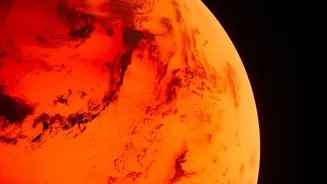
Looking ahead, NASA sees AI as fundamental to the future of exploration. The agency's Office of the Chief Science Data Officer is actively researching how AI can streamline the entire scientific workflow, from data discovery to analysis and visualization. For upcoming missions, like the DAVINCI probe set to plunge into Venus's dense atmosphere, AI will play a critical role. The probe will only survive for a short time, and AI will help prioritize what crucial data to send back to Earth in that limited window. By integrating AI more deeply into missions, NASA is building a future where autonomous systems can handle complex, real-time scenarios, from navigating a rover on a distant world to identifying the most scientifically valuable data from the farthest reaches of the universe.