




The Rain-Soaked Heart of the Jaintia Hills
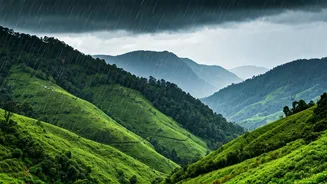
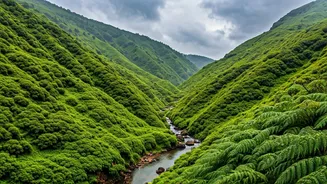
Nestled in the lush, rolling landscapes of Meghalaya, Jowai is the cultural epicentre for the Pnar people, a major tribal community in the state. While much of India celebrates the monsoon as a relief from summer heat or a boon for agriculture, the Pnar community of Jowai engages
with the season on a deeply spiritual level. Their most significant celebration, held right in the middle of the rains in July, isn't just a festival; it's a powerful ritual of cleansing, resilience, and communal faith that stands apart from the more widely known monsoon festivities across the country. Jowai, a town that serves as the headquarters of the West Jaintia Hills district, becomes the stage for a tradition that connects the land, the people, and the divine in a visceral, unforgettable way.
Behdeinkhlam: Chasing the Plague with Sticks
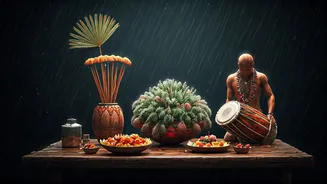
The centerpiece of Jowai's monsoon culture is the Behdeinkhlam festival. The name itself, from the Pnar language, tells a powerful story: 'Behdein' means to drive away with sticks, and 'Khlam' means plague or pestilence. Celebrated annually after the sowing season, the festival is a collective prayer to drive away sickness, evil spirits, and misfortune, and to ask for a bountiful harvest. This is not a gentle, passive observance. For four days, the town of Jowai transforms. Young men, carrying bamboo poles, move through the community, symbolically beating the roofs of houses to chase away any lingering negativity. It's an energetic, cathartic ritual that unites every household in a shared purpose of purification and protection.
Towering 'Rots' and a Sacred Football Match
The festival's climax is a visual spectacle. Intricately designed and towering bamboo structures called 'rots' are built by different localities. These are paraded through the streets amidst the sound of drums and pipes before being ceremonially immersed in a sacred pool known as Aitnar. The atmosphere is electric, charged with communal excitement and reverence. But perhaps the most unique ritual is the 'dad-lawakor'—a game resembling football played with a small wooden ball. Two teams, representing the north and south sides of the river, compete fiercely in the mud. The belief is that the side which wins ensures a more abundant harvest for their region in the coming year. It's a game where the stakes are far higher than a simple trophy, blending sacred belief with raw, physical competition.
Why This Story Matters
India's monsoon celebrations are wonderfully diverse, from the devotional Teej festival in Rajasthan and the grand Onam sadhyas in Kerala to the spirited Janmashtami Dahi Handi celebrations. These festivals are rich with mythology, romance, and gratitude for nature's bounty. However, Behdeinkhlam offers a different narrative. Its focus on actively driving away disease and evil spirits through collective action speaks to a primal theme of resilience in the face of nature's challenges. It’s a celebration born not just of joy, but of a deep-seated desire for communal well-being and spiritual cleansing. While travel guides often caution against visiting Meghalaya during the heavy rains, they miss the point that for the Pnar people, the monsoon is not an obstacle to culture—it is the very arena in which their most important cultural expression comes to life. This year, the festival is expected to take place from July 11th to 14th, offering a powerful reminder of this unique tradition.