





Why Your CV Isn’t Cutting It
Let’s be honest: job hunting can feel like shouting into a void. You spend hours tailoring your resume, only for it to be scanned by an Applicant Tracking System (ATS) and then glanced at by a human for maybe six seconds. A traditional resume is a static,
black-and-white summary of your past. It lists your responsibilities but struggles to convey your actual skills, your problem-solving abilities, or your personality. In fields like marketing, design, tech, and even consulting, recruiters don't just want to read what you’ve done; they want to see it. A bullet point saying you "managed a social media campaign" is far less impactful than a link to a portfolio page showing the campaign's visuals, the strategy behind it, and the impressive engagement metrics you achieved. Your resume tells a story; your portfolio proves it.
What is a Digital Portfolio?
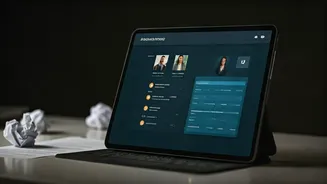
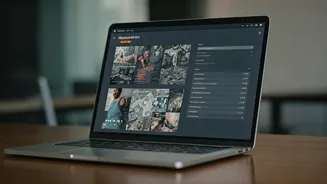
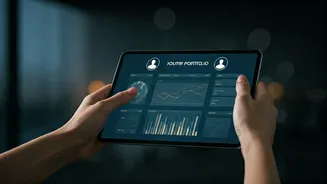
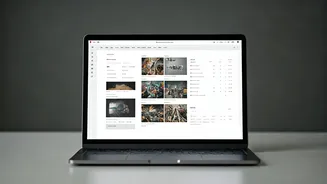
Think of a digital portfolio as your personal professional website. It’s an interactive, online space that you control, designed to showcase your best work, highlight your skills, and tell your career story in a compelling, visual way. Unlike a static PDF, it can host a variety of media: high-resolution images of design work, embedded videos of projects, links to live websites you've built, case studies of successful campaigns, or even code repositories.
This isn't just for artists and designers anymore. A software developer can show off their code on GitHub. A writer can display published articles. A project manager can present detailed case studies with timelines and outcomes. It’s a dynamic, living document that evolves with your career, offering a much richer, more comprehensive view of who you are as a professional.
The Power of 'Show, Don't Tell'
The single biggest advantage of a digital portfolio is its ability to demonstrate your competence. A resume makes claims, but a portfolio provides evidence. For a recruiter weighing dozens of similar-looking CVs, a candidate who can visually prove their impact immediately stands out. It shows initiative, technical savvy, and a genuine pride in your work.
Furthermore, a portfolio allows you to control your narrative. You’re not confined to the rigid structure of a resume. You can add a personal bio that reveals your work philosophy, include testimonials from former clients or managers, and organize your projects to highlight the skills most relevant to the job you want. It transforms you from a list of qualifications into a three-dimensional candidate with a clear personal brand.
Key Elements of a Winning Portfolio
A great portfolio is clear, easy to navigate, and focused. It doesn't need to be overly flashy, but it must be professional. Here are the essential components:
1. A Compelling 'About Me' Page: Briefly introduce yourself, your professional passion, and what drives you. Include a professional headshot.
2. A Curated Project Showcase: This is the heart of your portfolio. Select 3-5 of your best projects. For each one, explain the problem, your role, the process, and the result. Use visuals, data, and links to make it tangible.
3. A Clear List of Skills: Detail your technical proficiencies (software, programming languages) and soft skills (leadership, communication). Don't just list them; tie them to your projects.
4. Testimonials and Social Proof: Include quotes from previous employers, colleagues, or clients. This adds credibility and third-party validation.
5. Easy-to-Find Contact Information: Make it simple for a recruiter to get in touch. Include your email, a link to your LinkedIn profile, and any other relevant professional social media.
Getting Started: Tools and Tips
Building a portfolio might sound intimidating, but many user-friendly tools are available. Platforms like Squarespace, Wix, and Carrd offer simple drag-and-drop website builders with beautiful templates. For specific fields, there are specialized platforms: Behance is great for designers, GitHub Pages is perfect for developers, and Journo Portfolio is excellent for writers.
Start small. You don’t need to document your entire career history. Choose your strongest projects first. And remember, your portfolio doesn't replace your resume entirely. Most online applications still require a file upload. The strategy is to include a prominent link to your portfolio at the top of your resume, in your email signature, and on your LinkedIn profile. Guide recruiters to the richer experience you’ve built.