




The Smoke Point Problem
Every cook has experienced it: you heat oil in a pan, get distracted for a moment, and return to a smoky kitchen and a bitter, acrid smell. You've just exceeded the oil's smoke point. This is the temperature at which a fat or oil stops shimmering and starts
to break down, producing smoke. When this happens, the fat not only imparts a burnt taste to your food but also begins to form harmful compounds. The challenge for any cook, professional or at home, is to cook at a high enough temperature to achieve a good sear on paneer or vegetables, or to make a perfect tadka, without letting the fat degrade. This is where the choice of fat becomes critical.
Ghee: The High-Heat Hero
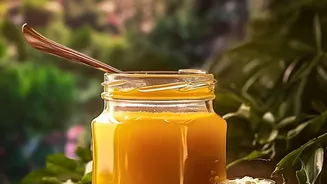
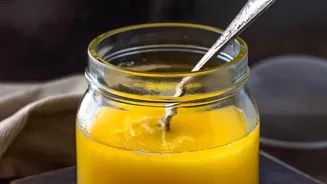
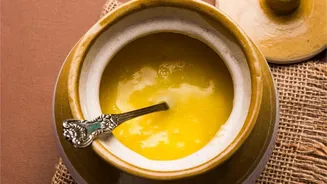
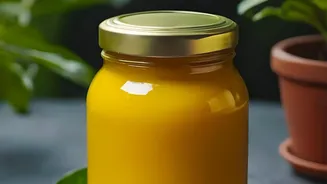
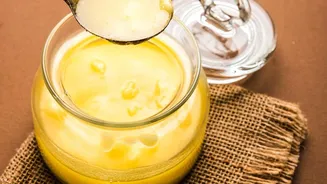
Ghee is the star player in a high-temperature kitchen. With a smoke point of around 250°C (482°F), it far surpasses butter (175°C), most unrefined oils, and many refined vegetable oils. This exceptional heat stability comes from the clarification process, where milk solids and water are removed from butter. It's these milk solids that cause regular butter to scorch and burn at lower temperatures. What remains in ghee is pure, stable butterfat, capable of withstanding the intense heat required for techniques like deep-frying, stir-frying, and searing. This makes ghee a reliable foundation for dishes that demand high heat, ensuring a clean taste and preventing the creation of undesirable breakdown products.
Infusion: Flavour Without the Burn
So, ghee solves the heat problem, but what about flavour? Many flavourful ingredients like garlic, fresh herbs, or whole spices have their own burning point, which is much lower than ghee's smoke point. Adding minced garlic to a ripping hot pan is a recipe for instant bitterness. This is where chefs employ a clever two-step process: infusion. Infusion is the technique of gently warming aromatics in fat to extract their flavour compounds, and then straining them out. The flavoured fat can then be heated to high temperatures for cooking. You get the full, rounded essence of the garlic, herbs, or spices, but without the actual solids that would burn and ruin the dish.
How to Create Your Own Infused Ghee
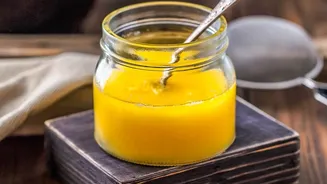
Making infused ghee at home is simple. Start by gently melting ghee in a saucepan over low heat. Add your chosen aromatics—think crushed garlic cloves, sliced ginger, whole spices like cardamom and cloves, curry leaves, or sturdy, dry herbs like rosemary. Keep the heat very low and let the ingredients steep for anywhere from 20 to 45 minutes, allowing their flavours to slowly infuse into the fat without cooking aggressively. The goal is a fragrant, aromatic ghee, not fried spices. Once the ghee is intensely flavoured, turn off the heat, let it cool slightly, and then strain it through a fine-mesh sieve or cheesecloth into a clean glass jar. You now have a potent, flavour-packed cooking medium ready for your high-heat dishes.
Putting Infused Ghee to Work
The applications for your infused ghee are endless. Use a garlic-infused ghee to sear paneer cubes for a curry, giving them a golden crust and a deep, savoury flavour without any burnt garlic bits. A spoonful of spice-infused ghee can be used as a 'tadka' or tempering for dal and sabzis, blooming the extracted spice flavours instantly when it hits the hot dish. Use it for stir-frying vegetables at high heat, coating them in a flavourful gloss while achieving a perfect crisp-tender texture. It can also replace regular butter or oil in baking for a more wholesome, earthy flavour, or simply be drizzled over hot rice for an instant upgrade.