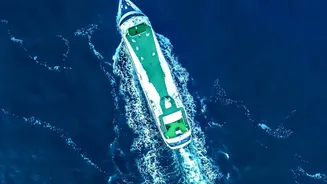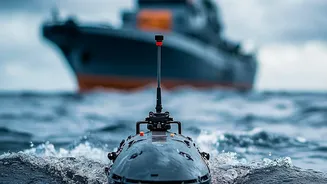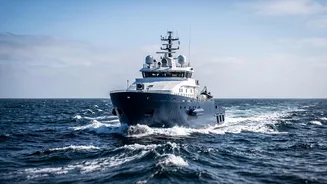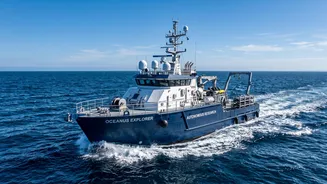







The dream of autonomous ships navigating the world's oceans is closer to reality, but one giant hurdle remains: safety. Now, researchers from IIT Madras have developed a solution called SeaNav to address this critical challenge.
What is SeaNav?
SeaNav is a state-of-the-art
digital twin platform developed by the Department of Ocean Engineering at the Indian Institute of Technology Madras. Think of it as an incredibly realistic video game for self-driving ships. It creates a high-fidelity virtual maritime environment where developers can test, validate, and train their autonomous navigation systems without the expense, complexity, and risk of real-world trials. The platform can simulate everything from ship and sensor behaviour to ocean conditions and vessel traffic in real-time. This innovation is a direct response to a major challenge in the global shipping industry, which is responsible for carrying over 80% of world trade.
The High Stakes of Autonomous Testing
Testing autonomous vessels in the open sea is not just expensive; it's potentially hazardous. A single flaw in a navigation algorithm could lead to a collision, environmental damage like an oil spill, or the loss of a vessel. The maritime environment is notoriously unpredictable, with variables like fog, rain, and heavy traffic that even human crews find challenging. SeaNav provides a safe harbour for innovation by modelling these tough conditions, including realistic sensor limitations like noise and delays, allowing developers to push their systems to the limit in a controlled setting. This is crucial for building the trust and reliability needed before these technologies can be widely deployed.
How the Digital Twin Works
Built on the powerful Unity3D engine, SeaNav creates a digital replica, or 'twin', of the maritime world. This isn't a simple simulation; it accurately replicates complex ocean waves and vessel movements. The system has been calibrated using a 320-meter-long tanker as a benchmark, ensuring the results in the virtual world closely mirror real-world commercial shipping operations. It even includes an immersive Virtual Reality (VR) interface using Meta Quest headsets, allowing trainees and maritime professionals to experience the simulation from a ship’s bridge for realistic training in collision avoidance and port manoeuvres.
Aligning with India's Maritime Vision
The development of SeaNav is a significant milestone for India's ambitions in the maritime sector. It directly supports the goals of the government's 'Sagarmala Programme' and Maritime India Vision 2030, both of which emphasize the need for smart ports, digital technologies, and autonomous systems. By creating this platform, IIT Madras is not only advancing global shipping technology but also fostering indigenous capability. The platform can be used to strengthen safety at major Indian ports like Chennai, Mumbai, Visakhapatnam, and Kochi by developing AI-assisted navigation systems to reduce grounding and collision risks. Furthermore, its multi-vessel simulation capabilities have potential applications in coastal surveillance, search-and rescue operations, and maritime defence.
The Bigger Picture for Self Driving Ships
The launch of SeaNav comes at a pivotal time for autonomous shipping. The International Maritime Organization (IMO) adopted the non‐mandatory Maritime Autonomous Surface Ships (MASS) Code in May 2026, which came into effect in July 2026. This code provides the first global guidelines for the design, operation, and safety of autonomous vessels, with the expectation that it will become mandatory in the coming years. Platforms like SeaNav will be essential tools for designers and operators to ensure their autonomous systems meet these rigorous, risk‐based international standards. By providing a robust testing framework, IIT Madras is helping to pave the way for a future where autonomous shipping is not just innovative, but fundamentally safe and reliable.