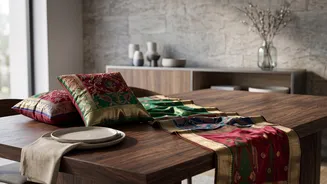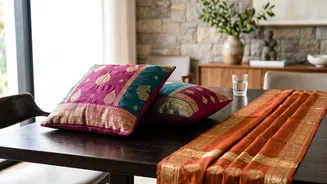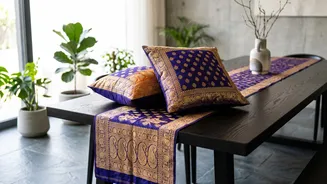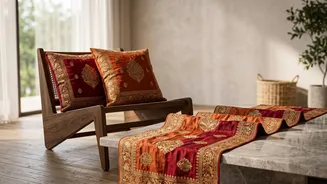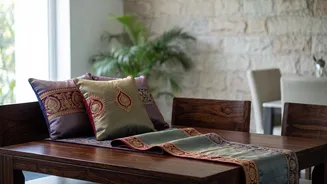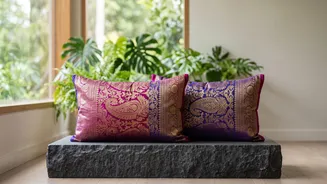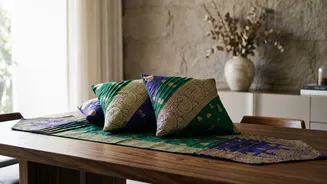






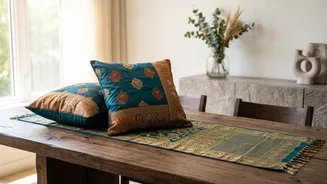
The Beauty of Upcycling Silk Sarees
Before you start cutting, take a moment to appreciate the material in your hands. A vintage silk saree is not just fabric; it's a piece of heritage. The rich colours, intricate zari work, and unique texture of silks like Banarasi or Kanjeevaram offer
a level of luxury that store-bought fabric rarely matches. By repurposing a saree, especially one that belonged to a mother or grandmother, you are weaving its story into the fabric of your home. It’s a sustainable choice that honours craftsmanship and creates decor that is both deeply personal and undeniably elegant. This project is perfect for sarees that may have minor damage or have gone out of style but are too precious to discard.
Gathering Your Crafting Essentials
A little preparation makes the entire process smoother. Before you begin, gather all your materials in one place. You won’t need much to get started, and many of these items are likely already in your home. Here’s a basic checklist: The Vintage Saree: Choose a saree after inspecting it for its strongest sections. The pallu and borders are often ideal for decorative fronts. Measuring Tape and Fabric Scissors: Precision is key. Sharp scissors will ensure clean cuts on delicate silk. Sewing Machine or Needle and Thread: A sewing machine will make the job quicker, but a simple needle and thread work just as well for this project. Cushion Inserts: Have your cushions ready to determine the size you need to cut. Lining Fabric (Optional but Recommended): A simple cotton lining will add durability to your cushion covers and table runner, especially if the silk is lightweight. Pins: To hold the fabric in place while you sew.* Fabric Glue or Hemming Tape (for no-sew options): If sewing isn't for you, these are great alternatives for creating clean edges.
Creating an Elegant Cushion Cover
Transforming a saree into a cushion cover is one of the easiest ways to start. An 'envelope' closure is a beginner-friendly technique that requires no zippers. 1. Measure and Cut: Place your cushion insert on the saree fabric. Cut one piece for the front that matches the cushion's dimensions, adding an inch on all sides for the seam. For the back, cut two overlapping pieces. Each should be the same width as the front piece but only about two-thirds of the length. This overlap will create the opening. 2. Focus on the Design: When cutting the front piece, try to centre an interesting motif from the saree or use a piece of the decorative pallu. 3. Hem the Back Pieces: On the two back pieces, fold over one of the long edges (the ones that will form the opening) by half an inch, press, and stitch a clean hem. 4. Assemble and Sew: Place the front piece right-side up. Then, place the two back pieces on top of it, right-side down, with the hemmed edges overlapping in the middle. Pin all four sides and sew around the entire perimeter. 5. Finish: Trim the corners, turn the cover right-side out, and press it with an iron on a low, silk-safe setting. Now you can easily stuff your cushion inside.
Designing a Festive Table Runner
A table runner is even simpler to make and can instantly elevate your dining space. The saree's natural length and decorative borders are perfect for this. 1. Measure Your Table: Decide on the desired length and width of your runner. A standard width is between 10 to 15 inches. The length should cover the table with a bit of overhang on each end. 2. Cut the Fabric: The most stunning table runners often utilize the saree's border along the long edges. Cut a long strip from the saree according to your measurements, adding an inch to both the length and width for hemming. If the saree has an elaborate pallu, you can feature it at the ends of the runner. 3. Line and Sew: If using a lining, place the silk and lining fabrics right-sides together and sew along all four sides, leaving a small opening for turning. If not using a lining, simply fold the edges in by half an inch, press, and stitch a neat hem all the way around. 4. Finishing Touches: Turn the runner right-side out through the opening and sew it closed. Press carefully. For extra flair, you can add tassels, which can be purchased or made from the saree's own threads, to the short ends.
Caring for Your New Silk Creations
Your handmade decor pieces are precious, and proper care will ensure they last for many festive seasons to come. Since they are made of silk, avoid machine washing if possible. Spot cleaning is the best first step for any spills. If a full wash is needed, gentle handwashing in cold water with a mild, pH-neutral detergent is recommended. Do not wring or twist the fabric; instead, gently squeeze out excess water. Always air dry your covers and runner away from direct sunlight, as the sun can cause the vibrant colours to fade.