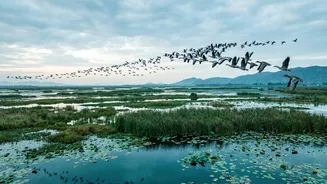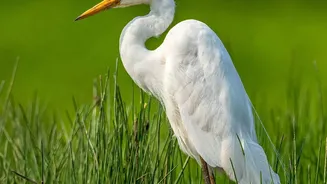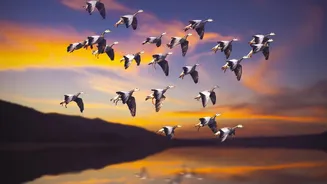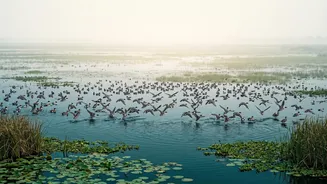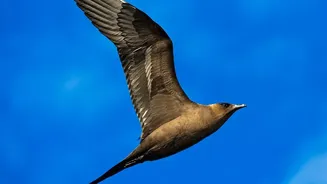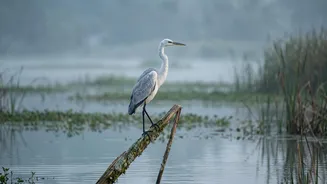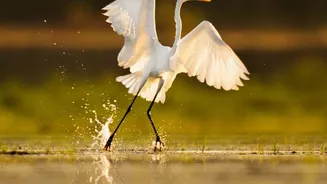








Every autumn, a breathtaking natural spectacle unfolds across the skies of Asia. Millions of birds embark on an arduous journey south, fleeing the harsh Siberian winter along a vast aerial corridor known as the Central Asian Flyway.
An Epic Journey South
The Central Asian Flyway
(CAF) is one of the world's nine major migratory routes for birds, stretching from the Arctic Ocean to the Indian Ocean and covering 30 countries. This superhighway in the sky is used by over 600 species, from the high-flying Bar-headed Goose to tiny shorebirds, as they travel from their breeding grounds in Russia and Central Asia to warmer wintering areas. India sits at the very heart of this flyway, making it an indispensable sanctuary. Over 90% of the bird species that use the CAF rely on India's diverse habitats to rest, refuel, or spend the entire winter.
India's Welcoming Wetlands
For these long-distance travellers, India’s vast network of wetlands—from high-altitude lakes in the Himalayas to coastal lagoons and village ponds—are life-saving destinations. After a gruelling flight, often across the formidable Himalayas, these birds arrive exhausted and in desperate need of food and safety. India's comparatively mild winters and rich aquatic ecosystems provide the perfect refuge. The country has over 300 important bird areas, many of which are wetlands that serve as critical stopover and wintering sites. Places like Chilika Lake in Odisha, Keoladeo National Park in Rajasthan, and Pong Dam Lake in Himachal Pradesh transform into bustling avian metropolises, hosting millions of birds.
A Seasonal Buffet
The primary reason these birds flock to Indian lakes is the abundance of food. The shallow waters and surrounding grasslands offer a rich buffet of aquatic plants, seeds, invertebrates, fish, and amphibians. This sustenance is crucial for their survival through the winter and for building up the energy reserves needed for their long journey back to their breeding grounds in the spring. Different species have different dietary needs; while ducks and geese feed on vegetation, waders like sandpipers probe the mud for invertebrates, and raptors hunt for prey. The health and productivity of these lake ecosystems are therefore directly linked to the survival of these migratory populations.
Sanctuaries Under Pressure
Despite their critical importance, India's wetlands are facing unprecedented threats. Rapid urbanisation, agricultural expansion, pollution from industries and pesticides, and the spread of invasive plant species are degrading these vital habitats. Many important wetlands are being encroached upon or drained, reducing the available space for birds to feed and roost. Climate change further complicates the picture, altering water availability and migration timings. This loss of habitat doesn't just affect birds; it also impacts local communities who depend on wetlands for water purification, flood control, and livelihoods.
A Shared Responsibility
Conserving these winged visitors requires action that spans continents, which is why India has taken a leading role in the conservation of the Central Asian Flyway. The country has launched a National Action Plan for the conservation of migratory birds, which focuses on protecting key habitats, monitoring species, and reducing threats. International cooperation through treaties like the Convention on Migratory Species (CMS) is also vital, as the survival of these birds depends on a chain of safe sites across multiple countries. Ultimately, the success of these efforts hinges on recognising that a single wetland in India is a critical link in a global natural wonder.