





The Sun’s Invisible Threat
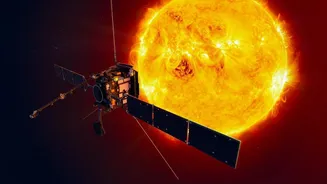
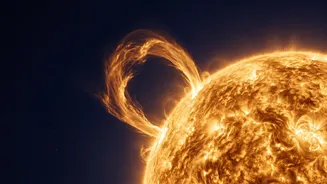
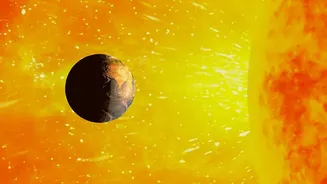
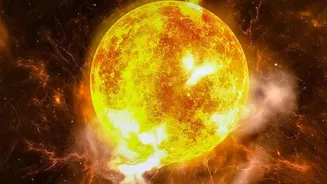
Imagine a storm not of wind and rain, but of magnetised particles and radiation, travelling from the sun at immense speeds. These are known as coronal mass ejections (CMEs). When a powerful CME strikes Earth, it can trigger a geomagnetic storm, an event
that can have devastating consequences. While our planet's magnetic field protects us from most of this onslaught, a strong enough storm can overwhelm these natural defences. The result? Widespread power outages as electrical grids are overloaded, damaged satellites falling from orbit, and disruptions to the GPS and communication networks that underpin modern life, from banking to aviation. The most famous example, the Carrington Event of 1859, knocked out telegraph systems. A similar event today could cause trillions of dollars in damage and bring society to a standstill.
Racing Against a 30-Minute Clock
For decades, predicting these events has been a major challenge for scientists. While we can see eruptions on the sun, figuring out if a CME will hit Earth and, crucially, where its impact will be most severe, has been difficult. Previous models could provide global forecasts, but they were not always timely or specific. This lack of precise, actionable warning has left critical infrastructure operators with little time to prepare for a potentially catastrophic event. The key has been finding a way to analyse the relentless stream of solar wind data from various satellites and turn it into a reliable, localised forecast before the storm hits. With the sun’s activity approaching a peak in its 11-year cycle, known as the solar maximum, the need for better forecasting has become more urgent than ever.
Enter DAGGER: A Digital Storm Chaser
This is where artificial intelligence enters the picture. An international team of researchers, in a partnership that includes NASA, has developed an AI model named DAGGER (Deep Learning Geomagnetic Perturbation). This system was trained using deep learning, a method where the AI sifts through vast amounts of historical data to recognise complex patterns. The team fed DAGGER data from numerous past solar storms and the corresponding geomagnetic disturbances measured at ground stations across the globe. By learning the intricate connections between the solar wind measurements from NASA's satellites and the real-world impact on Earth, DAGGER became an expert storm forecaster. It can now analyse real-time data from space and predict, with remarkable speed and accuracy, where a geomagnetic disturbance will occur.
The Power of an Early Warning
The single biggest advantage of the DAGGER model is its speed. It can generate a precise, worldwide forecast just 30 minutes before a solar storm strikes. A prediction is generated in under a second and is updated every single minute, providing a near real-time alert system. This 30-minute window might not sound like much, but for power grid operators, satellite controllers, and airlines, it’s a game-changer. It provides just enough time to take preventative measures: re-routing power, putting satellites into a protective safe mode, or diverting flights that might lose communication. Think of it like a tornado siren for space weather; the alarm gives you a crucial window to prepare for impact and prevent the worst-case scenario.
Why This Matters for a Digital India
The threat of solar storms is a global one, and for a nation as digitally connected as India, the stakes are incredibly high. Our economy, navigation systems, and even disaster management efforts rely on a network of satellites, all of which are vulnerable. The Indian Space Research Organisation (ISRO) actively monitors solar activity to protect its fleet of over 50 operational satellites. A powerful storm could disrupt not just GPS and mobile networks but also threaten the power grid that fuels our cities and industries. Advanced warning systems like DAGGER are therefore not just a scientific curiosity; they are a vital shield for protecting India’s critical infrastructure and ensuring the stability of our increasingly digital way of life.