




Gaganyaan: India's Giant Leap into Human Spaceflight
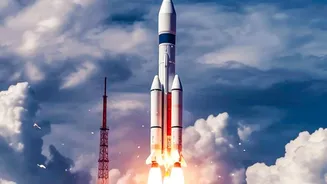
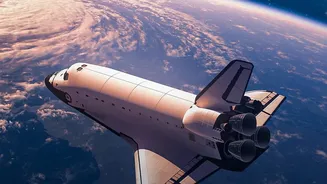
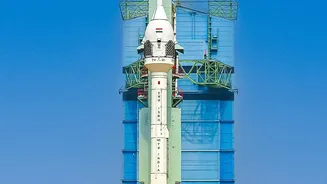
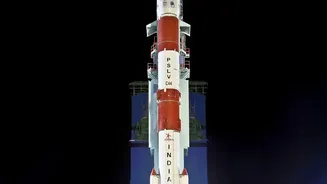
The Gaganyaan programme is arguably ISRO's most awaited endeavour, aiming to send a crew of three Indian astronauts into a 400 km orbit for a three-day mission. This will make India only the fourth country in the world to have an independent human spaceflight
capability, after the US, Russia, and China. The project is not just about sending humans to space; it is a massive technological undertaking that drives innovation in life support systems, crew escape mechanisms, and human-rated launch vehicles. Before the first crewed flight, targeted for 2027, ISRO is conducting several uncrewed test missions to ensure the highest levels of safety and reliability. The success of Gaganyaan will lay the groundwork for a future Indian space station (Bharatiya Antariksh Station) and crewed missions to the Moon.
Chandrayaan-4: Bringing a Piece of the Moon to Earth
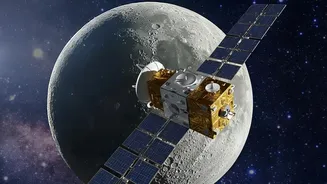
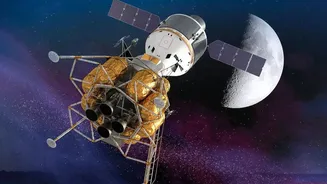
Building on the triumph of Chandrayaan-3's soft landing, ISRO is planning Chandrayaan-4, an ambitious lunar sample return mission. Scheduled for around 2028, the primary goal is to collect soil and rock samples from the Moon's south polar region and bring them back to Earth for detailed scientific analysis. This mission is technologically complex, requiring two separate launches to send five different modules into space. It will involve a soft landing, robotic sample collection, ascending from the lunar surface, and automated docking in lunar orbit before the return journey. Mastering these technologies is a crucial step towards future interplanetary sample returns and potential human landings on the Moon by 2040.
Mangalyaan-2: A Bold Return to the Red Planet
After the stellar success of its first Mars Orbiter Mission (MOM), ISRO is planning a more audacious follow-up: Mangalyaan-2. Unlike its predecessor, which was an orbiter, this mission aims to land on the Martian surface. The mission profile proposes a lander, a rover, and even a helicopter to study the Martian terrain, atmosphere, and geology. If successful, India would join the exclusive club of nations that have operated a rover on Mars. The mission will be a significant technological leap, involving complex entry, descent, and landing manoeuvres in the thin Martian atmosphere using systems like a sky crane and supersonic parachutes. It will further enhance our understanding of Mars' past and potential for habitability.
Shukrayaan-1: Unveiling the Secrets of Venus
ISRO is setting its sights on Earth's mysterious twin, Venus, with the Shukrayaan-1 orbiter mission. Planned for a 2028 launch, the mission will study the planet's incredibly dense and hostile atmosphere, which is composed of sulfuric acid clouds, and map its surface. Venus is a scientific puzzle; though similar in size to Earth, it evolved into the hottest planet in our solar system with crushing atmospheric pressure. Shukrayaan-1 will carry a suite of instruments, including a high-resolution synthetic aperture radar, to peer beneath the thick cloud cover and investigate its geological and volcanic activity. Understanding why Venus turned out so differently from Earth could offer vital clues about our own planet's climate and future.
NISAR: A Watchful Eye on Planet Earth
In a major collaboration, ISRO has partnered with NASA for the NISAR (NASA-ISRO Synthetic Aperture Radar) mission. This advanced Earth observation satellite is designed to monitor our planet’s surface changes with unprecedented detail, measuring shifts as small as a centimetre. Equipped with dual-frequency radar, it will track changes in ecosystems, ice sheets, land subsidence, and natural hazards like earthquakes and volcanic activity. The data gathered by NISAR will be crucial for understanding climate change, managing natural disasters, and monitoring agricultural and forest resources. It represents a powerful synergy of Indian and American space technology for the benefit of the entire globe.
SPADEX: Mastering the Art of Space Docking
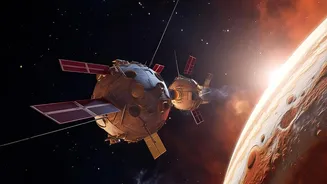
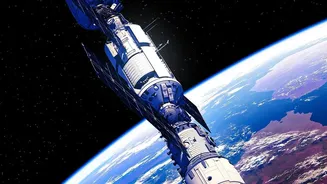
The Space Docking Experiment (SPADEX) is a critical technology demonstration mission. It involves launching two small satellites and having them autonomously rendezvous, dock, and undock in orbit. This technology is a fundamental building block for future complex space endeavours. Mastering space docking is essential for building a space station, conducting satellite servicing and refuelling, and assembling larger spacecraft in orbit for interplanetary missions. The SPADEX mission will also test the transfer of electric power between the two docked spacecraft, paving the way for more sustainable and long-duration missions.
An Ambitious Launch Cadence
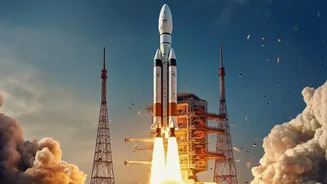
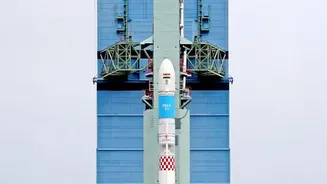
Beyond these specific flagship missions, ISRO has signalled a significant increase in its operational tempo. The organisation is reportedly planning for at least seven launches within the current financial year alone, a figure that highlights a new era of high-frequency operations. This ambitious schedule includes a mix of Earth observation satellites, communication satellites, technology demonstrators, and uncrewed tests for the Gaganyaan programme. This increased launch rate not only serves India’s strategic and developmental needs but also strengthens the country's position as a reliable and competitive player in the global commercial launch market, fostering a vibrant domestic space industry.