


Why 'Native' is More Than a Buzzword
Choosing a native plant means selecting a species that has evolved in your local region for thousands of years. These plants are the foundation of a healthy local ecosystem. Because they are perfectly adapted to the local climate and soil, they generally
require less water, fertiliser, and pesticides. More importantly, they have a deep, co-evolved relationship with local wildlife. Native insects, birds, and pollinators recognise these plants as sources of food and shelter in a way they simply don't with exotic ornamental varieties. By planting native species, you provide essential food and habitat, helping to support and sustain the biodiversity that is under threat in urban areas.
The Sweet Reward: Nectar-Rich Flowers
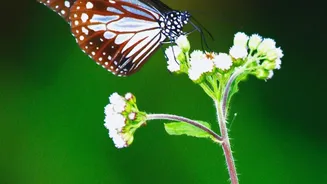
The second part of the equation is 'nectar-rich'. Nectar is a sugary fluid that provides a vital energy source for pollinators like bees, butterflies, and the iridescent sunbirds often seen in Indian cities. Many popular ornamental flowers are bred for appearance, not for wildlife, and produce very little nectar. By contrast, plants packed with this sweet reward act like magnets for these creatures. A balcony filled with nectar-rich flowers can become a crucial refuelling station in a vast urban landscape, creating a chain of small green spaces that help pollinators survive and thrive.
Sun-Loving Plants to Attract Pollinators
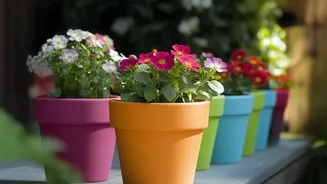
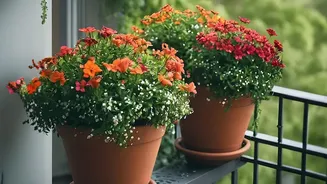
If your balcony or patch gets at least five to six hours of direct sunlight, you have a wealth of options. Hibiscus, with its large, nectar-filled blooms, is a well-known favourite for attracting sunbirds. It adapts well to containers and is available in a wide range of colours. Marigolds are another easy-to-grow, sun-loving choice. Their bright yellow and orange flowers attract bees and butterflies, and they are quite tolerant of Indian climate conditions. For clusters of colourful blooms, consider Ixora. Its dense bunches of small, tubular flowers are full of nectar and consistently draw in sunbirds and other pollinators. Tecoma, or 'yellow bells', also produces generous, trumpet-shaped flowers that birds love.
Fragrant Choices for Your Urban Oasis
Many fragrant plants are also excellent for wildlife. Various types of Jasmine (Mogra), especially native varieties like Jasminum sambac, can be grown in pots and their fragrant flowers are a delight for both humans and pollinators. While some jasmine varieties can be vigorous climbers, many can be managed in containers with a small trellis or support. Lavender is another fragrant choice whose nectar-rich flowers are particularly attractive to bees. When it flowers, the humble Tulsi (Holy Basil) also attracts plenty of bees and butterflies, making it a sacred and functional addition to any garden.
Thinking Beyond Just Flowers
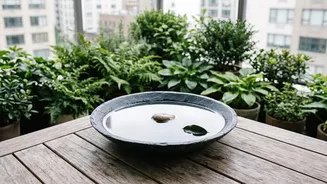
A truly wildlife-friendly garden provides more than just nectar. Delhi-based wildlife photographer Aman Sharma, who turned his terrace into an 'urban jungle' attracting over 100 bird species, recommends a three-plant approach: a host plant, a flowering plant, and a fruit-bearing plant. Host plants, like lemon, are what butterflies need to lay their eggs and for their caterpillars to feed on. You can also make your space more inviting by providing a shallow dish of clean water for birds to drink and bathe in. Finally, avoid using chemical pesticides. A strong jet of water or a neem oil solution can handle most pest problems without harming the beneficial insects and birds you want to attract.