


A Mission of Firsts
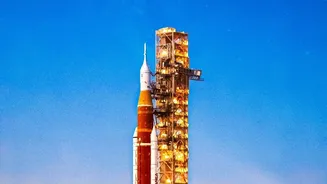
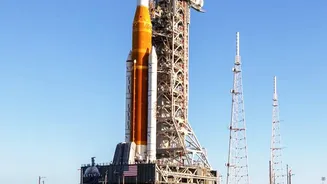
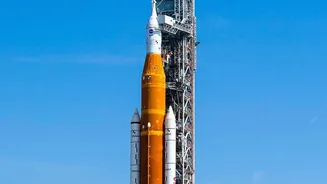
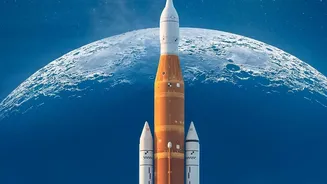
The Artemis II mission was primarily a flight test, designed to prove that the Orion spacecraft and its life support systems could safely carry astronauts on a journey around the Moon and back. The four-person crew validated critical systems, tested manoeuvres
in deep space, and demonstrated capabilities essential for future, more complex missions, including the planned lunar landing on Artemis III. But beyond the engineering goals, Artemis II was also a significant scientific endeavour. The astronauts were trained to be keen observers of the lunar environment, using high-powered cameras and their own eyes to document the Moon in ways that robotic probes cannot. This human element is crucial, adding a layer of interpretation and real-time decision-making to data collection.
What is a Lunar Impact Flash?
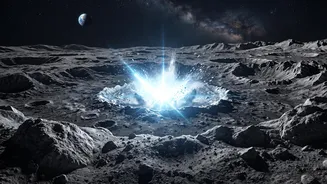
Imagine a tiny grain of sand or a small pebble hitting a surface at tens of kilometres per second. On Earth, our atmosphere would burn up most of these meteoroids, creating the familiar sight of a shooting star. The Moon, however, has virtually no atmosphere to protect it. When a meteoroid strikes the lunar surface, its immense kinetic energy is converted into heat and light, vaporizing rock and ejecting a plume of molten material. For a fraction of a second, this event creates a brilliant flash of light. These are known as lunar impact flashes. While they happen constantly, they are fleeting and difficult to study, often lasting less than a tenth of a second.
A Surprise in the Darkness
Scientists have been studying these flashes from Earth for years using ground-based telescopes to understand the frequency and size of objects hitting the Moon. Observing them from orbit, however, provides a new and valuable perspective. The Artemis II crew was specifically tasked with looking for these transient phenomena on the Moon's dark side—the portion of the surface unlit by the Sun but faintly visible thanks to light reflected off the Earth, known as 'Earthshine'. While official analyses are just beginning, initial reports suggest the crew's observations, aided by Orion's advanced camera systems, captured several such events. The data offers a unique, close-up view that can't be replicated from Earth, potentially revealing details about the energy and nature of these impacts.
Why This Needs Deeper Analysis
An observation is not the same as a conclusion. The data captured by the Artemis II crew is raw, and each flash needs to be carefully analysed. Scientists will correlate the visual data with the spacecraft's position, time, and known meteoroid streams. By studying the brightness and duration of each flash, they can estimate the size, mass, and energy of the impacting object. This process helps build a more accurate model of the lunar meteoroid environment. Are impacts more frequent than previously thought? Are there undiscovered meteoroid streams that the Moon passes through? Answering these questions requires meticulous work, cross-referencing the new data with decades of observations from ground-based programs at NASA and the European Space Agency.
Protecting Future Moon Dwellers
This research is not just academic; it is critical for the future of human space exploration. NASA's goal is to establish a sustainable human presence on the Moon, including a permanent base camp. Understanding the risk posed by micrometeoroid impacts is essential for designing safe habitats, vehicles, and spacesuits. Even a tiny particle travelling at hypervelocity can puncture vital equipment or endanger an astronaut. The data from Artemis II's impact flash observations will feed directly into engineering models that calculate these risks, helping designers build better shielding and plan safer operations for the astronauts who will one day live and work on the lunar surface.