




The dolphin push-up is a powerful exercise for building shoulder strength and core stability. But to truly master its fluid motion, the secret lies not just in muscle, but in breath. Here’s how to sync them for maximum benefit.
Understanding the Dolphin Push-Up
Before diving into breathing,
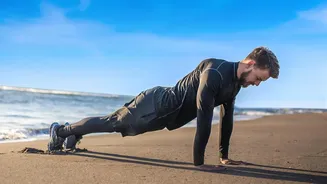
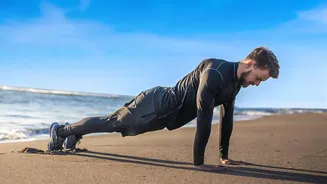
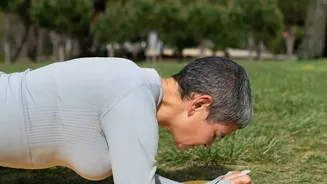
it's crucial to understand the movement itself. The dolphin push-up combines elements of a forearm plank and the downward-facing dog yoga pose. You start on your forearms and toes, with your hips lifted high to create an inverted 'V' shape. From there, you guide your head and chest forward and down, almost as if you are trying to slide under a low barrier. Just before your head reaches your hands, you press through your shoulders and forearms to return to the starting 'V' position. This dynamic exercise primarily targets the shoulders (deltoids), upper back, and core, while also engaging the chest and triceps and providing a stretch for the hamstrings. Its wrist-friendly nature makes it an excellent alternative to traditional push-ups.
The Core Breathing Pattern: Exhale Forward, Inhale Back
The most effective breathing pattern for the dolphin push-up aligns with the exertion phase of the movement. The general rule for most strength exercises is to exhale during the most difficult part of the motion and inhale during the easier, preparatory phase. Applying this logic to the dolphin push-up, the pattern is as follows: 1. Exhale as you move forward and down: As you lower your head and chest towards your hands, engage your core and exhale steadily. This exhalation helps to create intra-abdominal pressure, which stabilises your spine and core throughout the movement. Think of it as bracing your midsection for effort. 2. Inhale as you press back up: As you push through your shoulders to lift your hips back into the inverted 'V', take a controlled inhale. This prepares your body for the next repetition, delivering fresh oxygen to your working muscles. This is similar to the breathing pattern used in related movements like a pike-to-plank, where the breath guides the flow between the two positions.
Why This Rhythm Unlocks Your Strength
Syncing your breath with the movement isn't just about avoiding lightheadedness; it's about performance. Exhaling as you lower your body helps to tighten your abdominal wall, providing a rigid 'corset' of support for your spine. This core stability is essential for controlling the forward-and-down motion and protecting your lower back. Without it, your hips might sag, compromising your form and reducing the effectiveness of the exercise. Conversely, a full inhale on the way back up helps reset your posture and ensures your muscles are fuelled with oxygen, which can enhance endurance and reduce fatigue. A steady, regulated breathing pattern also has a calming effect, stimulating the parasympathetic nervous system, which helps improve blood flow and allows you to maintain focus and control throughout your set.
Common Breathing Mistakes to Avoid
One of the most frequent errors in any challenging exercise is holding your breath. This is known as the Valsalva maneuver. While it can make you feel momentarily stronger, it can also cause a sharp spike in blood pressure and deprive your muscles of the steady oxygen supply they need to perform. You might feel dizzy or find yourself gasping for air after just a few reps. Another mistake is shallow or panicked breathing. When the exercise becomes difficult, there's a tendency to take short, sharp breaths from the chest. This is inefficient and can actually increase feelings of stress and fatigue. Focus instead on deep, diaphragmatic breaths, often called 'belly breathing', where you feel your stomach expand on the inhale. This technique ensures you are using your full lung capacity.
Tips for Finding Your Flow
If you're new to the dolphin pushup, coordinating the breath and movement can feel awkward at first. Start slowly. Practice the movement at a reduced pace, consciously thinking 'exhale forward, inhale back' with each repetition. You can even break it down: perform a forearm plank and practice deep, controlled breathing to get a feel for core engagement first. If you find the full range of motion too difficult, you can modify the exercise by bending your knees slightly or reducing how far forward you go. The priority is to establish a smooth, consistent breathing pattern. As you get stronger and more comfortable, the rhythm will become second nature, allowing you to perform the exercise with greater power, control, and endurance.