






An Underground River System
Think of Chennai's drainage as a multi-layered river system designed to carry rainwater to the sea. It starts with small 'micro' drains, the stormwater drains (SWDs) you see on the sides of roads. These are meant to collect runoff from streets. This water then
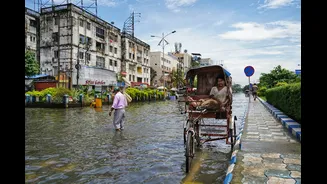
flows into a network of larger 'macro' drains and canals, including major waterways like the Cooum River, Adyar River, and Buckingham Canal. For roads to clear, this entire system must function seamlessly, with each part passing water efficiently to the next until it reaches the Bay of Bengal. Any blockage or bottleneck along this path can cause a system-wide backup, leading to the familiar sight of inundated streets.
The Annual Battle Against Silt and Waste
The single biggest threat to this network is obstruction. Tonnes of silt, plastic waste, and garbage find their way into the drains, drastically reducing their carrying capacity. This makes the annual pre-monsoon 'desilting' process one of the most critical civic exercises in the city. The Greater Chennai Corporation (GCC) undertakes the mammoth task of clearing thousands of kilometres of drains and over a lakh silt catch pits. As of mid-October 2026, the GCC reported that desilting work along 1,583.62 km of the stormwater drain network was complete ahead of the northeast monsoon. However, the work is a recurring battle; without sustained cleaning, even newly built drains can become ineffective within a few seasons.
A Race Against the Monsoon
Monsoon preparedness is a year-round activity that intensifies in the months leading up to October. For 2026, the state government set a deadline of October 15 for civic agencies to complete all flood mitigation works. This included finishing major Integrated Storm Water Drain (ISWD) projects, such as the one in the Kosasthalaiyar basin, which was reported as nearly 99.9% complete by early October. Yet, challenges remain. Officials have to address 'missing links' in the drain network—gaps that prevent a continuous flow of water. For the 2026 monsoon, 105 such missing link locations were identified for priority work.
The Pressure of Urban Growth
Chennai's rapid urbanisation has put immense pressure on its natural and man-made drainage systems. Many of the city's wetlands and lakes, which once acted as natural sponges to absorb excess rainwater, have been encroached upon or built over. This rampant concretisation means more water runs off into the drains instead of percolating into the ground. Furthermore, illegal construction and encroachments along major canals have narrowed these crucial waterways, creating bottlenecks that worsen flooding in upstream neighbourhoods. This loss of natural floodplains means the city is more reliant than ever on its artificial drainage network.
Building for a Wetter Future
Recognising the limitations of the old infrastructure, which was often designed for much lower rainfall intensity, the GCC has been investing heavily in new drainage systems. Major projects under initiatives like Singara Chennai 2.0 and the Asian Development Bank-funded ISWD project aim to build wider, more resilient drains capable of handling extreme rainfall events. Officials note that the number of vulnerable, flood-prone locations in the city has been steadily decreasing, from nearly 800 in 2015 to 219 identified for the 2026 monsoon. While these long-term projects are crucial, the city also relies on temporary measures each year, deploying over a thousand high-powered motor pumps to clear water from low-lying areas and known inundation hotspots.