





What Exactly Is a Dolphin Push-Up?
The dolphin push-up is a dynamic bodyweight exercise that blends elements of yoga and traditional strength training. The movement essentially transitions between a forearm plank and a 'dolphin pose'—which looks like a downward-facing dog, but balanced
on your forearms instead of your hands. This fluid, rocking motion challenges your muscles in a way that static holds cannot. It primarily targets the shoulders, upper back, and core, but also engages the triceps and chest. Because it removes direct pressure from the wrists, it's an excellent alternative for people who find standard push-ups or high planks uncomfortable.
The Forearm Plank: A Crucial Foundation
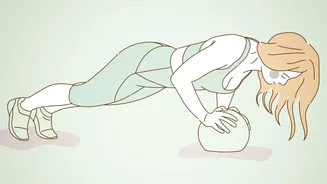
The entire exercise hinges on a proper starting position: the forearm plank. This isn't just a resting spot; it's the foundation of the movement. According to research, the forearm plank generates greater muscle activation in the primary abdominal muscles compared to a standard high plank on the hands. This means from the very first moment, your core is working harder to stabilize your body. To set up correctly, place your forearms on the floor with your elbows stacked directly under your shoulders. Engage your core to lift your body, forming a straight, rigid line from your head to your heels. Avoid letting your hips sag or lifting them too high. This strong, stable base is non-negotiable for performing the dolphin push-up safely and effectively.
A Step-by-Step Guide
Once you've mastered the forearm plank, you're ready to add the 'push-up' motion. Here’s how to execute it: 1. Start in a strong forearm plank position. Ensure your shoulders are over your elbows and your core is tight. 2. Press firmly through your forearms and lift your hips up and back, moving into an inverted 'V' shape. Your head will travel between your upper arms. 3. Keep your legs as straight as you comfortably can; you should feel a stretch in your hamstrings and calves. 4. From the top position, smoothly lower your hips and guide your body forward, returning to the starting forearm plank. Some variations involve leaning forward so your shoulders pass slightly over your elbows to increase the challenge. 5. That completes one repetition. The key is to maintain control throughout the entire movement, keeping your muscles under tension.
Why It's So Effective
The dolphin push_up is more than just an obscure plank variation. Its benefits are rooted in the way it combines muscle strengthening with dynamic movement. The exercise is phenomenal for building shoulder strength and stability, targeting key muscles like the deltoids and the often_neglected serratus anterior, which is vital for healthy shoulder function. This makes it an excellent preparatory exercise for more advanced movements like forearm stands or handstands. The constant need to stabilize your torso through the rocking motion provides an intense core workout. Furthermore, the movement improves flexibility in the shoulders, hamstrings, and calves, offering a blend of strength and mobility in a single exercise.
Common Mistakes to Avoid
To get the most out of dolphin pushups and prevent injury, watch out for these common form errors. First, avoid sagging hips during the plank phase, which indicates your core has disengaged. Second, don't shrug your shoulders up toward your ears; keep your shoulder blades pulled down and back to properly engage your back and protect your neck. Another mistake is moving too quickly. The benefits come from slow, controlled movements that maximize time under tension. Finally, if your hamstrings are tight, allow for a slight bend in your knees. It's more important to maintain a neutral spine than to force your legs perfectly straight.