



The Rise of the Cultural Traveller
Cultural tourism is about connecting with the soul of a place. It’s for those who travel to learn, discover, and experience the art, history, and traditions that define a destination. More than just sightseeing, it’s an immersive journey into the stories
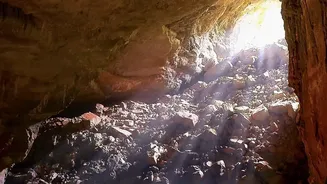
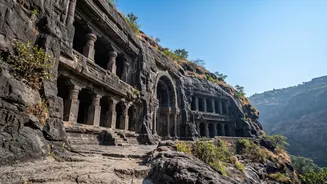
and human achievements of the past. Cultural travellers are drawn to sites that offer authenticity and insight, and few places deliver this as powerfully as the magnificent rock-cut caves of Ajanta and Ellora in Maharashtra, both of which are UNESCO World Heritage Sites. These ancient monuments provide a direct link to the artisans, monks, and devotees who created them over a millennium ago.
Ajanta: A Canvas of Ancient Murals
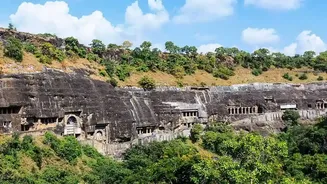
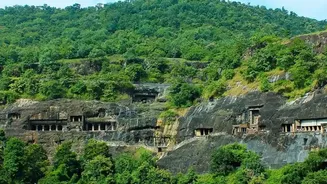
The Ajanta caves, a collection of 30 rock-cut Buddhist monuments, are renowned for their stunning paintings, considered among the finest surviving examples of ancient Indian art. Carved into a horseshoe-shaped cliff, these caves served as monasteries and worship halls for Buddhist monks. The murals, which adorn the walls and ceilings, predominantly narrate the Jataka tales—stories of the Buddha's previous lives. These vibrant frescoes are celebrated for their expressive detail, capturing emotions, and offering a vivid window into the society, culture, and spiritual beliefs of the time, from the 2nd century BCE to the 5th century CE. For a cultural traveller, Ajanta is an art gallery frozen in time, showcasing a level of craftsmanship and narrative depth that is simply breathtaking.
Ellora: An Epic of Converging Faiths
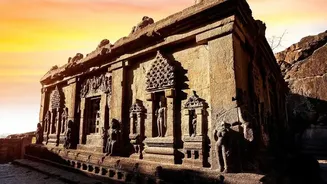
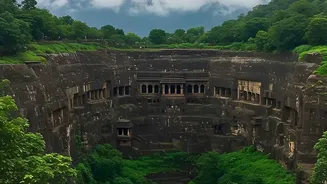
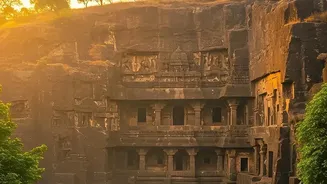
A short distance from Ajanta, the Ellora caves present a different but equally astounding marvel. This complex features 34 caves excavated from basalt cliffs, but its true uniqueness lies in its harmonious blend of Hindu, Buddhist, and Jain monuments built in close proximity to one another. This illustrates a remarkable period of religious tolerance in ancient India. The undisputed centrepiece is the Kailasa Temple (Cave 16), the world's largest single monolithic excavation. Carved from the top down from a single rock, this temple dedicated to Lord Shiva is an engineering feat that continues to baffle experts. An estimated 400,000 tonnes of rock were scooped out to create this architectural masterpiece, which features intricate sculptures depicting scenes from the Ramayana and Mahabharata. Ellora's grandeur and its fusion of faiths make it a pilgrimage site for those interested in architecture, history, and the evolution of religious thought in India.
The IRCTC Tour: A Seamless Cultural Immersion
While the appeal of Ajanta and Ellora is timeless, the logistics of visiting them can be complex. This is where a structured tour becomes invaluable. IRCTC offers several tour packages that handle the key aspects of travel, allowing visitors to fully immerse themselves in the experience. Packages like the 'Shirdi-Shani Shingnapur - Grishneshwar-Ajanta - Ellora' tour or other multi-day itineraries departing from cities like Hyderabad often include train transport, AC vehicles for sightseeing, hotel accommodation, and sometimes meals. By managing the travel between Aurangabad (now officially Chhatrapati Sambhajinagar), the gateway city, and the cave sites, along with other significant spots like the Grishneshwar Jyotirlinga Temple, these tours remove the stress of planning. This convenience ensures that a traveller’s energy is spent appreciating the art and history, not navigating local transport and accommodation.