


Start with a Separate Safe Room
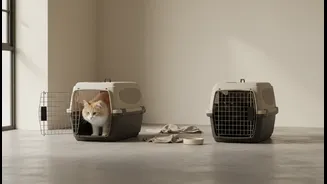
Before your new cat even arrives, prepare a dedicated, separate room for them. This space, like a spare bedroom or office, should be a self-contained sanctuary equipped with its own food, water, litter box, toys, and a cozy hiding spot. The new arrival
should live exclusively in this room for at least several days to a week. This allows them to decompress from the stress of a new environment and establish a small territory of their own without feeling threatened by your resident cat. They can sniff each other under the door, which is a perfect, non-confrontational first step.
Introduce by Scent, Not Sight
A cat's world is built on scent. After the initial settling-in period, start swapping scents between the two cats. Take a blanket or toy the new cat has been using and place it in your resident cat's area, and vice-versa. You can also use a soft cloth to gently rub one cat’s cheeks and forehead, then leave that cloth for the other cat to investigate near their food bowl. This process, known as scent swapping, allows them to gather information about each other indirectly and in a low-stakes way, building familiarity without the risk of a face-to-face confrontation.
Create Positive Associations
The goal is for each cat to associate the other's presence with positive experiences. Feed both cats their meals on opposite sides of the closed door to the new cat's room. This helps them link the other cat's scent and presence with something they love: food. You can also engage in play sessions near the door. If both cats can eat and play calmly, you are building a crucial foundation of positive association that will pave the way for future interactions.
Manage the First Visual Introduction
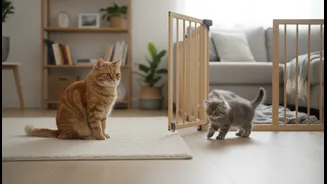
Once both cats are calm with scent swapping and eating near the door, it’s time for a visual introduction. Do this through a barrier, like stacked baby gates or a screen door. Keep these initial sightings brief—just a few seconds at first—and ensure there's a good distance between them. Reward calm behaviour with praise or treats. The moment you see any signs of significant stress, like fixed stares, growling, or flattened ears, calmly end the session by blocking their view and try again later for a shorter duration. Rushing this stage is a common mistake that can set the process back significantly.
Understanding Key Body Language
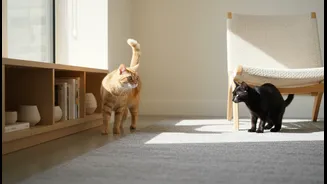
Knowing how to read feline body language is critical during this process. Relaxed, friendly postures include a tail held high, perhaps with a slight curve at the tip, forward-facing ears, and a willingness to look away. Warning signs of fear or aggression include dilated pupils, a swishing or twitching tail, flattened ears, hissing, growling, or hair standing on end. A little bit of tension is normal, but watch for escalation. Hissing is a sign of fear, so if it happens, redirect the cat and give them space rather than punishing them.
Supervise Face-to-Face Meetings
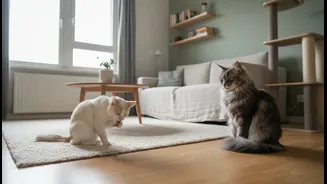
After several successful visual meetings with no aggression, you can allow the cats to be in the same room without a barrier. These first meetings must be short and heavily supervised. Keep them positive with treats or a fun play session using a feather wand to distract them. Don't force them to interact. If they choose to ignore each other, that's a great outcome. Be ready to calmly intervene and separate them if you see signs of escalating tension. Gradually increase the duration of these shared sessions over many days or even weeks.
Enrich the Environment for Harmony
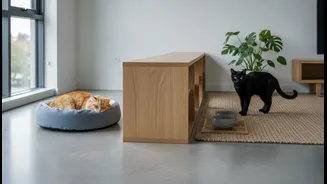
To prevent territorial disputes, ensure your home has enough resources for everyone. The rule of thumb is one of everything per cat, plus one extra. This means multiple litter boxes, food and water stations, and scratching posts spread throughout the home to prevent competition. Vertical space is also crucial. Providing cat trees, shelves, and perches allows them to create distance and observe from a safe vantage point, which reduces stress and potential conflict.