







Recalibrate Your Commute Timeline
The first rule of monsoon commuting is to forget your usual time calculations. Fifteen extra minutes won't cut it when a single downpour can cause a ripple effect of delays. Waterlogged streets slow down traffic to a crawl, public transport services get overwhelmed,
and app-based taxis become scarce and expensive. Start by checking city-specific weather apps and traffic updates the night before and again in the morning. This allows you to make informed decisions instead of reacting to chaos. Plan to leave at least 30-45 minutes earlier than usual, understanding that this buffer is for sanity, not just punctuality. The goal is to avoid the peak rush that builds as more people are delayed.
Prep Your Vehicle to Be a Personal Ark
If you drive, your vehicle is your first line of defense. For car owners, a pre-monsoon check is non-negotiable. Ensure your tyres have adequate tread depth to grip slippery roads and prevent aquaplaning. Worn-out tyres are a significant risk on wet surfaces. Test your brakes, as their efficiency can be reduced by water, and replace worn wiper blades for clear visibility. For two-wheeler riders, the stakes are higher. Slow down, maintain a greater distance from the vehicle ahead, and brake gently and progressively to avoid skidding. Ensure your headlights and taillights are functional to see and be seen in low visibility. Wearing a reflective jacket can dramatically increase your visibility to other drivers.
Mastering a Soggy Public Transport System
For those relying on buses, metros, or local trains, the monsoon brings a different set of challenges: overwhelming crowds and unpredictable schedules. Using live tracking apps for buses and trains can help you monitor delays and potentially find less crowded routes. If possible, try to board at a station before the major crowded stops. Protect your electronics and important documents by placing them in waterproof pouches or ziplock bags inside your main bag. Good quality footwear with a strong grip is essential to navigate slippery station platforms and footbridges safely. And remember, a sturdy, compact umbrella might be more practical in a crowded train or bus than a bulky raincoat.
The Monsoon Commuter’s Go-Bag
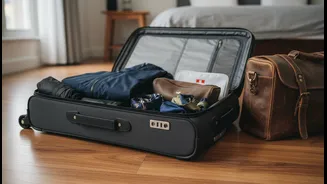
A well-packed bag is your secret weapon. Think beyond just an umbrella. Your kit should include a waterproof bag or at least a rain cover for your backpack. Pack a change of clothes—or at least a dry shirt and a pair of socks—in a sealed plastic bag. A small, quick-drying microfiber towel is invaluable for drying off your face, hands, and belongings. A power bank is a must, as heavy rains can disrupt power and you might need your phone for longer than usual. Also, consider carrying a separate pair of office-appropriate shoes and changing into them upon arrival, leaving your wet footwear to dry. Many seasoned Mumbai commuters wear waterproof sandals or floaters for the journey and switch at the office.
Arrive, Dry, and Revive
You’ve made it, but you're damp and slightly dishevelled. The final step is transitioning into a productive workday. Head straight to the restroom to use your go-bag essentials. Change into your dry clothes and shoes. Use your microfiber towel to dry any remaining dampness. Having a small kit at your desk with items like a comb, and for some, a hairdryer, can make a world of difference. Once you're comfortable, you can finally grab that well-deserved cup of tea or coffee, knowing you've successfully conquered the monsoon commute, arriving not just on time, but also ready for the day ahead.