
A New Eye on the Universe
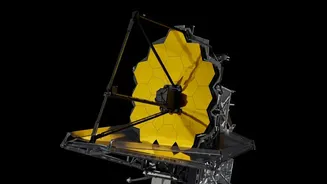
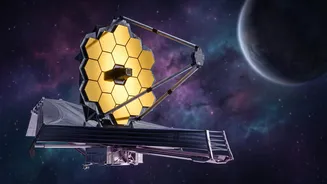
Launched as a successor to the Hubble Space Telescope, the JWST is the most powerful space observatory ever built. Its primary advantage lies in its ability to see the universe in infrared light. This is crucial because the light from the most distant
objects in the cosmos is stretched into longer, redder wavelengths as the universe expands. Infrared is also ideal for peering through cosmic dust clouds and, most importantly, for analysing the atmospheres of planets outside our solar system, known as exoplanets. While Hubble gave us tantalising hints, Webb's massive mirror and sophisticated instruments provide a level of detail that was previously unimaginable, marking a new era in astronomy.
Decoding a Planet's Atmosphere
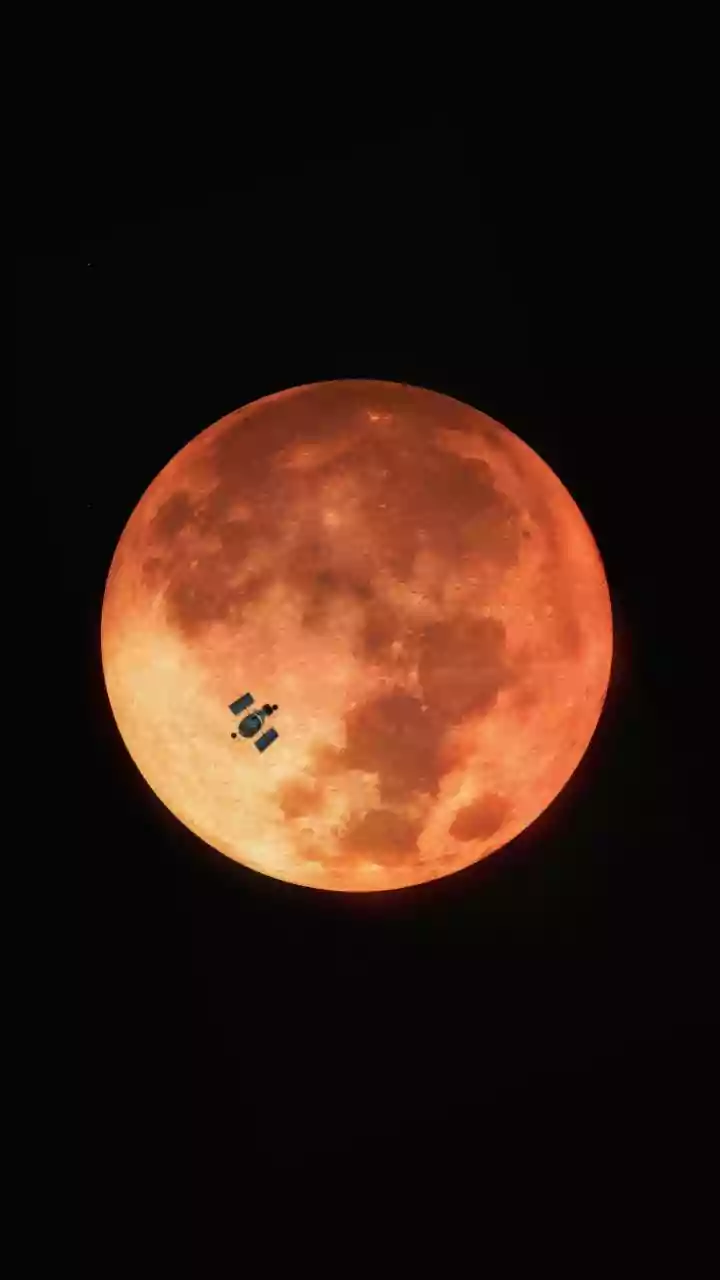
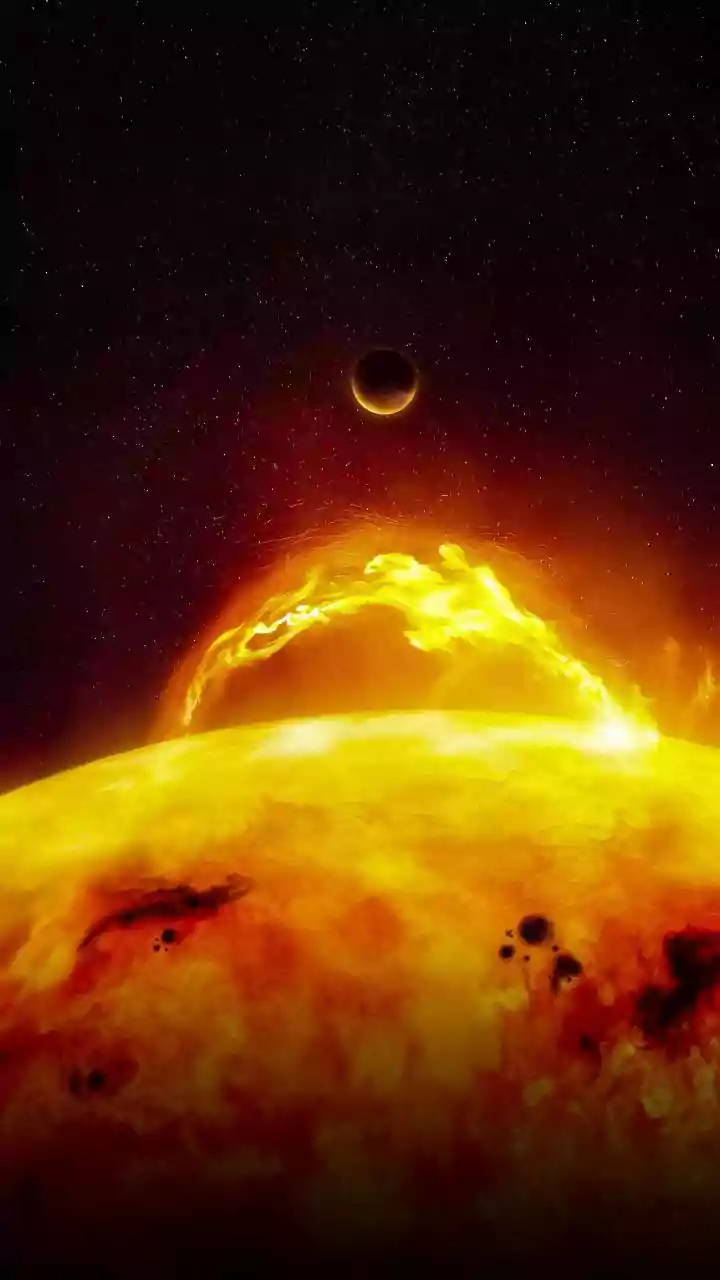
So, how does an infrared telescope find water hundreds of light-years away? The technique is called transit spectroscopy. When an exoplanet passes in front of its host star from our perspective, a tiny fraction of the starlight filters through the planet's atmosphere. Different gases in that atmosphere absorb specific colours, or wavelengths, of light. Water vapour, methane, and carbon dioxide each have a unique 'barcode' or absorption signature. JWST's spectrographs are incredibly sensitive instruments that can read this barcode, breaking down the starlight to reveal which molecules are present and in what quantities. It’s like a chemical fingerprint left behind in the starlight, telling a story about a world we can never visit.
Super-Earths: A Galactic Mystery
Among the thousands of exoplanets discovered, one of the most common types is the 'super-Earth'. These are planets more massive than Earth but smaller than Neptune. Curiously, our solar system has no planets of this size, making them a complete mystery. Scientists are unsure if they are large rocky worlds or small gas planets. This is why they are a prime target for JWST. Discovering what their atmospheres are made of is the first step in determining whether they are more like a giant Earth or a mini-Neptune. Finding water vapour on them is a significant clue, suggesting that at least some of these common planets can hold onto the ingredients necessary for life.
The Case of K2-18 b
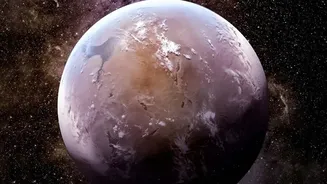
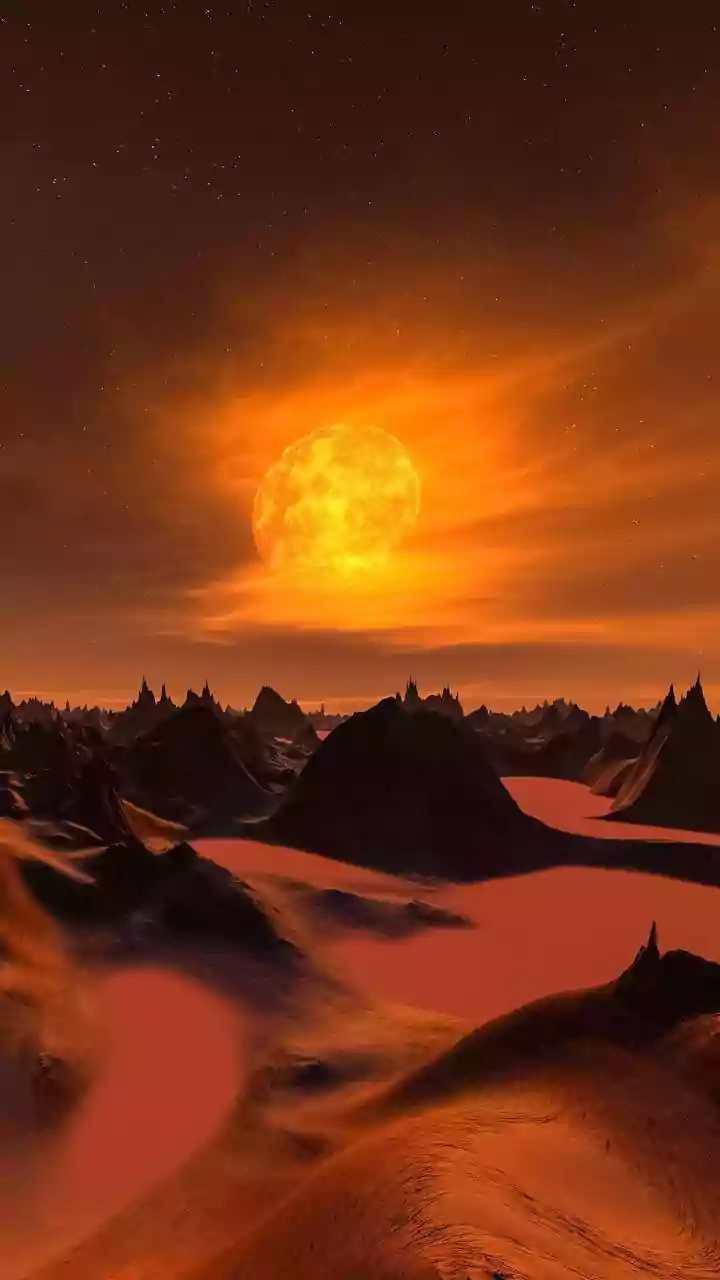
One of the most compelling targets for Webb has been K2-18 b, a super-Earth located about 120 light-years away in the habitable zone of its star. Observations have confirmed the presence of carbon-bearing molecules like methane and carbon dioxide, alongside a lack of ammonia. This chemical mix strongly supports the theory that K2-18 b could be a 'Hycean' world—a hypothetical type of planet with a hydrogen-rich atmosphere and a surface covered by a water ocean. Adding to the intrigue, initial observations hinted at the possible presence of dimethyl sulfide (DMS), a molecule that, on Earth, is only produced by life, primarily marine phytoplankton. However, scientists are cautious, stressing that this particular signal is not yet robust and requires much more data to be confirmed.
Beyond Just Finding Water
The detection of water vapour, while exciting, does not automatically mean a planet is habitable. Many super-Earths orbit so close to their stars that their surfaces are scorching hot, making liquid water impossible. The true power of JWST lies in its ability to build a complete atmospheric profile. The combination of different molecules provides a richer context. For example, the presence of water vapour, methane, and carbon dioxide on K2-18 b points towards a potential water world. In contrast, finding water vapour on a 430-degree Celsius planet confirms that the molecule can exist in rocky planet atmospheres, but not that the world is friendly to life. Each discovery is a crucial piece of a much larger puzzle.