


An Eclipse For The Ages
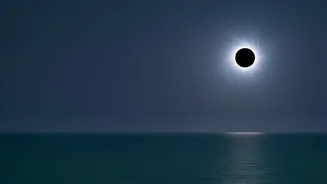
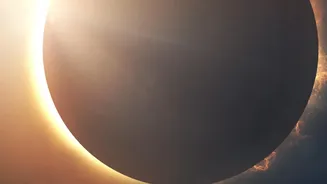
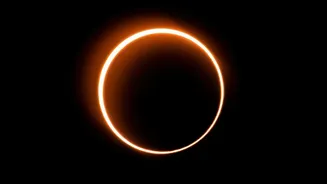
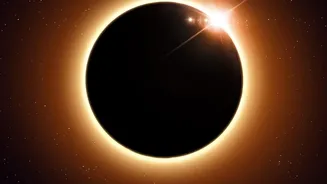
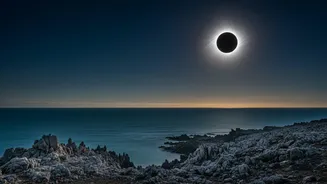
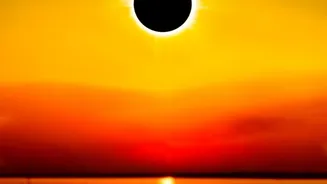
A total solar eclipse occurs when the Moon passes directly between the Sun and Earth, completely blocking the Sun's face. For a few brief minutes, day turns to an eerie twilight, and the Sun’s ethereal outer atmosphere, the corona, becomes visible to the naked
eye. While these events happen somewhere on Earth every 18 months or so, the path of totality—the narrow track where the full eclipse is visible—is often remote. But the 2026 eclipse will pass over accessible and spectacular parts of the globe, making it the first total solar eclipse visible from mainland Europe since 1999 and the first over Iceland in over 70 years. The path begins over remote Siberia, crosses parts of Greenland, then makes its way to two of the world's most dramatic landscapes: Iceland and Spain.
Iceland: Fire, Ice, and Darkness
The Moon's shadow will first make significant landfall in western Iceland, a region famed for its otherworldly terrain. The path of totality will sweep across the Reykjanes and Snæfellsnes peninsulas, areas defined by volcanic craters, vast lava fields, and dramatic coastlines. For just over two minutes, the Sun will be completely obscured, with the point of longest totality occurring just off the country's western coast. Viewers on the Snæfellsnes Peninsula could watch the spectacle from the edge of the Snæfellsjökull glacier, the very setting of Jules Verne's "Journey to the Center of the Earth." Others might flock to the Látrabjarg cliffs, Europe's westernmost point and a haven for puffins, offering a staggering view over the Atlantic. The capital, Reykjavík, also lies within the path, promising about a minute of total darkness for its residents and the thousands of visitors expected.
Spain: A Sunset Spectacle
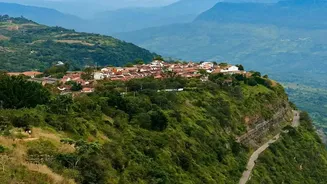
After crossing the Atlantic, the eclipse will make its final and most widely accessible stop in northern Spain. The roughly 290-kilometer-wide path of totality will slice diagonally across the country, from the northern coast of Galicia and Asturias to the Balearic Islands in the Mediterranean. Uniquely, the eclipse will occur late in the evening, just before sunset, creating the potential for an incredibly photogenic event with the darkened Sun low on the horizon. Cities like A Coruña, Oviedo, Burgos, Zaragoza, and Valencia are all within the path. This offers a multitude of viewing opportunities, from historic castle grounds and vineyard-covered hills to stunning beaches along the Atlantic and Mediterranean coasts. The island of Mallorca will experience totality just as the Sun touches the horizon, a grand finale over the water.
NASA's Scientific Quest
For NASA and other scientific bodies, the eclipse is more than a spectacle; it is a crucial research opportunity. NASA-funded science teams will be stationed in both Iceland and Spain. One major project involves using a high-altitude WB-57 research aircraft to chase the Moon's shadow over the Atlantic. Flying at 50,000 feet, above most of the atmosphere, specialized cameras will capture high-resolution images of the solar corona to study its structure, temperature, and the origins of the solar wind. Meanwhile, the Nationwide Eclipse Ballooning Project will see student teams launch dozens of scientific balloons in both Iceland and Spain. These balloons will gather data on how Earth's atmosphere reacts to the sudden drop in sunlight, providing insights into weather dynamics and atmospheric gravity waves. These experiments, building on data from previous eclipses, help scientists better understand the Sun's influence on our planet and improve space weather forecasting.