







The Deception of Soft Luggage
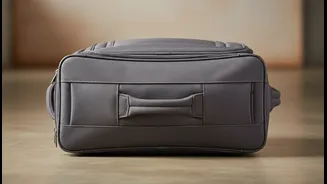
A hard-shell suitcase has fixed dimensions; its size is its size. A soft-sided bag, however, is a different beast. Made of flexible fabric, its greatest strength is also its biggest potential weakness. When you pack it to capacity, especially with bulky
items or by using those handy exterior pockets, the sides can expand and bulge outwards. This seemingly small expansion can easily add several centimetres to your bag’s width and depth, pushing it beyond the airline's strict carry-on limits. An empty bag that meets the 55cm x 35cm x 25cm standard might become 57cm x 38cm x 28cm once you’ve squeezed in that extra pair of shoes, leading to a costly surprise at the boarding gate.
Know the Numbers Game
Airlines are not forgiving when it comes to carry-on dimensions. These rules exist to ensure bags fit safely in the overhead bins. For most domestic airlines in India, such as IndiGo and Air India, the standard carry-on size is around 55cm x 35cm x 25cm. International carriers often have similar, though sometimes slightly different, limits. Crucially, these measurements are absolute and include every part of the bag—wheels, handles (even when retracted), and side pockets. The metal sizer at the gate is the final arbiter. If your bag has to be forced in or doesn't fit, it’s considered oversized.
The Right Way to Measure
Measuring your bag before you leave for the airport is essential, but only if you do it correctly. The key is to measure the bag after it has been fully packed for your trip. Lay the bag on a flat surface. For the height, measure from the very bottom of the wheels to the top of the handle. For the width, measure from side to side at the widest point, accounting for any bulging. Finally, for the depth, measure from the back of the bag to the front, including the expansion of any packed front pockets. Use a flexible measuring tape for the most accurate reading and compare these final numbers to your airline's specific allowance.
The Cost of a Bulging Bag
If a gate agent determines your carry-on is too large, the consequences can be both inconvenient and expensive. You will likely be required to check the bag at the gate. This can come with significant fees, often higher than what you would have paid to check the bag in the first place. For example, some budget airlines charge steep penalties for oversized cabin bags discovered at boarding. This process can also cause delays, forcing you to step out of the line and potentially rushing you to make your flight. In the worst-case scenario, it means parting with a bag you intended to keep with you, along with any valuables or essentials inside.
Pack Smarter, Not Just More
Preventing the dreaded bulge comes down to smart packing. Utilise packing cubes to compress clothing and keep items tightly organized within the main compartment. This not only saves space but also provides internal structure, reducing the likelihood of the sides bowing outwards. Rolling your clothes instead of folding them is another effective space-saving technique. Be strategic about how you pack the front pockets; use them for flat items like documents or a thin book rather than bulky chargers or clothing. The goal is to maintain the bag’s original shape as much as possible, ensuring the dimensions you measured are the ones that show up at the airport.