





A Martian Home in Houston
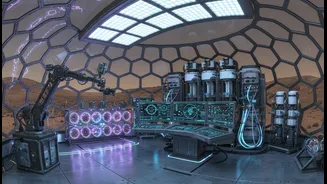
Deep in the heart of NASA's Johnson Space Center in Houston, a small crew is living on Mars time. They reside in a 1,700-square-foot habitat, 3D-printed to simulate a Martian base. This project, known as CHAPEA (Crew Health and Performance Exploration
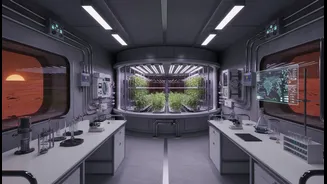
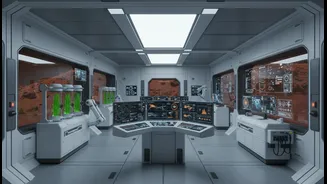
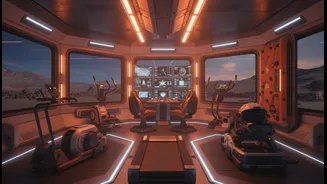
Analog), is a series of year-long missions that lock volunteers away from the outside world. The second mission, CHAPEA 2, began in October 2025 and saw four crew members step into isolation for 378 days. Their goal is to live and work as astronauts would on the Red Planet, providing crucial data on how humans cope with the intense demands of a long-duration space mission. The habitat includes private crew quarters, a kitchen, and dedicated areas for medical, recreational, and work activities, all designed to mimic the resources and constraints of a real Martian outpost.
The Daily Grind on Another World
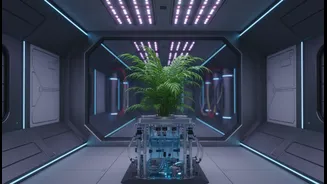
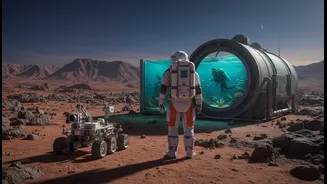
Life inside the CHAPEA habitat is a carefully structured routine of tasks that future Mars explorers will face. The crew conducts simulated spacewalks in an attached sandbox filled with red sand, performing geological surveys and maintenance. They manage robotic operations, maintain their habitat, and even grow their own crops, like leafy greens and tomatoes, to supplement their diet of freeze-dried space food. One of the biggest challenges is the communication delay. Messages to and from mission control take up to 22 minutes each way, just as they would between Earth and Mars. This forces the crew to become incredibly self-reliant, solving problems and even dealing with simulated equipment failures on their own. As one crew member noted, creatively solving problems with limited resources has been both a challenge and a reward.
The Science of Extreme Isolation
Beyond the technical and operational challenges, the core of the CHAPEA missions is studying the human element. Researchers are closely monitoring the crew's physical and psychological health to understand the effects of prolonged isolation and confinement. Previous studies and analog missions have shown that such extreme environments can lead to stress, sleep disturbances, and interpersonal conflict, which could jeopardize a real mission's success. By observing how the crew adapts, manages stress, and maintains team cohesion over the year, NASA can develop better support systems, selection protocols, and coping strategies for actual astronauts. This research is vital, as experts agree that the psychological risks of a multi-year trip to Mars are among the most serious and difficult to mitigate.
Inspiring the Next Generation
The headline's mention of "youth science feeds" points to a crucial, if less formal, aspect of these missions: public engagement. While the crew is isolated, their mission is not a secret. NASA actively shares updates, photos, and videos through its social media channels and educational outreach programs. These snippets of life on 'Mars'—from growing space salads to navigating a communications blackout—are captivating content for a generation that has grown up online. By turning a complex scientific endeavor into a compelling, shareable story, NASA is feeding the curiosity of young people around the world. Programs like the App Development Challenge, student launch initiatives, and even opportunities for kids to design mission patches connect students directly to the excitement of space exploration, ensuring that the next generation of scientists, engineers, and astronauts is ready to take up the torch.