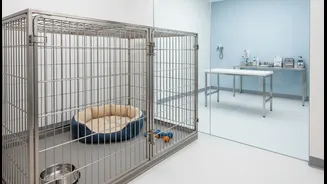






Tour the Facility and Assess the Space
Before you book, a personal visit is non-negotiable. Pay close attention to the physical environment. A quality facility should be clean, well-ventilated, and free from strong odours. Look at the individual kennels or rooms. Are they spacious enough for your
pet to stand, turn around, and lie down comfortably? Overcrowding is a major red flag, as it can lead to stress and the rapid spread of illness. Ask about exercise areas. Where will your dog play and how often? For dogs, access to a secure, clean outdoor space is important, while cats require a separate, quiet area away from dogs. The overall cleanliness and organisation of the facility are strong indicators of the quality of care your pet will receive.
Understand All the Rules and Policies
Every boarding facility has its own set of rules. A reputable establishment will require proof of up-to-date vaccinations, including rabies, distemper, and Bordetella (kennel cough) for dogs. If a facility has no vaccination requirements, consider it a serious red flag as it puts all resident animals at risk. Ask about their policies on feeding. Will they adhere to your pet's specific diet and schedule, or do they use their own food? It’s best to provide your own food to avoid digestive upset. Inquire about what personal items you can bring, such as a favourite toy or a blanket with your scent, which can provide comfort and reduce anxiety. Also, clarify rules on socialisation. Are dogs separated by size and temperament during playtime? A good facility will supervise all interactions to prevent conflicts.
Verify the Emergency Medical Plan
This is one of the most critical checks. Ask for the facility’s specific protocol in case of a medical emergency. A trustworthy boarder should be able to name a specific partner veterinarian or a nearby 24/7 animal hospital they work with. Vague answers are a cause for concern. You need to know exactly what steps will be taken if your pet becomes ill or is injured. Confirm that you will be contacted immediately and ask for the emergency contact information they will use. It is also wise to ensure the staff is trained in basic pet first aid. Before you leave, provide the facility with your veterinarian's contact details, along with written authorisation to seek treatment on your behalf. You should also leave the contact information for a local friend or family member who can make decisions in your absence if you are unreachable.
Evaluate Staff and Supervision
The people caring for your pet matter immensely. During your visit, observe how the staff interacts with the animals. They should appear calm, confident, and genuinely interested in the pets' well-being. Ask about the staff-to-pet ratio. A low number of staff for a large number of animals is a warning sign that your pet may not receive adequate attention. Find out if there is staff on-site 24/7. Some facilities do not have overnight supervision, leaving animals unattended for long periods. A dedicated and experienced team will not only ensure your pet's physical safety but also provide the emotional support and interaction needed to keep them happy and engaged.
Check Reviews and Consider a Trial Stay
Do your homework online and offline. Read recent reviews from other pet owners, but also ask for recommendations from your veterinarian, local pet groups, or friends. Pay attention to recurring complaints about cleanliness, communication, or staff attitude. A reputable facility should be transparent and willing to provide references. Before committing to a long stay, arrange for a short trial, such as a single day of daycare or one overnight stay. This allows you to see how your pet responds to the environment and the staff. It’s the best way to gauge their comfort level and identify any potential issues before you leave for an extended period, ensuring peace of mind for both you and your pet.