




Ashwin's Final Verdict
In a recent video segment for ESPNcricinfo, Ravichandran Ashwin undertook the massive task of naming his greatest-ever Indian cricketer through a 16-player knockout bracket. The final showdown pitted Sachin Tendulkar against Kapil Dev, two men who revolutionised
Indian cricket in their own right. While Ashwin praised Kapil's game-changing all-round ability and his role in the 1983 World Cup win, he ultimately chose Tendulkar. Admitting that personal preference played a role in the final decision, Ashwin crowned the 'Master Blaster' as his pick for the greatest, a choice that has reignited one of the sport's most compelling discussions.
The Case for Kapil: The Original Revolutionary
To understand Kapil Dev's impact is to understand Indian cricket before 1983. India was a team known for sublime spin bowling and technically gifted batsmen, but it was rarely considered a global powerhouse, especially in the one-day format. Kapil changed that single-handedly. He was a genuine fast-bowling all-rounder, a rarity for India, who could turn a game with either bat or ball. His captaincy during the 1983 World Cup is the stuff of legend. He led a team of underdogs to a stunning victory against the seemingly invincible West Indies. That moment, immortalised by the image of him lifting the trophy at Lord's, did more than just win a tournament; it injected a shot of self-belief into the nation, inspiring a generation to pick up the sport and transforming cricket from a pastime into a national passion. His incredible 175 not out against Zimbabwe in that same tournament, an innings played when India was on the brink of elimination, remains a testament to his transformative power.
The Case for Sachin: The Global Phenomenon
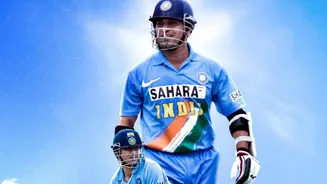
If Kapil Dev taught India to believe, Sachin Tendulkar taught India to dominate. Debuting as a 16-year-old prodigy in 1989, Tendulkar carried the weight of a billion hopes on his shoulders for over two decades. In an era of transition, he was often the lone warrior, the single pillar holding up the Indian batting line-up. His records are staggering and likely insurmountable: 200 Test matches, 100 international centuries, and over 34,000 international runs. But his influence transcends statistics. Tendulkar's relentless pursuit of perfection, his technical mastery, and his calm demeanour under immense pressure made him a global icon. He became the face of modern Indian cricket as the sport entered a new commercial era, turning the game into the cultural and financial behemoth it is today. Winning the World Cup in 2011 was the final jewel in a crown that already sparkled with unparalleled individual brilliance.
Two Icons, Two Different Revolutions
So, who truly changed the game? The answer depends on your definition. Kapil Dev was a structural game-changer. He broke the mould of what an Indian cricketer could be, proving the team could win on the world's biggest stage with grit, aggression, and self-belief. He laid the foundation. Sachin Tendulkar, on the other hand, was an inspirational game-changer who built a skyscraper on that foundation. He pushed the boundaries of what was possible in batting, setting a new standard of excellence and consistency that inspired not just his teammates, but an entire country. Kapil's revolution was about belief and identity; he showed that India could win. Tendulkar's revolution was about aspiration and dominance; he showed India how to become the best. One started the fire, the other turned it into an inferno.