





Pineapple: The Tropical Powerhouse
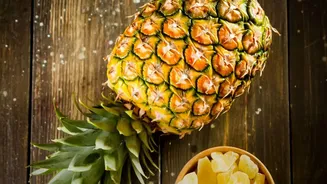
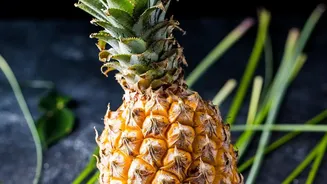
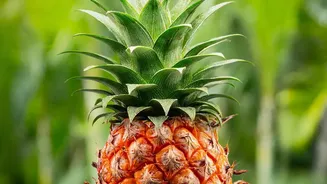
Pineapple is a favourite for its sweet and tangy flavour, but it's also a nutritional star. It is exceptionally rich in vitamin C, with a single cup providing nearly a full day's requirement, which is essential for a strong immune system. It's also a fantastic
source of manganese, a mineral crucial for bone health and metabolism. Per 100 grams, pineapple contains around 50 calories, 13 grams of carbohydrates, and about 10 grams of sugar. Its most famous component is bromelain, a mixture of enzymes believed to aid digestion and reduce inflammation. While many health claims about bromelain are based on concentrated supplements rather than the fruit itself, eating pineapple can contribute to better digestion.
Pear: The Fibre-Rich Friend
Pears offer a subtler, sweeter flavour and a very different nutritional profile. Their standout feature is dietary fibre. A medium-sized pear packs about 6 grams of fibre, which is roughly 21% of the daily recommended intake. This makes pears excellent for digestive health, helping to maintain regularity and keep you feeling full longer. A 100-gram serving of pear has about 57 calories, 15 grams of carbohydrates, and just under 10 grams of sugar. Pears also provide a good amount of vitamin C, vitamin K, and potassium. Their high fibre content helps slow the absorption of sugar, making them a great choice for steady energy.
The Impact of Ripeness
The nutritional content of fruit changes as it ripens. As a fruit matures, its starches convert into simple sugars, making it sweeter. While the total calorie count doesn't change much, the type of carbohydrate does. This is important for blood sugar management. A less ripe fruit with more starch will have a lower glycemic impact than a very ripe, sugary one. Furthermore, antioxidant levels, including vitamin C, tend to increase as a fruit ripens. For pineapple, vitamin C content increases with ripeness. Pears, which are often picked before they are fully ripe, continue to ripen at home. A ripe pear is not only sweeter but also softer and easier to digest. An unripe pear will have more starch, while a fully ripe one will have more fructose.
Portion Size Matters
While both fruits are healthy, portion control is crucial. A standard serving of fruit is about 80 to 150 grams. For pineapple, this is about one large slice, and for pear, it's one medium fruit. Because both fruits contain natural sugars, overindulging can lead to a high sugar intake. Pineapple has a moderate glycemic index of around 59 to 66, meaning it can raise blood sugar more quickly than a pear, which has a low glycemic index of about 38. For those monitoring blood sugar, pairing pineapple with a protein or healthy fat can help slow sugar absorption. Pear's high fibre content naturally helps regulate blood sugar response, but large portions will still deliver a significant sugar load.
The Final Verdict: Which Is Better?
So, which fruit should you choose? It truly depends on your health goals. For a massive vitamin C and manganese boost, pineapple is the clear winner. Its bromelain content also offers potential digestive and anti-inflammatory benefits. However, if you are focused on digestive health and want to increase your fibre intake, the pear is superior. Pears are also a better choice for those who need to manage blood sugar levels carefully, due to their lower glycemic index and high fibre. Pineapple is slightly lower in calories, but the difference is minimal. Both are excellent additions to a balanced diet. The key is to eat them in appropriate portions and consider their ripeness. For a quick energy and vitamin boost, reach for a slice of ripe pineapple. For sustained energy and a happy gut, a crisp, ripe pear is a fantastic option.