





The Planet's Refrigerator
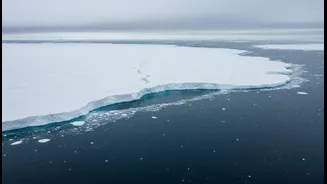
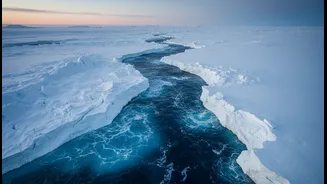
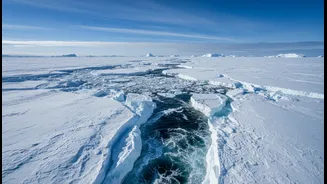
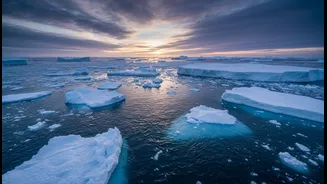
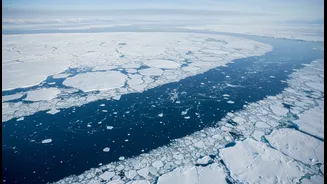
Antarctica's sea ice acts like a giant mirror. Its bright white surface reflects a huge amount of the sun's energy back into space, a phenomenon known as the albedo effect. This helps keep the polar regions, and by extension the entire planet, cool. When
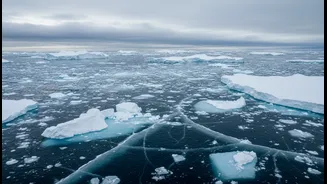
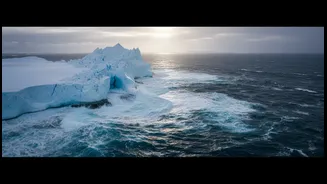
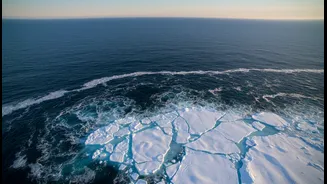
sea ice melts, it exposes the darker ocean water below. This dark surface absorbs more solar energy instead of reflecting it, leading to warmer ocean temperatures. This creates a feedback loop: warmer water melts more ice, which leads to more warming. For a long time, Antarctic sea ice seemed surprisingly stable, even expanding in some years, while the Arctic experienced rapid decline. However, in recent years, scientists have observed record lows, raising concerns that the southern pole may be transitioning from a climate buffer to a climate amplifier.
An Engine of Ocean Circulation
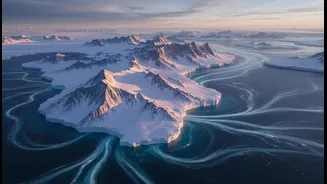
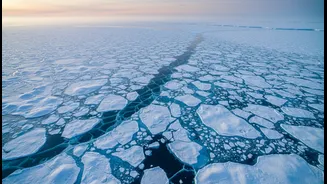
The impact of Antarctic sea ice goes far beyond just temperature regulation. It is a key driver of the global ocean conveyor belt, a system of deep-ocean currents that circulates water around the world, transporting heat, salt, oxygen, and nutrients. This process starts when sea ice forms. As the seawater freezes, it pushes out salt, creating surrounding water that is extremely cold, and salty, and therefore very dense. This dense water, known as Antarctic Bottom Water, sinks to the ocean floor and begins a long journey north, driving a massive overturning circulation. This circulation is vital; it ventilates the deep ocean with oxygen and brings nutrient-rich water to the surface elsewhere, supporting marine ecosystems.
A Slowdown with Global Consequences
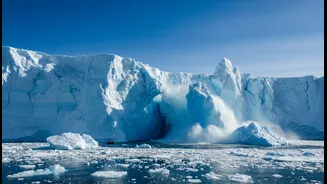
Recent research suggests this critical ocean engine is slowing down. Increased melting of both sea ice and the continent's land-based ice sheets is releasing vast amounts of freshwater into the Southern Ocean. This freshwater is less dense and acts like a lid, making it harder for the cold, salty water to sink and form Antarctic Bottom Water. Scientists using climate models project that this slowdown could be significant, with some studies suggesting the formation of this deep water could be severely curtailed by the middle of this century. A slowdown or shutdown of this circulation would have profound global consequences, altering the ocean's ability to absorb heat and carbon, and potentially leading to dramatic shifts in global weather patterns and marine productivity.
From Pole to the Tropics
The changes in Antarctica's ice and ocean circulation can influence weather far away, including in India. The global conveyor belt is an interconnected system, and a slowdown in the Southern Ocean can affect currents in the Atlantic and Pacific. These ocean currents play a significant role in shaping large-scale weather phenomena like the monsoon. While the direct links are still an active area of research, disruptions to the global climate system originating in Antarctica can contribute to more unpredictable and extreme weather events worldwide. Furthermore, the melting of Antarctica's massive land-based ice sheets, which are destabilised by warmer oceans and loss of protective sea ice, is a major contributor to global sea level rise, threatening coastal communities everywhere.