





A High-Stakes Repair in Orbit
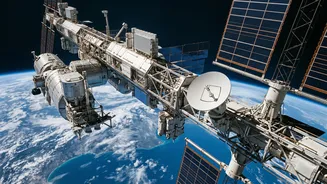
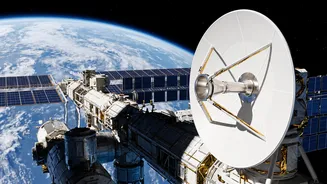
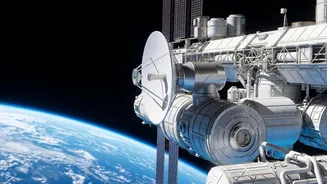
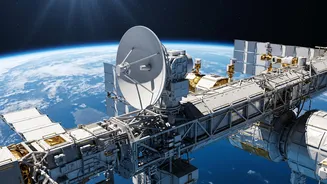
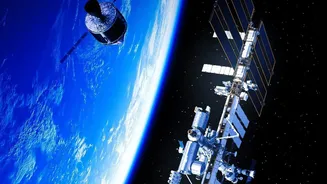
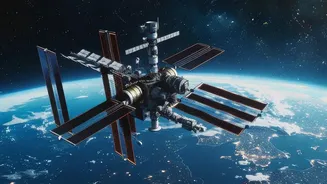
The International Space Station (ISS) is more than just a home for astronauts; it's a world-class laboratory orbiting 400 kilometres above Earth. Like any complex machine, it requires constant maintenance. Recently, one of its two primary Space-to-Ground
Antennas (SGANT) failed, compromising a key communication channel. While a second antenna kept essential data flowing, losing one created a significant risk; a second failure could have severely limited the crew's ability to send large volumes of science data and high-definition video back to Earth. The solution required a hands-on repair in the most challenging environment imaginable: the vacuum of space.
A Complex Dance in the Void
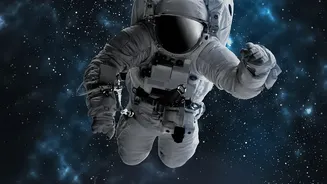
On Tuesday, August 25, NASA astronaut Anil Menon and European Space Agency (ESA) astronaut Sophie Adenot embarked on a spacewalk lasting six and a half hours to fix the problem. The mission was the culmination of an earlier spacewalk on August 18, during which the pair had removed the faulty antenna but ran out of time to install the replacement. During the second spacewalk, Menon, secured to the end of the Canadarm2 robotic arm, and Adenot worked meticulously to install and connect a spare antenna to the station's Z-1 truss. The successful operation was the 283rd spacewalk in support of ISS assembly and maintenance, marking Menon's third and Adenot's second venture outside the station.
Restoring a Critical Lifeline
The newly installed antenna is a critical link for high-speed data transmission between the ISS and NASA's Mission Control Center in Houston. These Ku-band antennas are the workhorses that relay vast amounts of information—from scientific experiment results to crew communications and live video—through NASA's Tracking and Data Relay Satellite (TDRS) system. Shortly after the installation, ground controllers received the good news: initial tests showed good power and data transmission. The relief and excitement were palpable, with one official in Mission Control famously telling the astronauts, "You just saved the video dish!" The repair successfully re-established full redundancy for the station's high-data-rate communications, a crucial safety and operational margin.
Why This Upgrade Matters for Science
With the ISS's communication systems fully restored, the flow of scientific knowledge can continue unimpeded. The station hosts hundreds of experiments in biology, physics, astronomy, and human research, many of which generate enormous data sets. Having a robust, high-speed connection is essential for researchers on the ground to receive this information promptly, analyze it, and guide the next steps of their experiments. This successful antenna replacement ensures that the ISS can continue to operate at its full scientific potential, pushing the boundaries of human knowledge. The ongoing upgrades are part of a broader effort to modernize the aging orbital outpost, preparing it for continued service and ensuring it remains a valuable platform for testing technologies needed for future deep-space missions.