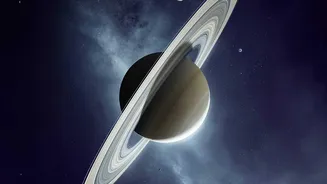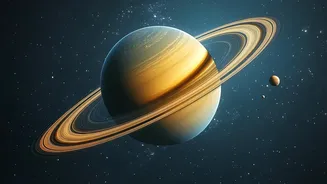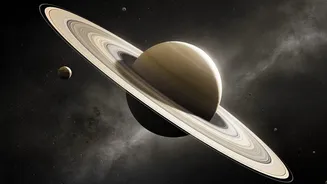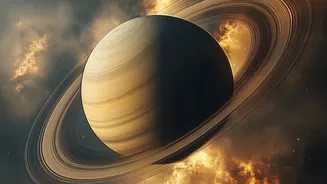





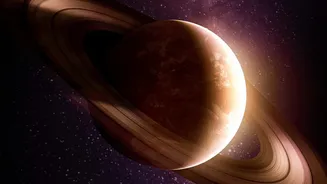
The Ringed Giant Steps Into the Spotlight
While the headline is true that darker evenings help, the real reason Saturn is putting on a show is due to celestial mechanics. Throughout 2026, Saturn is moving toward its 'opposition' on October 4th. Opposition is when Earth passes directly between
the sun and an outer planet, making that planet appear at its largest and brightest for the year. Think of it as a celestial alignment that puts Saturn in the full glare of the sun from our perspective, causing it to shine brilliantly in our night sky. August marks the beginning of this prime viewing season, as the planet begins rising earlier in the evening and climbing higher for clearer views. It will be visible all night long, rising in the east around sunset and tracing a path across the sky before setting in the west at sunrise.
How to Find Saturn This Month
Finding Saturn in August 2026 is surprisingly straightforward. You don't need to be an expert astronomer. Look toward the eastern sky a few hours after sunset. In early August, Saturn will rise around 11 p.m. local time, but by the end of the month, it will be visible as early as 9 p.m. The planet will be situated in the faint constellation of Pisces. Because the stars of Pisces are not very bright, Saturn will stand out as a steady, bright, yellowish-white point of light. A key difference to note is that planets tend to shine with a steady light, while stars appear to twinkle. This is because the light from distant stars is more easily disturbed by Earth's atmosphere. Saturn’s relative proximity means its light is more stable, making it a serene beacon in the sky.
Do You Need a Telescope?
This is the most common question, and the answer depends on what you want to see. With just your naked eye, Saturn is easily visible as a bright 'star'. It’s a rewarding sight, knowing you are looking at another world millions of kilometres away. If you have a pair of binoculars, you can get a better sense of its shape. While you won't make out the rings, you may notice that the planet appears slightly elongated or oval-shaped. You might even spot its largest moon, Titan, as a tiny pinpoint of light nearby. However, to see Saturn's magnificent rings, a telescope is necessary. The good news is that you don’t need a professional observatory. Even a modest, small telescope will reveal the rings as distinct from the planet's body, a sight that has captivated observers since Galileo first glimpsed them as 'ears' in 1610.
The Jewel of the Solar System
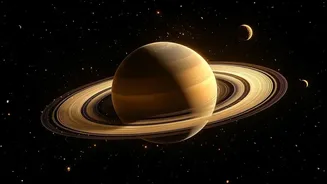
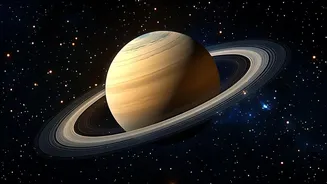
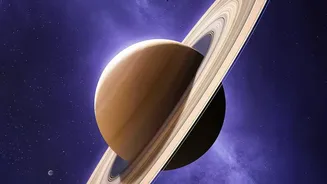
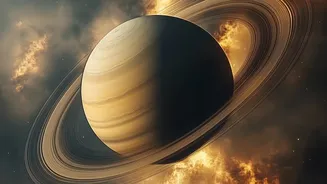
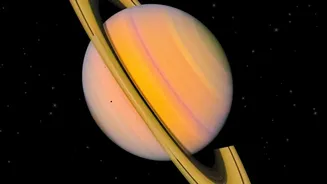
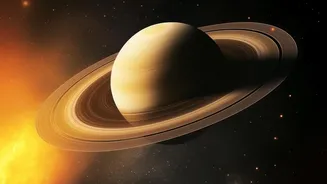
Once you've found it, take a moment to appreciate what you're seeing. Saturn is the sixth planet from the sun and the second-largest in our solar system. It is a gas giant, composed mostly of hydrogen and helium, with no solid surface to stand on. Its most famous feature, the rings, are not solid but are made of billions of individual particles of ice and rock, ranging in size from dust grains to small mountains. The planet is so large that you could fit over 760 Earths inside it, yet it is the least dense planet in the solar system. In fact, if you could find a bathtub large enough, Saturn would float. It also has a fascinating family of moons—well over 100 have now been discovered—including Titan, which is larger than the planet Mercury and has its own thick atmosphere.
Tips for the Best Viewing
To make the most of your Saturn-gazing session, a few simple tips can go a long way. First, try to get away from city lights. The darker your location, the more the planets and stars will pop. Second, give your eyes time to adapt to the dark; it usually takes about 20-30 minutes for your night vision to fully kick in. Third, for the best view, wait until Saturn is higher in the sky, at least an hour or two after it rises. Looking at objects near the horizon means you're looking through more of Earth's turbulent atmosphere, which can make the image blurry. Finally, be patient. Stargazing is an exercise in mindfulness. Enjoy the quiet moments under the vast expanse of the cosmos, with the ringed planet as your focus.