




Why Warming Up Is Non-Negotiable
Skipping a warm-up is like asking for an injury. Cold muscles are more susceptible to strains and tears. A good warm-up gradually increases your body temperature and heart rate, sending more oxygen-rich blood to your muscles. This makes them more pliable
and ready for action. Beyond the physical benefits, a warm-up is also a mental transition. It gives you a moment to connect your mind to your body, shift your focus away from the day's stress, and prepare to move with intention and expression. Think of it as priming the engine; it ensures your body can perform more efficiently and safely, helping you get the most out of every session.
Start with Dynamic Movement
Forget holding static stretches for long periods before you dance. Pre-workout warm-ups should be dynamic, meaning you are moving through a range of motion. This approach lubricates the joints and activates the specific muscle groups you're about to use without decreasing their power. Start with 5-10 minutes of light cardio like marching in place, light jogging, or simple side-to-side steps to get your heart rate up. Then, move into targeted dynamic exercises.
Essential Full-Body Exercises
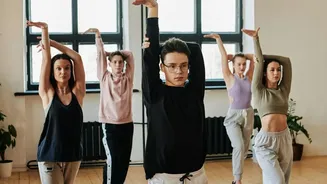
A great freestyle session involves your entire body, so your warm-up should too. Incorporate movements that target major muscle groups. Arm Circles and Shoulder Rolls: Extend your arms to the sides and make controlled circles, starting small and gradually getting bigger. Then, roll your shoulders up, back, and down to release tension in your upper back. Torso Twists: With your feet shoulder-width apart, gently twist your upper body from side to side, keeping your hips stable. This mobilises your spine. Hip Circles and Leg Swings: Place your hands on your hips and make large, slow circles to warm up the hip joints. Then, holding onto a stable surface for balance, swing one leg forward and backward, then side to side. These movements are crucial for dancers, preparing the hips for a wide range of motion. Lunges and Squats: Perform slow, controlled lunges or bodyweight squats to activate your glutes, quads, and hamstrings. This builds a strong foundation for more powerful movements.
Connect With the Music
Freestyle is about interpreting music through movement. Your warm-up is the perfect time to start building that connection. Once your body feels warmer, put on a song you love and just begin to move gently. Don't worry about what it looks like; focus on how it feels. Shift your weight from foot to foot, bounce lightly to the beat, or let your arms sway naturally. The goal is to listen to the different layers of the music and let your body respond organically. This bridges the gap between mechanical exercises and creative expression, making the transition into full freestyle feel seamless.
A Sample 10-Minute Warm-Up Routine
Here is a simple sequence to get you started: 1. Light Cardio (2 minutes): March in place, jog lightly, or do some jumping jacks to elevate your heart rate. 2. Joint Mobility (3 minutes): Perform 10-15 slow, controlled circles in each direction for your neck, shoulders, hips, and ankles. 3. Dynamic Stretches (3 minutes): Complete 10-12 reps per side of leg swings (forward/back and side-to-side) and walking lunges with a gentle torso twist. 4. Spinal Articulation (1 minute): Move through a few Cat-Cow stretches on your hands and knees to warm up your entire spine. 5. Musical Connection (1 minute): Put on your first track and simply sway, step-touch, or gently bounce to the beat, feeling the rhythm.