





The Soaring Cost of Extra Luggage
Airlines have become experts at unbundling fares, turning every travel necessity into an extra charge. The most common and painful of these are excess baggage fees. For domestic travel within India, airlines often charge around ₹600 per extra kilogram
at the airport. If you're 10 kilograms over the limit, that’s an instant ₹6,000 added to your travel cost. On international routes, the charges can be even more severe, often calculated per piece or at staggering per-kilo rates. Pre-booking extra luggage online can offer a discount, but it still represents a significant expense, especially for families, students, or anyone on a long trip. This is where a little-known travel hack comes into play. By comparing the cost of your excess baggage to the price of an upgrade, you might find a path to significant savings and a much better flying experience.
How to Do the Upgrade Math
The calculation is simpler than it sounds. First, weigh your bags at home and determine how much excess weight you're carrying. Next, visit your airline’s website to find the cost of pre-booking that extra weight. For example, if you have 15 kg of excess baggage on a domestic flight, the cost could be around ₹8,000 or more if paid at the airport. Now, check the 'Manage My Booking' section on the airline’s app or website. Airlines often offer last-minute upgrade deals to fill empty seats in Premium Economy or Business Class. You might find an offer to upgrade for a price that is surprisingly close to your excess baggage fee. Vistara, for instance, even has a system where you can bid for an upgrade. If the upgrade costs ₹9,000 and the baggage fee is ₹8,000, you're essentially paying a small premium for a host of additional benefits, not just the extra luggage space.
The Hidden Perks of Premium
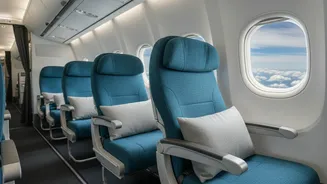
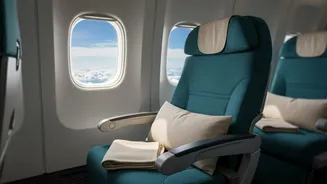
An upgrade isn't just about the baggage allowance. A move to Premium Economy or Business Class unlocks a suite of perks that can transform your journey. The most immediate benefit is comfort: wider seats, significantly more legroom, and a greater recline. Beyond the seat, you often get priority services, including dedicated check-in counters, faster security clearance, and priority boarding, which can be a huge time-saver at a busy airport. Onboard, the experience is elevated with better meal options, complimentary drinks, larger entertainment screens, and sometimes even noise-cancelling headphones and amenity kits. Full-service carriers like Air India and Vistara, as well as international airlines, typically offer a more substantial difference between cabins. When you factor in the value of these comforts, the upgrade decision becomes even more compelling.
When an Upgrade Makes the Most Sense
This strategy is most effective on long-haul international flights, where both excess baggage fees and the benefits of a more comfortable seat are magnified. On these routes, upgrading from Economy to Premium Economy often doubles your baggage allowance, for example from one 23 kg bag to two 23 kg bags. The cost of a second checked bag on a US-bound flight can be over $200 (around ₹16,600), making an upgrade offer in a similar price range an excellent deal. Full-service carriers are generally better candidates for this hack than budget airlines, as they have dedicated premium cabins and more substantial baggage allowances to begin with. For domestic travel, the math works best if you are significantly over the weight limit. If you only have a few extra kilos, paying the standard fee will almost certainly be cheaper.
When to Stick with Your Economy Ticket
Of course, this approach isn't a universal solution. If you are travelling light and well within your baggage allowance, there’s no financial reason to consider an upgrade unless you simply want the comfort. Furthermore, on many budget airlines, the concept of a true 'Premium Economy' doesn't exist. You might be able to pay for an extra legroom seat, but this typically doesn't come with an increased baggage allowance. Always read the fine print of the upgrade offer to see what’s included. Sometimes, the upgrade cost can be astronomically high, especially if the flight is full. In these cases, paying for your extra bags directly—preferably online and in advance to secure a discount—remains the most sensible and economical choice. The key is to be flexible and analytical, ready to take advantage of a good deal when it appears.