
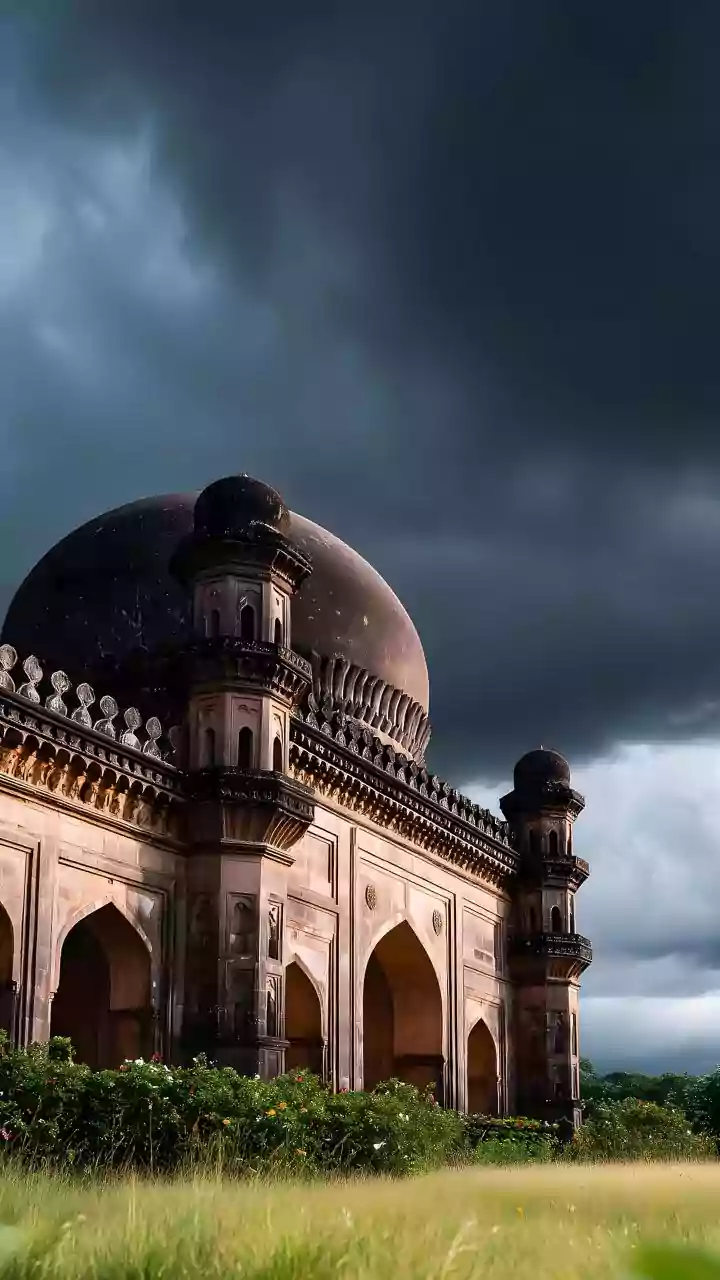








The Sky's Electric Theatre
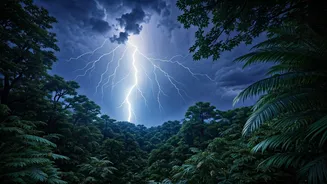
The most familiar of the monsoon’s light shows is, of course, lightning. Far from being a random flash, it’s a complex and dramatic atmospheric event. As the monsoon winds carry immense moisture from the sea, colossal cumulonimbus clouds build up, sometimes
stretching several kilometres into the sky. Inside these turbulent giants, tiny ice crystals and water droplets collide, creating static electricity. The top of the cloud becomes positively charged, while the base becomes negative. Nature abhors an imbalance, and lightning is its powerful way of correcting it. A massive electrical discharge flashes either within the cloud (sheet lightning, illuminating it like a giant lantern) or between the cloud and the ground (the iconic, jagged fork). This grand celestial drama, which plays out in an instant, releases more energy than a power plant, painting the dark sky with strokes of brilliant white and violet light.
A Symphony of Awe and Power
For centuries, this aerial spectacle has inspired both awe and fear. In Indian culture, the monsoon storm is a potent symbol. It represents destruction and creation, ferocity and life-giving renewal. The thunder that follows the flash—the sound of air rapidly expanding from the heat of the lightning bolt—is the storm’s powerful voice. This combination of light and sound is a recurring motif in our art, poetry, and films, often heralding a moment of dramatic change or intense emotion. It’s a reminder of nature's untameable power, a force that commands our respect even as we admire its fierce beauty from the safety of our homes.
The Earth's Quiet Glow
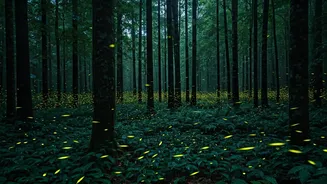
While lightning dominates the sky, the monsoon awakens a quieter, more magical light show on the ground. This is the world of bioluminescence, or ‘living light.’ The increased humidity and moisture trigger this phenomenon in various organisms. In the dense forests of the Western Ghats, particularly in Maharashtra and Goa, certain species of fungi (like Mycena) begin to glow. Their mycelia, the thread-like networks in decaying wood and leaves, emit a soft, ethereal green light. This turns a damp forest floor into a scene from a fantasy film, with patches of earth glowing mysteriously in the dark. This 'foxfire,' as it's sometimes called, is thought to attract insects that help spread the fungi's spores.
When the Ocean Lights Up
The magic isn't confined to the forests. The monsoon also brings this light show to our shores. The runoff from the rains carries rich nutrients into the sea, causing blooms of single-celled organisms called dinoflagellates. These microscopic plankton produce light when disturbed. The result is a breathtaking spectacle: as waves crash on the shore or a boat cuts through the water, the sea sparkles with a brilliant blue-green glow. Beaches in Maharashtra (like Bhayandar's Juhu-Koliwada), Goa (like Betalbatim), and Karnataka (near Gokarna) become famous for this 'sea sparkle' during and just after the monsoon. Wading into the water and seeing it light up around your feet is an unforgettable experience, as if the stars have fallen from the sky into the ocean.
Admiring the Beauty Safely
While the monsoon's light shows are enchanting, the most powerful one—lightning—demands caution. Enjoying a thunderstorm is best done from a safe distance. The National Disaster Management Authority (NDMA) advises staying indoors in a sturdy building during a thunderstorm and avoiding contact with electrical appliances or plumbing. If you are caught outdoors, avoid open fields, tall trees, and water bodies. Do not lie flat on the ground; instead, crouch down into a ball-like position with your head tucked and hands over your ears. This minimises your contact with the ground and lowers your profile. By taking these simple precautions, you can fully appreciate the majesty of the storm without putting yourself at risk.