








What Is Functional Mobility?
Forget the complex jargon for a moment. Functional mobility is simply your ability to move your joints through their full, intended range of motion without pain or restriction. Think about the daily movements you take for granted: squatting down to pick
up a package, reaching for something on a high shelf, twisting to grab your seatbelt, or getting up off the floor with ease. That’s functional mobility in action. It’s not about isolating a single muscle to make it bigger; it’s about making sure your entire body works as a coordinated, efficient system. This type of training focuses on multi-joint movements that mimic real-life activities, improving your balance, coordination, and the overall quality of your movement.
The Old 'Flex' vs. The New One
The traditional gym culture often lionises the pursuit of a one-rep max—the heaviest possible lift for a single repetition. It's a tangible, impressive measure of raw strength. But for most of us, who aren't competitive powerlifters, is that the most useful metric for health? The new 'flex' argues that true strength is being able to carry all your groceries in one trip without tweaking your back, play with your kids on the floor without your knees screaming, and feel energetic and pain-free at the end of the day. It’s a shift in priority from demonstrating power to possessing it in a practical, sustainable way. This doesn't mean heavy lifting is 'bad'. It simply suggests that for the average person, it might be an incomplete picture of fitness if pursued without a foundation of good movement.
Why Mobility Is Your Fitness Foundation
Think of your body like a high-performance car. Heavy lifting gives you a powerful engine, but mobility provides the steering, suspension, and well-oiled chassis. Without it, all that horsepower is useless and might even lead to a crash. Poor mobility forces your body to compensate. If your hips are tight, your lower back might take the strain during a squat. If your shoulder mobility is limited, a simple overhead press could lead to an impingement. Prioritising mobility work helps prevent these common injuries. It improves your posture, alleviates chronic aches and pains, and enhances your performance in every other physical activity you do—including, ironically, making your heavy lifts safer and more effective by allowing you to achieve better form.
It's a Partnership, Not a Competition
The headline is a provocation, but the reality is more nuanced. The goal isn't to replace heavy lifting with mobility drills; it's to integrate them. Strength and mobility are partners, not rivals. A strong, mobile body is the ultimate goal. Functional mobility work prepares your body for the stress of strength training. By ensuring your joints can move properly, you can then load those patterns with weight to build robust, resilient muscle and bone density. Doing a deep, controlled bodyweight squat (mobility) is the prerequisite for doing a heavy-weighted back squat (strength) safely. One enables the other. The problem arises when we chase strength at the expense of movement quality, skipping the foundational work and heading straight for the heavy weights.
Simple Ways to Boost Your Mobility
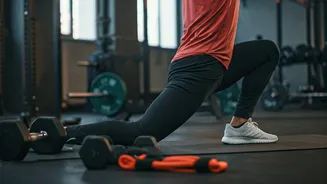
You don't need to add an extra hour to your gym session. Integrating mobility can be simple. Start your workouts with 5-10 minutes of dynamic stretches like leg swings, arm circles, and cat-cow stretches to prepare your joints for movement. End your day with a few minutes of foam rolling or static stretches, holding positions for 30-60 seconds to release tension. Consider dedicating one short session a week purely to mobility, or trying a beginner's yoga or Pilates class. Even small habits, like taking breaks to stretch during the workday or practising deep squats while waiting for your tea to brew, can make a significant difference over time. The key is consistency, not intensity.