




The Invisible Enemy Onboard
In any enclosed space, from a submarine to a spacecraft, the air needs constant attention. While we worry about having enough oxygen, the more immediate danger is the buildup of carbon dioxide (CO2). On Earth, plants and the sheer volume of our atmosphere
handle this for us. In a tiny capsule millions of kilometres from home, CO2 from astronauts' own breath can quickly reach toxic levels. At concentrations as low as 1%, it can cause drowsiness, and at higher levels, it leads to impaired cognitive function, headaches, and worse—a critical problem when astronauts need to be at their sharpest. Every long-duration space mission has had to solve this fundamental problem: how to remove the CO2 to keep the crew safe and healthy. The answer lies in a technology known as a 'CO2 scrubber'.
Yesterday’s Solution: The Throwaway Filter
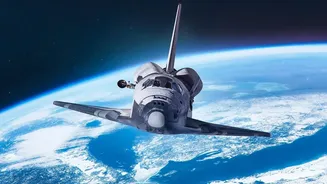
Early space missions, like Apollo and the Space Shuttle, used a straightforward but limited method. They relied on disposable canisters filled with lithium hydroxide. As cabin air passed through these canisters, a chemical reaction would capture the CO2, effectively trapping it. This worked well for short missions. However, the system had a major drawback: once the chemical was used up, the entire canister had to be replaced. For a long trip, like a multi-year mission to Mars, the sheer number of canisters required would be enormous, taking up precious space and adding significant weight. According to NASA, the consumable chemicals on the Space Shuttle took up the volume of nearly 143 basketballs. For deep space exploration to be feasible, a reusable, or 'regenerative', solution was needed.
Artemis's Regenerative Approach
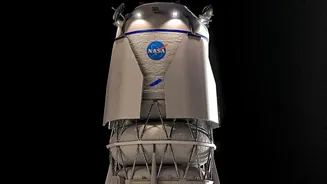
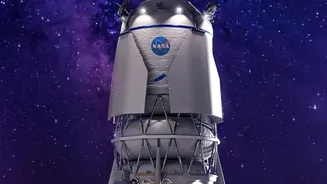
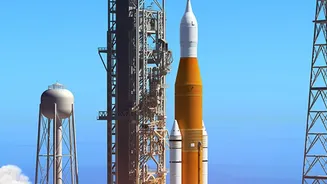
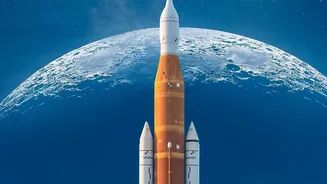
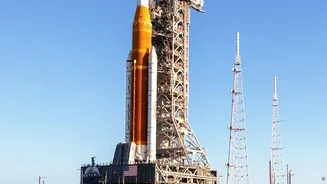
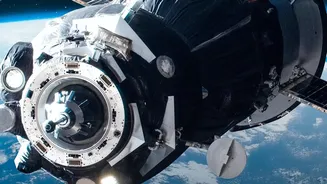
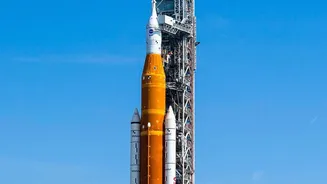
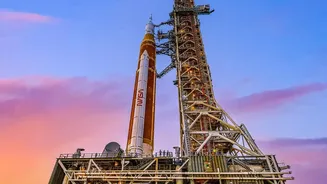
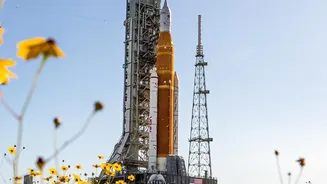
NASA's Orion spacecraft, the vehicle for the Artemis missions, is equipped with a far more advanced life support system, a key component of which is a regenerative CO2 scrubber. Part of the overall Environmental Control and Life Support System (ECLSS), this new technology is designed to be smaller, lighter, and, most importantly, reusable. Instead of disposable canisters, Orion uses a system called the Carbon Dioxide and Humidity Control (CHC), which features reusable filter beds. This system is a significant upgrade, taking up a fraction of the space of its predecessors—the equivalent of just 16 basketballs—and saving over 100 pounds in weight. This leap in efficiency is what makes long-duration missions possible without turning half the spacecraft into a storage closet for air filters.
The Tech Behind the Breath
So how does it work? The system uses a technology often referred to as an 'amine swing bed'. The air from the cabin is circulated through beds containing a special material coated with amines, a class of ammonia-derived compounds. This material acts like a chemical sponge, absorbing both CO2 and water vapour from the air. Orion has multiple beds. While one or two are actively scrubbing the cabin air, another is in its 'regeneration' cycle. To regenerate a bed, it is simply exposed to the vacuum of space. This vacuum sucks the captured CO2 and water out of the amine material, venting it harmlessly overboard. Once 'cleaned', the bed is ready to be cycled back into use to scrub the air again. This continuous process of absorbing and venting allows the system to operate for the entire mission duration without needing replacement parts from Earth.
Closing the Loop for Mars
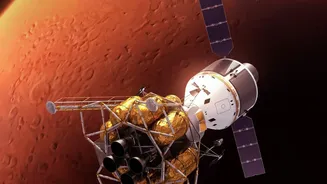
Venting CO2 into space is a brilliant solution for the Orion capsule, but for even longer missions, such as establishing a permanent base on the Moon or Mars, engineers are working on the next step: closing the loop entirely. On the International Space Station (ISS), systems like the Sabatier reactor are already being used to take this a step further. A Sabatier system combines the captured CO2 with hydrogen (produced from splitting water via electrolysis) to create two valuable resources: water and methane. The water can be recycled for drinking or to create more oxygen, reducing the amount that needs to be launched from Earth. The methane is currently vented, but future applications could see it used as a rocket propellant. This concept, known as a Bioregenerative Life Support System (BLSS), aims to mimic Earth's natural cycles, creating a self-sustaining environment for astronauts.