








The Great Energy Divide
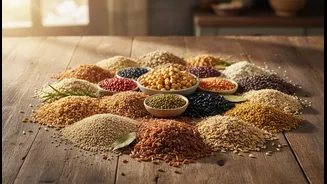
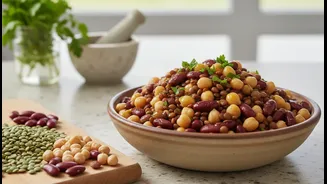
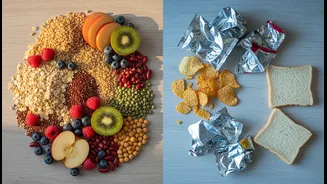
At the heart of the difference between an apple and a packet of biscuits is how they release energy. Foods like whole grains, pulses, and fruits are what you might call 'slow-release' fuels. They are digested slowly, providing a steady stream of energy that
keeps you going for hours. In contrast, refined snacks, such as chips, cookies, and sugary drinks, are 'fast-release' fuels. They are broken down quickly, causing a rapid spike in blood sugar, followed by an inevitable crash that leaves you feeling tired and hungry again soon after.
Fibre: The Unsung Hero
The magic ingredient responsible for this steady energy release is fibre. Whole grains, pulses, and fruits are packed with it. Because our bodies can't break down fibre into sugar molecules, it slows down the entire digestive process. Soluble fibre, found in oats, beans, and apples, dissolves in water to form a gel-like substance. This gel traps sugars and slows their absorption into the bloodstream, preventing those sharp glucose spikes. Insoluble fibre adds bulk and helps food move through your digestive system, promoting gut health. Most refined snacks have had their natural fibre stripped away during processing, which is why they hit your bloodstream so quickly.
The Sugar Rollercoaster
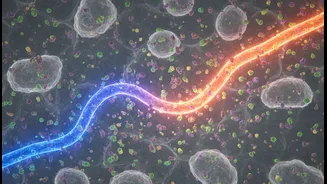
When you eat a refined snack, your body is hit with a large amount of easily absorbed sugar. This triggers a large release of insulin to move that sugar out of your blood and into your cells for energy. The result is a rapid drop in blood sugar, which can cause fatigue, irritability, and more cravings for sugary foods. This cycle is often called the 'sugar rollercoaster'. Over time, constantly forcing your body to produce large spikes of insulin can lead to serious health issues, including insulin resistance and an increased risk of type 2 diabetes. Diets rich in whole foods, on the other hand, lead to a smaller, slower rise in blood glucose and a much more stable insulin response.
It's About Nutrient Density
Beyond just energy, there’s the matter of nutritional value. Whole foods are 'nutrient-dense', meaning they provide a high amount of vitamins, minerals, antioxidants, and other beneficial compounds for their calorie count. A whole-grain bread, for example, has significantly more fibre, protein, magnesium, and B vitamins than its white bread counterpart for roughly the same number of calories. Refined snacks are often described as 'energy-dense' or 'empty calories'. They provide calories, mainly from added sugars and fats, but offer very little in the way of essential nutrients. Choosing nutrient-dense foods supports everything from your immune system to your long-term health.
Feeling Fuller, For Longer
The fibre and protein in whole foods also play a crucial role in satiety—the feeling of fullness. Because these foods are digested more slowly, they remain in your stomach for longer, helping you feel satisfied. This can help prevent overeating and support weight management. Refined snacks, being low in fibre and protein, are digested so quickly that they don't provide the same sense of fullness, making it easy to consume large amounts without feeling satisfied. This is one reason why studies have linked high consumption of ultra-processed foods to weight gain.