
The Sun’s Invisible Threat
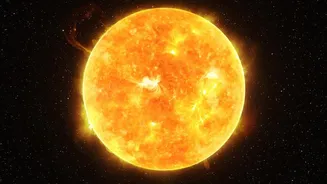
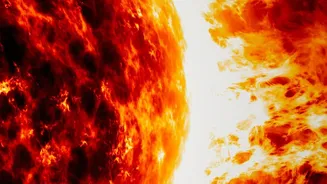
The sun, our source of light and life, has a volatile side. It frequently unleashes solar flares and coronal mass ejections (CMEs), which are massive explosions of energy and charged particles. When these eruptions are directed at Earth, they can cause
geomagnetic storms. While these storms produce beautiful auroras, they also pose a significant danger to our technology-dependent society. The particles can interfere with radio signals, damage satellite electronics, and even induce harmful electrical currents in ground-based power grids, threatening widespread disruption. A severe storm in 1989, for instance, caused a nine-hour blackout across Quebec, Canada, demonstrating the very real and costly consequences.
The Challenge of Looking into the Sun
For decades, predicting the impact of a solar storm has been incredibly difficult. Spacecraft positioned between the Earth and sun could provide some warning, but often with very little lead time—sometimes as little as 15 to 30 minutes for the fastest-moving storms. This isn't enough time for satellite operators or grid managers to take meaningful protective measures, such as temporarily shutting down sensitive systems or re-routing power. Furthermore, existing observatories often delivered high-quality data with a delay of hours, making real-time forecasting a major challenge. Scientists knew a storm was coming, but predicting its specific strength and earthly targets was a monumental task.
A New Generation of Solar Sentinels
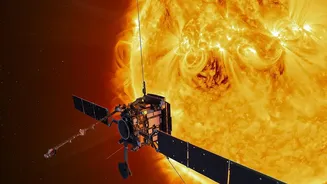
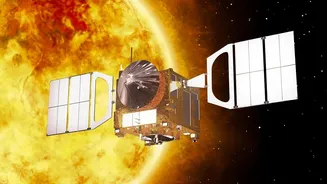
A new wave of technology is revolutionizing space weather forecasting, shifting it from a reactive to a proactive discipline. A key element is the use of artificial intelligence. AI models like DAGGER and EarlyDetect are being trained on vast archives of solar data from missions like NASA's Solar Dynamics Observatory. These models can identify subtle precursor patterns in the sun's magnetic field and acoustic activity, spotting the tell-tale signs of an emerging active region hours or even days before it becomes visible. One model can give a 30-minute global forecast of where a storm will strike, updating its predictions every minute. This AI-driven approach provides a much earlier and more accurate warning system.
Protecting Our Orbiting Lifelines
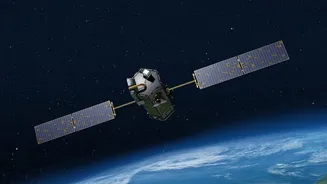
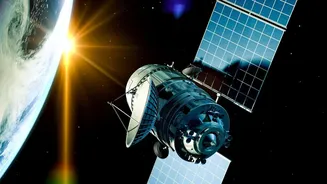
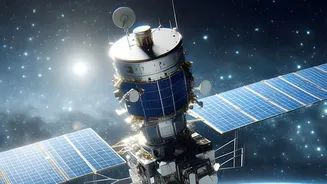
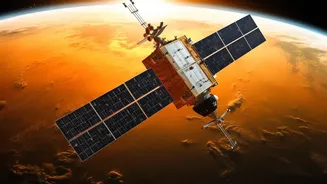
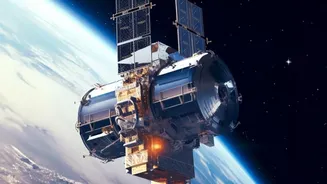
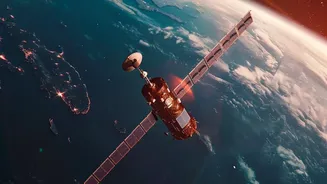
For the thousands of satellites orbiting Earth, this advanced warning is a game-changer. Communication, navigation (GPS), and data-relay satellites are all vulnerable. Solar storms can damage their electronics, disrupt communications with ground stations, and even increase atmospheric drag, which can cause satellites in low-Earth orbit to lose altitude. With more accurate and timely forecasts, operators can take preventative action. This might include temporarily placing a satellite into a safe mode, adjusting its orbit to minimize exposure, or re-routing data traffic through unaffected satellites. As the number of operational satellites is projected to grow exponentially, this protective capability is crucial for the global economy and services like satellite internet.
Keeping the Lights On Earth
On the ground, the biggest concern is the electrical grid. Geomagnetically induced currents (GICs) can flow into high-voltage transmission lines during a storm, potentially overloading and damaging critical transformers—equipment that is expensive and can take months or years to replace. Early warnings from new systems and satellites like NOAA's SOLAR-1 give utility operators precious time to prepare. They can adjust grid configurations or, in extreme cases, perform targeted disconnections to prevent a cascading failure. In addition to forecasting, new hardware is being deployed. Neutral blocking devices, for example, can be installed on transformers to physically block these harmful currents from flowing into the equipment, acting as a final line of defense.