





The Global Obsession with Ramen
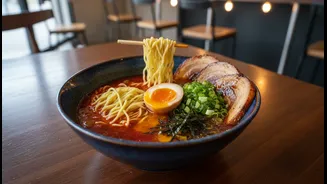
Ramen is more than just noodle soup; it's a global phenomenon. From the bustling ramen-yas of Tokyo to trendy eateries in Mumbai and Delhi, this Japanese staple has captured the world's palate. In India, its popularity has exploded, moving from niche
restaurants to mainstream menus. Initially, the focus was on faithful replication of classic styles like tonkotsu, shio, and miso. But as chefs have grown more confident, they've begun to ask a fascinating question: What happens when we stop just borrowing a dish and start a conversation with it? This has sparked a new movement in Indian food, where local ingredients are not just substituted, but thoughtfully integrated to create something entirely new and exciting.
Enter Kokum: The Coastal Superstar
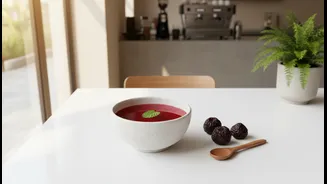
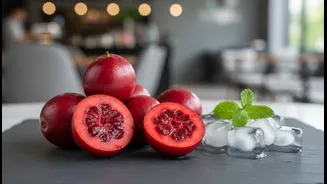
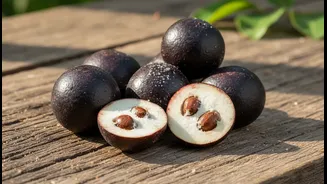
Enter Garcinia indica, known more commonly as kokum. For anyone familiar with the coastal cuisines of Maharashtra, Goa, and Karnataka, kokum is a pantry essential. Traditionally, the dried, dark purple rind of this fruit is used as a souring agent in everything from fish curries to lentils and is the star of the cooling drink, solkadhi. Its flavour is unique and complex; it delivers a deep, fruity sourness with a slightly floral, sweet aroma, a world away from the sharp punch of vinegar or the tang of tamarind. This distinct profile is thanks to its primary organic acid, hydroxycitric acid (HCA), which provides a clean, bright acidity.
The Science of Sour in Ramen
A great bowl of ramen is all about balance. The profound savoury depth, or umami, from ingredients like kombu, miso, and rich meat or mushroom broths needs a counterpoint. This is where acidity, known in Japanese culinary terms as 'sanmi', plays a crucial role. A touch of sourness—traditionally from rice vinegar, certain types of soy sauce, or citrus like yuzu—cuts through the fat and richness of the broth. It cleanses the palate, brightens the other flavours, and makes each spoonful feel balanced rather than heavy. Without this acidic lift, even the most umami-rich broth can feel flat and overwhelming. It is the secret element that keeps you coming back for another sip.
A Match Made in a Modern Kitchen
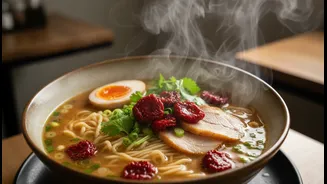
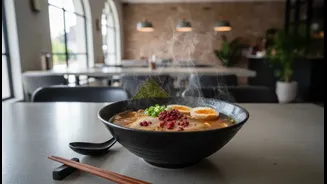
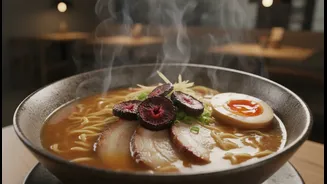
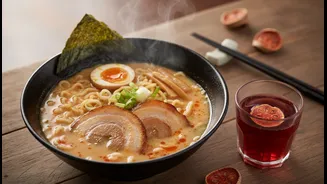
This is where the 'modern cafe makeover' comes into play. Visionary Indian chefs are looking at their own culinary backyards and seeing incredible potential. Why use a standard rice vinegar when a local ingredient like kokum can offer a more complex and layered acidity? Soaking a few pieces of dried kokum in the ramen broth as it simmers imparts its signature tartness and a beautiful, subtle pinkish hue. Its unique HCA-driven sourness is less aggressive than vinegar, allowing the delicate flavours of the dashi and tare to shine through while still providing the necessary balance. It pairs exceptionally well with both rich pork and lighter chicken or vegetable broths, introducing a flavour note that is at once novel and deeply rooted in Indian culinary tradition. This is not fusion for novelty's sake; it is a thoughtful enhancement that respects both cuisines.
Beyond the Bowl: A New Culinary Confidence
The use of kokum in ramen signifies something much bigger than a single ingredient swap. It represents a burgeoning confidence among Indian chefs to place local ingredients on the global stage. For years, Indian fusion food often meant adding a generic 'curry' flavour to a Western dish. Today, the approach is more nuanced and story-driven. It's about understanding the function of an ingredient in its original context—like kokum's role as a souring agent in coastal curries—and applying that principle to a different cuisine. This trend shows a move away from simply adopting international foods and toward a genuine, creative dialogue, proving that Indian ingredients can elevate and innovate, rather than just imitate. It's a sign that the Indian kitchen is ready to lead the conversation.