








Conduct an Honest Time Audit
Before you choose a single recipe, take a realistic look at your week. Many meal plans fail because they are too ambitious and don't align with real life. Be honest about how much time you genuinely have to dedicate to cooking and all its related tasks.
On days with late meetings or family commitments, plan for quick, low-effort meals like sheet-pan dinners or repurposing leftovers. Don't commit to cooking seven new meals a week. Instead, build a flexible framework that might include two or three home-cooked dinners, a designated leftover night, and the freedom to order takeout without guilt. This initial assessment is crucial; it grounds your plan in reality, preventing the all-or-nothing thinking that can derail your efforts before you even begin.
Prep Smarter, Not Harder
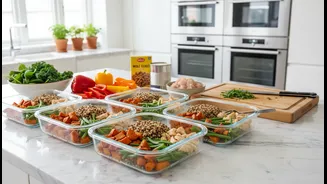
Effective prep work is about more than just a big chopping session on Sunday. Start by planning meals that use overlapping ingredients to simplify your grocery list and reduce prep time. For example, if one recipe needs half a bell pepper, find another that uses the other half. You can also batch-cook versatile components at the beginning of the week. Cook a large portion of a protein like ground turkey or a grain like quinoa, and then use it in different dishes—tacos one night, a pasta dish the next. This strategy, often called “component prepping,” saves you from starting from scratch every evening. Even small actions, like washing and chopping vegetables as soon as you get home from the store, can save precious minutes and mental energy on a busy weeknight.
Build Cleanup Time Into the Equation
The single most overlooked part of any meal is the cleanup that follows. A 30-minute meal is never truly 30 minutes if it creates an hour's worth of dishes. To combat this, adopt a “clean as you go” philosophy. While water is boiling or something is roasting in the oven, wash the prep bowls and cutting boards you're finished with. Choose recipes that minimize dishes, such as one-pan or slow-cooker meals. These are specifically designed for busy schedules and significantly cut down on cleanup. When creating your weekly schedule, mentally add 15-20 minutes of cleanup time to every home-cooked meal. Acknowledging this time makes your overall plan more accurate and sustainable, preventing the feeling of being overwhelmed by a messy kitchen after you've already cooked and eaten.
Use Storage as a Strategic Tool
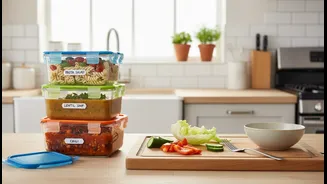
How you store your food is directly linked to the success of your meal plan. The right containers not only keep food fresh but also make your plan easier to follow. Invest in quality, clear containers so you can see what you have at a glance, which helps prevent food waste. Consider a system with different containers for different jobs: glass for microwaving, sectioned containers for portion control, and airtight, leak-proof options for soups and sauces. Labeling prepped items with the date ensures you use older food first. An organized fridge, where prepped ingredients and leftovers are easily accessible, removes another barrier to sticking with your plan. Instead of staring into a chaotic fridge and deciding to give up, you can quickly grab what you need and get cooking.