


The Dust of Ancient Comets
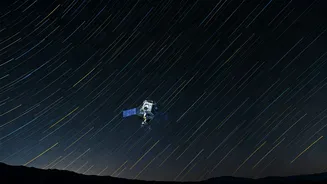
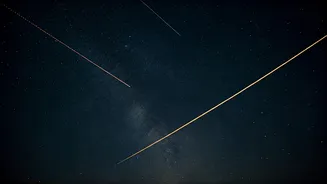
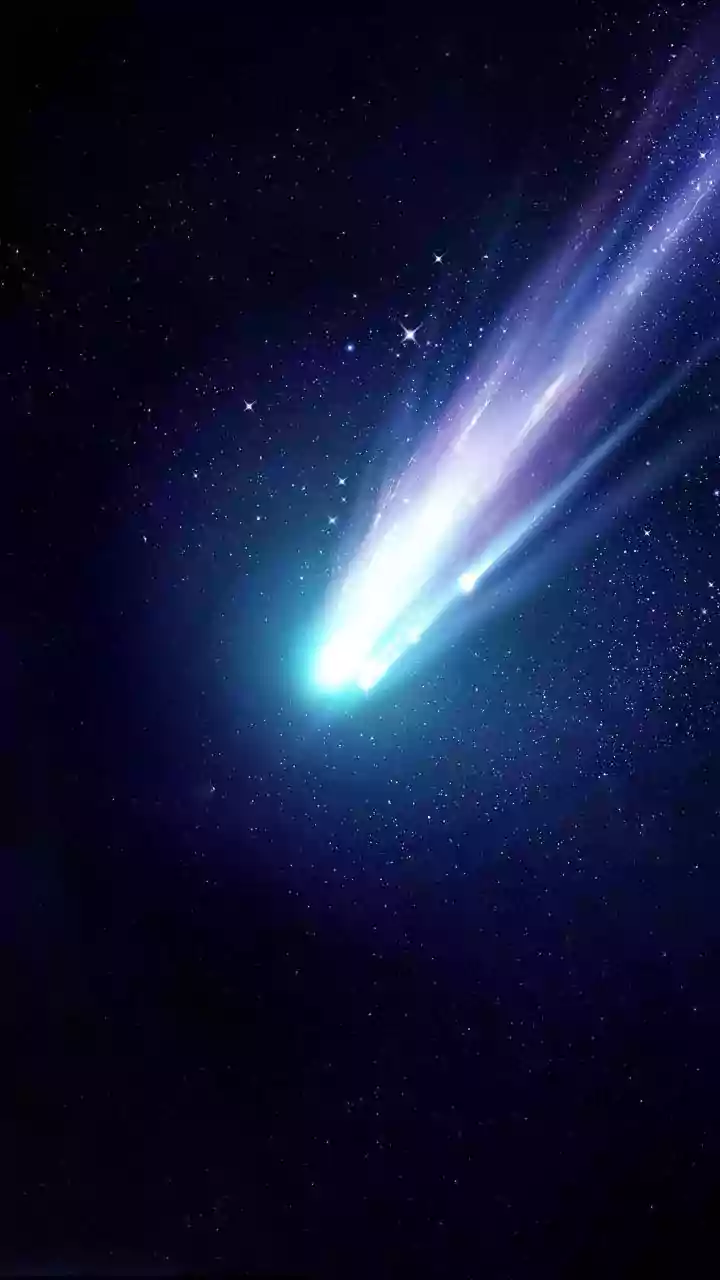
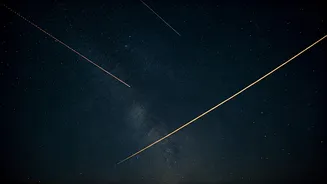
That brilliant streak you call a shooting star? It’s a direct message from the past. Most meteor showers, like the famous Perseids in August or the Geminids in December, are caused by Earth passing through the trail of dusty, icy debris left behind by a comet
on its own aeons-long journey around the sun. The parent comet of the Perseids, Swift-Tuttle, takes 133 years to complete one orbit. When you see one of its tiny debris fragments burn up in our atmosphere, you’re witnessing the final, fleeting moment of a particle that has been travelling through the solar system for centuries, if not millennia. It’s a spectacular end for a piece of cosmic dust, and a reminder that even the grandest journeys can have a brief, beautiful conclusion.
The Slow Dance of the Planets
Unlike the fixed stars, the planets in our solar system are constantly on the move. When you spot the bright, steady light of Jupiter or the distinct reddish hue of Mars, you are seeing a fellow world tracing its own path. Their orbits are a grand, predictable dance governed by gravity, a celestial clockwork set in motion 4.5 billion years ago. On any given night, their positions tell a story. You might see a conjunction, where two planets appear close together in our sky, a temporary alignment in their vast, independent journeys. Watching them shift position over weeks and months is a tangible way to feel the movement of our solar system, a slow, majestic waltz that has continued uninterrupted for billions of years.
Echoes from a Star's Ghost
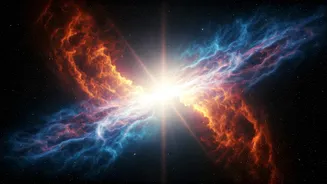
The light from the stars travels incredibly fast, but space is incomprehensibly vast. This means that when we look at a star, we are seeing it as it was in the past. The light from our nearest stellar neighbour, Proxima Centauri, takes over four years to reach us. The light from Betelgeuse, the bright red star in the Orion constellation, began its journey about 640 years ago. This means we are seeing Betelgeuse as it was during the time of the Tughlaq dynasty in India. For all we know, the star could have already exploded in a supernova, and we wouldn’t find out for centuries. Stargazing is, in essence, time travel. Each star is a portal to a different moment in history, its light a faithful messenger carrying an image of a long-gone past.
Our Home in the Milky Way
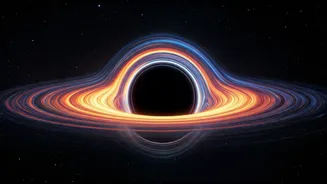
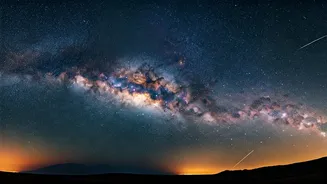
If you can escape city lights, you might see a faint, cloudy band stretching across the sky. That is the Milky Way, our home galaxy, seen from the inside. That gentle glow is not a cloud, but the combined light of billions of stars, so far away that our eyes blend them into a luminous river. Our sun is just one of an estimated 200-400 billion stars in this galaxy, circling a supermassive black hole at its centre. This galactic structure took billions of years to form and will continue to evolve for billions more. When you gaze at the Milky Way, you are seeing the grand architecture of your cosmic city—a sprawling, ancient metropolis of stars, gas, and dust to which we belong.
A Collision Course in Deep Time
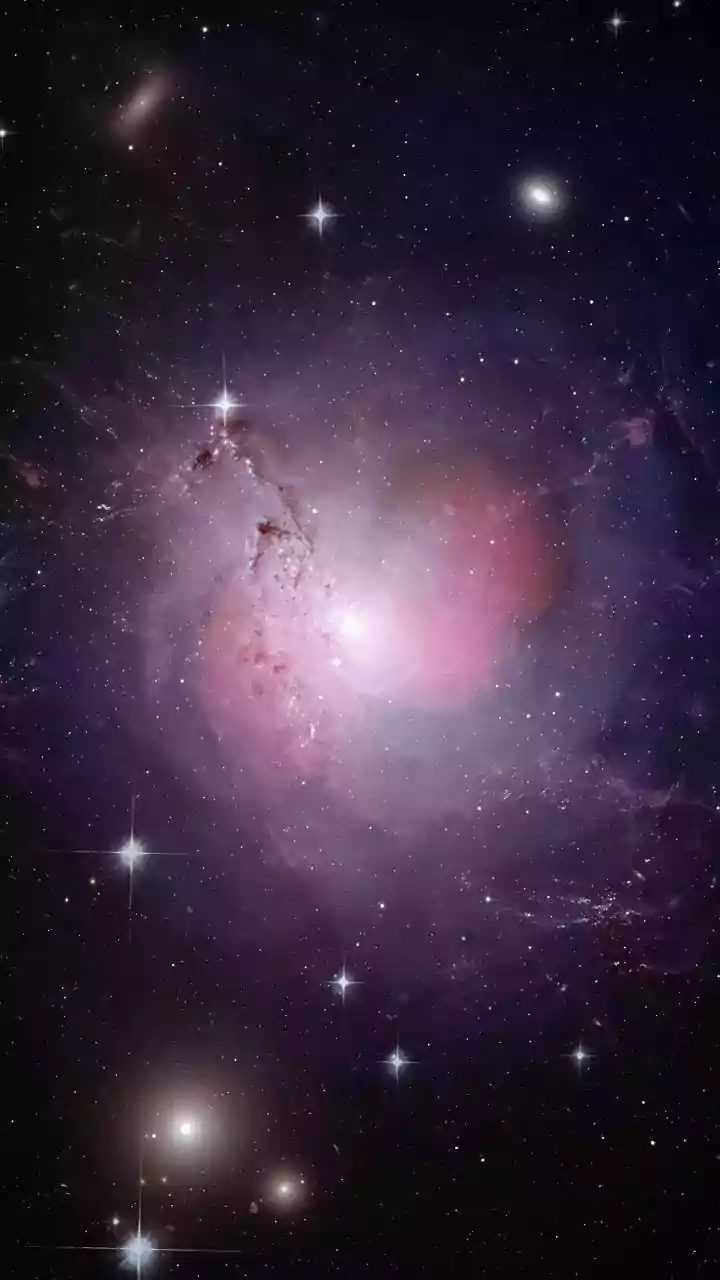
For a truly mind-bending timeline, consider our galactic neighbour, the Andromeda Galaxy. Visible to the naked eye as a tiny, fuzzy smudge under very dark skies, Andromeda is the most distant object you can see without a telescope. It is currently 2.5 million light-years away, but it is hurtling towards our Milky Way at a staggering speed. The two galaxies are on a collision course, destined to merge in about 4.5 billion years. This event, dubbed 'Milkomeda,' will reshape both galaxies into a new, larger one. It's a future so distant it's almost meaningless on a human scale, yet the evidence for it is written in the sky tonight. It’s a profound reminder that the universe is not static; it is dynamic, evolving, and constantly creating new futures on timelines we can barely comprehend.