



A New Era for Indian Spaceflight
For decades, India’s space ambitions were carried solely on the shoulders of the Indian Space Research Organisation (ISRO). But a strategic shift that began with opening the sector in 2020 has ignited a vibrant private ecosystem. Today, the country is home
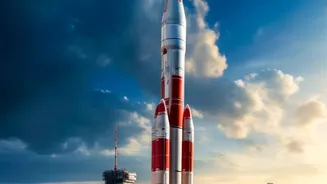
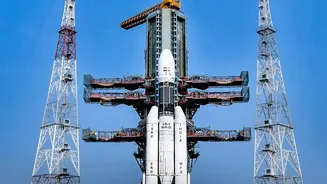
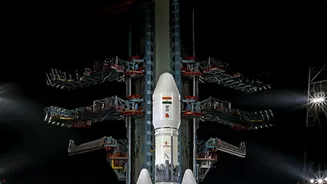
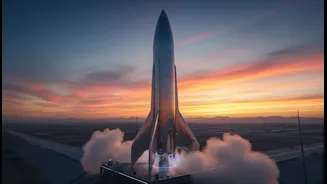
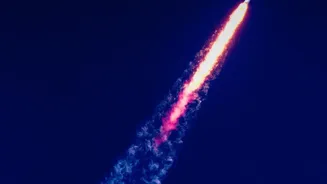
to over 450 space startups, a massive leap from single digits just six years ago. This transformation was recently highlighted by the successful orbital launch of Vikram-1 by Skyroot Aerospace on July 18, 2026, the first-ever privately developed Indian rocket to reach orbit. This milestone wasn't just a technical success; it marked India's arrival as the third country, after the US and China, with private orbital launch capability, signaling a fundamental shift from a government monopoly to a dynamic, open market.
The Trailblazers Reaching for the Stars
At the forefront of this revolution are several ambitious startups. Hyderabad-based Skyroot Aerospace, founded by former ISRO scientists, made history with its Vikram-1 launch, successfully deploying customer payloads into a 450-kilometer orbit on its very first attempt. The company had earlier launched a suborbital rocket, Vikram-S, in 2022, laying the groundwork for this larger success. Another key player, Agnikul Cosmos, has pioneered 3D-printed rocket engines, successfully testing the world's first single-piece 3D-printed semi-cryogenic engine in a suborbital launch in May 2024. The Chennai-based startup is focused on developing its Agnibaan rocket, a highly customizable vehicle for small satellite launches, and is perfecting the technology of firing multiple engines at once.
More Than Just Rockets
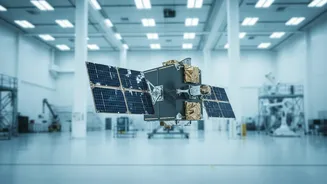
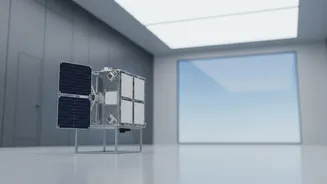
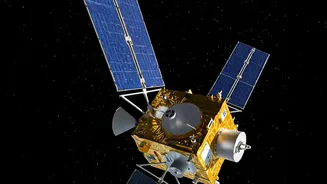
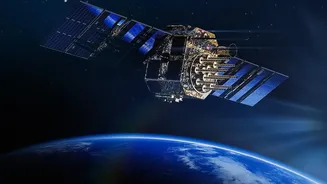
The ecosystem's growth extends far beyond launch vehicles. Companies are innovating across the entire space value chain. Pixxel is building a constellation of the world's highest-resolution hyperspectral Earth observation satellites. Its 'Firefly' constellation provides incredibly detailed data across more than 150 spectral bands, supporting applications from monitoring crop health and water quality to mineral exploration and disaster response. Meanwhile, Hyderabad's Dhruva Space has become a full-stack satellite solutions provider. The company builds satellites, develops satellite deployers, and manages mission operations. It received the first authorization from IN-SPACe for a private space activity and has executed multiple successful missions, deploying its own satellites and testing its orbital deployers on ISRO's PSLV rockets.
The Power of Public-Private Partnership
This boom wouldn't be possible without a crucial facilitator: the Indian National Space Promotion and Authorisation Centre (IN-SPACe). Established in 2020, IN-SPACe acts as a single-window agency to promote, authorize, and supervise all space activities by private entities. It provides startups with access to ISRO’s world-class facilities, offers technical support, and facilitates technology transfers, bridging the gap between the established government agency and emerging commercial players. By handling the regulatory and logistical hurdles, IN-SPACe allows startups to focus on innovation. In the last four years, it has received over 800 applications and issued more than 130 authorizations, demonstrating the surging interest and activity in the sector.
The Road Ahead: Billions in a Burgeoning Market
India's space economy, currently valued at around $8.4 billion, is projected to grow to $44 billion by 2033. This growth is being fueled by significant investment, with startups attracting nearly $390 million over the past three years. The government is also stepping in with initiatives like the Antariksh Venture Capital Fund to provide dedicated capital for space-tech companies. Challenges remain, including scaling up manufacturing and proving launch reliability over multiple missions. However, the successful flights of Skyroot and Agnikul, combined with the comprehensive satellite services offered by Pixxel and Dhruva Space, show that the industry is rapidly maturing from bold ideas to bankable commercial missions.