






A New Era of Overnight Travel
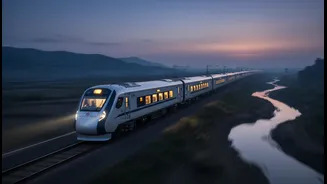
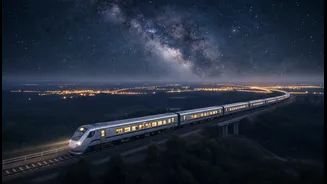
The hum of the airport and the cramped confines of a plane are no longer the only options for swift, long-distance travel. Since the first service was launched in January 2026, the Vande Bharat Sleeper Express has emerged as a formidable alternative.
These self-propelled, fully air-conditioned trains are designed for overnight journeys connecting cities between 800 and 1,200 kilometres apart. Unlike their chair-car siblings, these trains focus on transforming travel time into rest time. With an initial rollout on key routes like Guwahati-Kolkata and Varanasi-Chheharta, Indian Railways is betting on a new class of traveller who values overall experience as much as arrival time.
Escaping the Hassles of Air Travel
The advertised one-hour flight time is often a fraction of the total journey. When you factor in the commute to airports frequently located on city outskirts, the two-hour pre-departure check-in, security screenings, and baggage claim queues, a short flight can easily consume half a day. In contrast, overnight trains offer a more seamless experience. Passengers can board at centrally located railway stations closer to their departure time and wake up the next morning in the heart of their destination city, saving valuable time and the cost of airport transfers. Furthermore, the luggage allowance on trains is significantly more generous than the restrictive 15 kg check-in and 7 kg cabin limits imposed by most airlines, eliminating the stress and expense of excess baggage fees.
The Comfort and Cost Equation
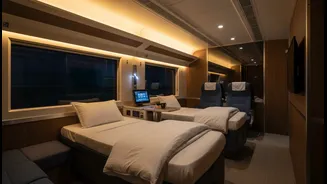
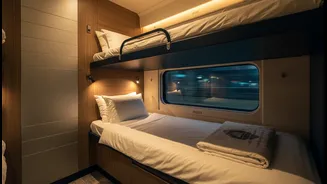
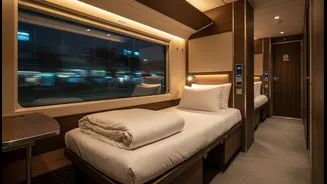
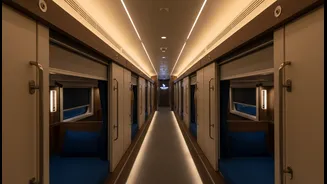
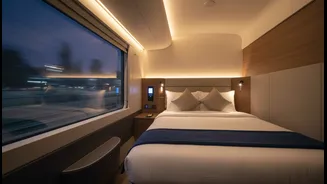
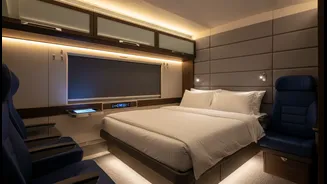
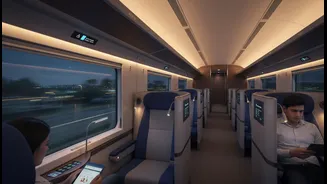
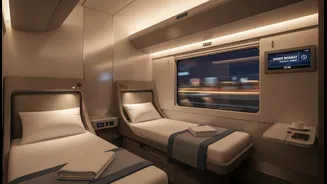
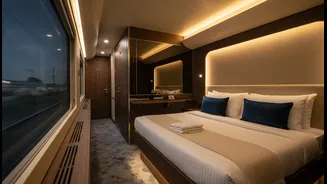
The Vande Bharat sleeper was engineered with passenger comfort at its core. It boasts wider, better-cushioned berths, improved soundproofing for a quieter journey, and advanced bio-vacuum toilets with odour control. The trains are equipped with modern amenities like reading lights, charging sockets for every passenger, Wi-Fi, and CCTV for enhanced security. For those in first AC, there's even the luxury of a hot shower. While fares are higher than conventional trains and comparable to premium services like the Rajdhani Express, they present a strong value proposition against air travel. A ticket on a Vande Bharat sleeper combines the cost of transport and a night's accommodation, often for less than the price of a flight ticket plus the associated hidden costs.
Redefining a 'Productive' Journey
Perhaps the most significant shift offered by these trains is the redefinition of travel time. A flight may be faster, but the journey is often disruptive. An overnight train trip, however, allows for a full night's sleep. A business traveller can board after a full day's work, sleep comfortably, and arrive rested and ready for morning meetings. A leisure traveller saves a precious day of their itinerary that would have otherwise been spent in transit. The Vande Bharat's design, featuring automatic doors and sealed gangways, ensures a jerk-free, quiet, and climate-controlled environment conducive to rest. This ability to integrate travel seamlessly into one's schedule, without losing a day or a night's sleep, is a powerful draw for time-conscious Indians.
The Future of Long-Distance Travel
The initial launch is just the beginning, with Indian Railways planning a wider rollout of Vande Bharat sleeper services across the country. The model is clear: target high-demand, long-distance corridors where the total door-to-door time and cost of flying become less appealing when compared to a comfortable, modern, and efficient overnight rail journey. These trains will operate on a confirmed-ticket-only basis, eliminating the uncertainty of RAC or waitlisted travel, and function more like airlines in their booking process. As the network expands, more travellers will be presented with a compelling choice that challenges the long-held assumption that flying is always the superior option.