




An Engine Deep Within
At the heart of our planet lies a solid iron inner core surrounded by a liquid outer core made of molten iron and nickel. The immense heat flowing from the solid core into the liquid layer creates powerful, churning convection currents. Coupled with the Earth’s
rotation, this motion of molten metal generates enormous electrical currents, which in turn produce our planet's magnetic field. This entire process is known as a geodynamo, a self-sustaining planetary engine that has been running for billions of years. The result is a magnetic field that extends from the core far out into space, creating a protective bubble known as the magnetosphere.
A Shield Against a Hostile Sun
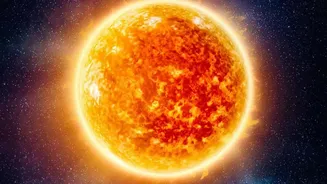
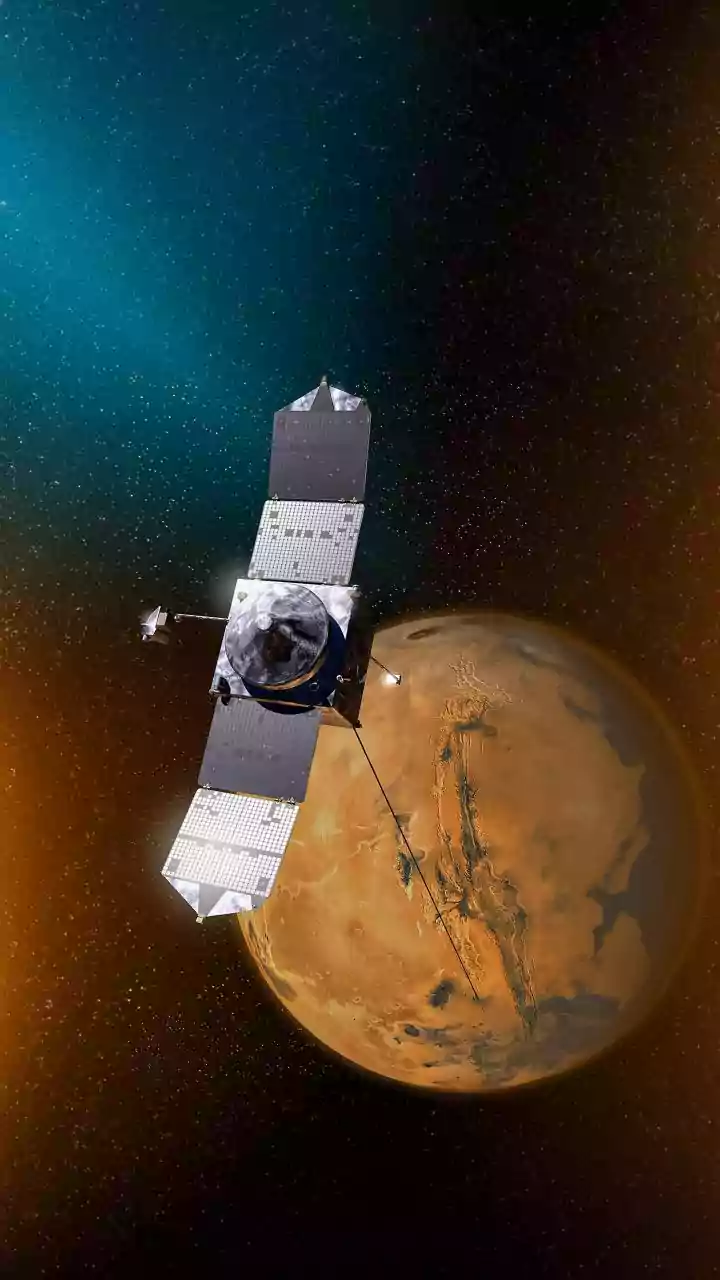
The Sun constantly bombards the solar system with the 'solar wind', a stream of highly energetic charged particles. Without a protective barrier, this relentless assault would strip away a planet's atmosphere over time, boil off its oceans, and irradiate its surface. This is precisely what scientists believe happened to Mars. Billions of years ago, Mars lost its global magnetic field, leaving its atmosphere vulnerable. The solar wind gradually eroded it, transforming a potentially wet and warm world into the cold, dry desert we see today. Earth’s magnetosphere acts as a critical shield, deflecting the vast majority of these harmful particles and preserving the atmosphere that life needs to breathe.
The Great Leap to Land
For billions of years, life existed exclusively in the oceans, where the water provided a natural shield from the Sun's harsh ultraviolet radiation. The colonisation of land was a pivotal moment in evolution, with the first plants venturing ashore around 500 million years ago, followed by animals like arthropods and eventually our own vertebrate ancestors around 370 million years ago. This transition could only happen once the environment on land was stable enough to support complex organisms. A strong and stable magnetic field was a key prerequisite. By shielding the surface from deadly radiation and protecting the atmosphere, the magnetosphere created a safe haven where life could emerge from the water and begin its conquest of the continents.
A Fortuitous Fluctuation
Interestingly, recent research suggests that a temporary weakening of the magnetic field may have also played a crucial, and somewhat counterintuitive, role. During the Ediacaran Period, just before the Cambrian explosion of life, the field weakened dramatically. Scientists theorise that this ultra-weak field allowed more hydrogen to escape from the atmosphere into space. This process could have led to a gradual increase in the concentration of oxygen in the atmosphere and oceans. This rise in oxygen is believed to have been a critical trigger for the evolution of larger, more complex, and mobile animal life. The field then recovered its strength, providing the necessary protection for this newly evolved life to diversify and flourish.
A Planet Uniquely Suited for Life
The story of Earth's magnetic field is a powerful reminder of how interconnected our planet’s systems are. The dynamic geology of our planet's core creates an invisible shield that protects our atmosphere, which in turn allows for liquid water and stable surface conditions. This delicate balance made it possible for life not only to begin but to evolve into the complex forms we see today, including ourselves. If the magnetic field were to vanish, the consequences would be severe. Over time, increased radiation would pose a risk to life, and the solar wind would begin the slow process of eroding our atmosphere, putting our water and our entire ecosystem at risk. The geomagnetic shield is not just a scientific curiosity; it is a fundamental pillar of our planet's habitability.