


The banana is a staple snack, but the debate over the 'perfect' ripeness is about more than just taste. Whether you prefer them green and firm or yellow and soft, the nutritional profile changes significantly, impacting everything from your gut health
to your blood sugar.
The Green Banana: A Prebiotic Powerhouse
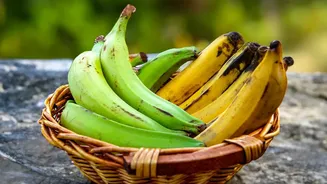
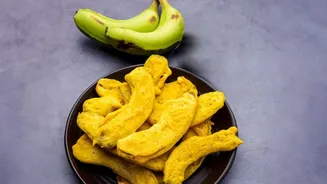
A green, or unripe, banana has a less sweet, almost starchy flavour and a firmer texture. The key to its unique health benefits lies in its high concentration of resistant starch. Resistant starch functions similarly to dietary fibre, passing through the small intestine undigested. This means it doesn't cause a rapid spike in blood sugar, giving green bananas a low glycemic index (GI) of around 30-42. This slow release of energy is particularly beneficial for individuals managing blood sugar levels. Furthermore, once this starch reaches the colon, it acts as a prebiotic, feeding the friendly bacteria in your gut. This process promotes good digestive health and can help you feel fuller for longer, potentially aiding in weight management. However, the high fibre and starch content may cause gas or bloating in some individuals who are not used to it.
The Ripe Banana: Quick Energy and Easier Digestion
As a banana ripens, its starches convert into simple sugars like sucrose, fructose, and glucose. This is why yellow, spotty bananas are significantly sweeter and softer. This conversion also makes them easier to digest for most people because the body doesn't have to work as hard to break down the carbohydrates. The glycemic index of a ripe banana is higher, typically in the medium range of 51 to 62, providing a quicker source of energy. This makes a ripe banana an excellent pre-workout snack or a fast pick-me-up. Ripe bananas also tend to have higher levels of antioxidants, which help combat oxidative stress in the body. The tradeoff is that some micronutrients may slightly decrease as the banana ages. For those with Irritable Bowel Syndrome (IBS), ripe bananas can be problematic as they become high in fructans, a type of FODMAP that can trigger symptoms like bloating.
Fibre's Role: It’s About Type, Not Just Amount
While the total fibre content of a banana doesn't change dramatically as it ripens, the type of fibre does. A medium banana generally contains around 3 grams of fibre. In a green banana, a large portion of its carbohydrate content is resistant starch, which behaves like soluble fibre. This is what supports gut health and promotes satiety. In a ripe banana, this resistant starch has mostly converted to simple sugars. So, while you're still getting fibre, you miss out on the specific benefits of a high resistant starch content that the greener version offers. The pectin content, another type of fibre that gives the fruit its structure, also breaks down during ripening, contributing to the soft, sometimes mushy, texture of an overripe banana.
Why Portion Size Always Matters
Regardless of which banana you choose, moderation is crucial. Bananas are a nutrient-dense fruit, but they are also a source of calories and carbohydrates. A typical serving is considered one medium banana, which contains about 105-110 calories. For most healthy individuals, one to two bananas per day is a reasonable amount. Eating too many of any single food can contribute to an imbalanced diet. If you are mindful of your sugar intake, even the natural sugars in ripe bananas can add up. Pairing a banana with a source of protein or healthy fat, such as a handful of nuts or a spoonful of almond butter, can help slow the absorption of sugar and moderate its impact on your blood sugar levels.
The Verdict: Which Banana Is Best For You?
There is no 'bad' banana; the 'best' one simply depends on your personal health goals and digestive tolerance. If you are managing blood sugar levels, seeking to improve gut health, or want a snack that keeps you feeling full, a greener banana is the superior choice due to its high resistant starch and low GI. If you need a quick and easily digestible source of energy before physical activity or prefer a sweeter taste, a ripe yellow banana is ideal. People with digestive sensitivities like IBS may find green bananas more tolerable than ripe ones. Ultimately, the most important factor is choosing the fruit at a stage you enjoy, ensuring it remains a welcome and healthy part of your diet.