





The Ghost in the Machine
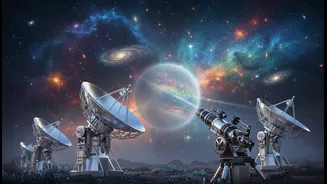
In astronomy, the instruments used to observe the cosmos are incredibly sensitive. Telescopes, whether on the ground or in space, are complex machines designed to detect faint signals from billions of kilometres away. But like any complex tool, they are not
perfect. They have quirks, imperfections, and operational eccentricities that can introduce errors into the data they collect. These are known as systematic errors or instrument artifacts. Think of it like taking a photograph of a sunset with a smudge on your camera lens. The resulting picture might show a strange flare or an odd-looking spot in the sky. An unknowing observer might think they've captured a UFO, but it's just an artifact created by the camera itself. In astronomy, these artifacts can manifest as false signals that mimic the presence of a planet, a distant star, or another celestial object. These can be caused by anything from imperfectly calibrated sensors and temperature fluctuations to the way data is processed on a computer.
When Telescopes Tell Lies
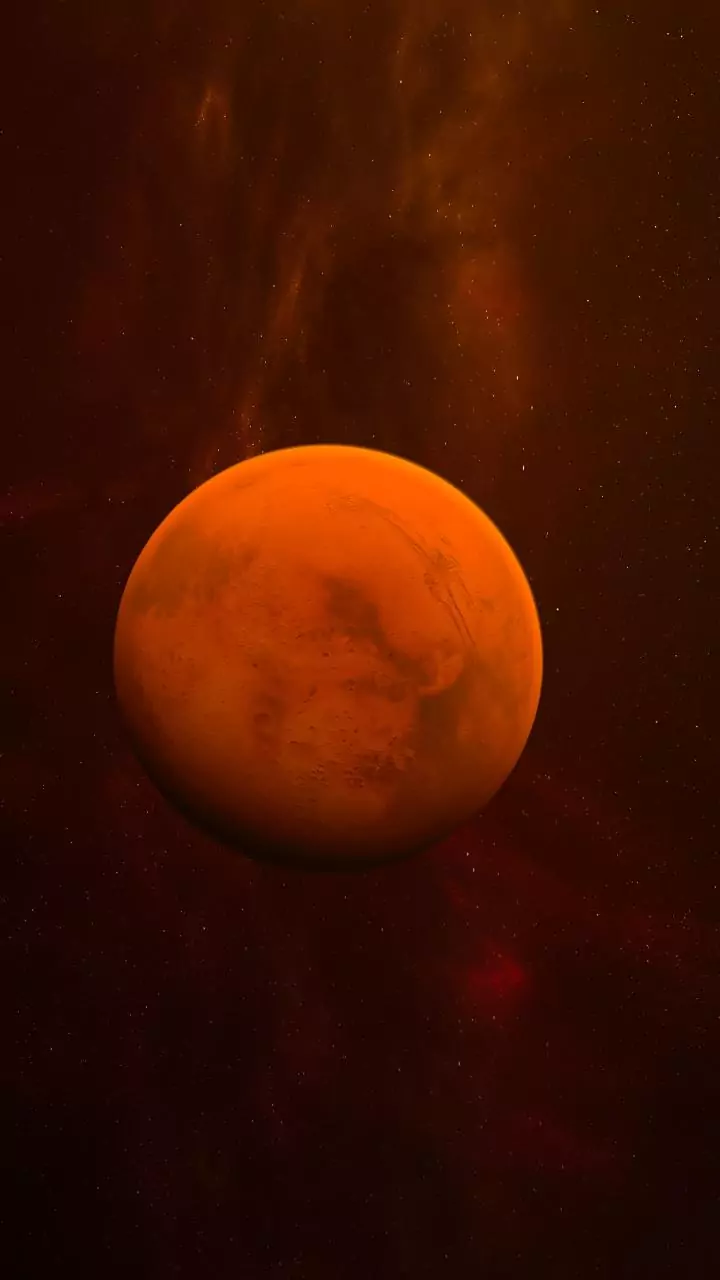
History is filled with examples of astronomers being misled by what they saw. One of the most famous cases is Percival Lowell's conviction that he saw canals on Mars in the late 19th and early 20th centuries. He spent years mapping what he believed were vast irrigation networks built by an intelligent Martian civilisation. However, other astronomers couldn't see them. It was later determined that the 'canals' were likely an optical illusion, a combination of the human brain's tendency to see patterns in random details and the limitations of the telescopes of that era. A more modern example occurred in 1991 when astronomers reported finding a planet orbiting a pulsar. The evidence seemed solid, based on variations in the timing of the pulsar's radio pulses. However, the team later realised they had used a slightly incorrect position for the pulsar. The signal they thought was a planet was actually an artifact created by Earth's own motion around the sun. These events aren't failures, but crucial parts of the scientific process that highlight the need for skepticism and verification.
The Power of a Second Opinion
This is where cross-checking becomes the bedrock of astronomical discovery. The core principle is simple: don't trust a single observation from a single instrument. To confirm a potential new planet, multiple teams of scientists must observe the same target using different methods and different telescopes. For instance, if the Transiting Exoplanet Survey Satellite (TESS) detects a slight dimming of a star, suggesting a planet has passed in front of it (the transit method), other observatories will be called in to verify it. A ground-based telescope might be used to see if it can also detect the dimming. Another team might use an entirely different technique, like the radial velocity method, which looks for the tiny wobble a planet's gravity induces in its host star. If multiple instruments using different techniques all point to the same conclusion, confidence in the discovery soars. This process helps to rule out the possibility that the signal is just a quirk of one particular telescope or detection method.
Building a More Certain Universe
This rigorous validation process is more important than ever in the age of powerful instruments like the James Webb Space Telescope (JWST). While incredibly advanced, its sensitivity also means it can be susceptible to subtle systematic errors. Scientists working with JWST data often use sophisticated computer models and cross-validation techniques to distinguish a true astrophysical signal from instrument noise. For example, when confirming a potential exoplanet, researchers might compare observations from different instruments on the same telescope or even from different missions entirely, like combining data from TESS and the older K2 mission. They develop new data science approaches to match observations across different surveys, ensuring that a celestial object seen by one telescope is the same one seen by another. This painstaking work ensures that when a discovery is finally announced, it rests on a solid foundation of evidence, not just a single, potentially flawed, piece of data. It transforms a 'maybe' into a 'yes' and protects the integrity of our cosmic map.