





The Immediate Reward of a Single Workout
It’s a feeling many people know: the post-workout glow. A single bout of exercise provides an immediate and satisfying payoff. Your heart pumps, endorphins flow, and you feel more alert and focused. At a molecular level, things are buzzing. A single session
can temporarily alter the expression of genes related to strength and metabolism, helping muscles work more efficiently for a short time. Studies have shown that even one hour of moderate aerobic exercise can increase your cells' ability to burn both fat and sugar-based fuels. This immediate response is the body's way of handling the stress of exercise, creating a cascade of molecular events that last for a few hours to a couple of days. It’s a fantastic first step, but it's just that—a first step.
Acute Response vs. Chronic Adaptation
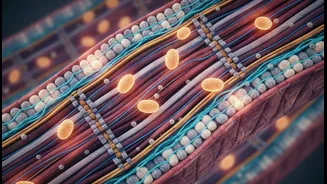
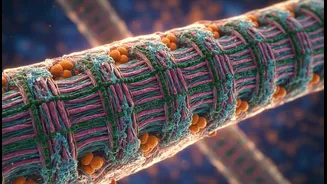
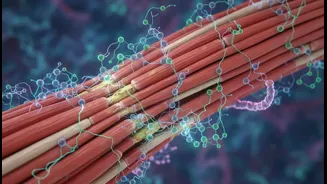
The key difference between one workout and a lifetime of fitness lies in the distinction between an acute response and chronic adaptation. The former is a temporary state of alarm; the latter is a fundamental change in how your body operates at its baseline. A single workout triggers a flurry of molecular signals. Think of it as a busy construction site that's active for a day. Years of consistent training, however, are like building an entirely new, more efficient, and resilient city. The body stops seeing exercise as a surprise emergency and instead adapts its very infrastructure. This is where the magic really happens. Muscles build more mitochondria, the powerhouses of our cells, and improve their network of blood vessels to deliver oxygen and nutrients more effectively.
Your Muscles Have a 'Molecular Age'
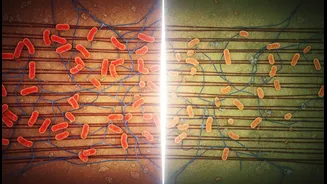
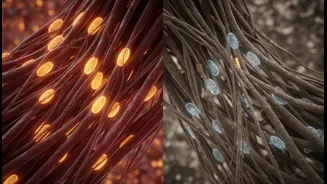
One of the most exciting areas of research is the concept of a muscle's 'molecular age'. This isn't about how old you are in years, but how old your muscle tissue acts on a biological level. Scientists can measure this through 'epigenetic clocks', which look at chemical tags on your DNA, like methylation, that change with age and lifestyle. Studies have shown that consistent, long-term exercise can effectively slow down or even partially reverse this epigenetic aging process in muscle tissue. In essence, the muscles of a physically active older adult can have a molecular profile that looks years, or even decades, younger than that of a sedentary person of the same chronological age. This is something a single burst of exercise simply cannot achieve. It doesn't rebuild the city; it just puts up some temporary scaffolding.
The Power of a Well-Regulated System
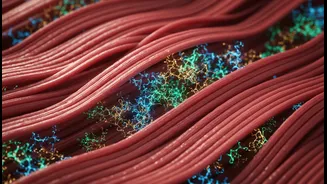
As we get older, a crucial balance inside our muscle cells gets thrown off. A pathway that promotes the creation of new proteins can become too active, while the system for clearing out old, damaged proteins slows down. This leads to an accumulation of cellular 'junk', contributing to muscle weakness. Recent research has identified a gene called DEAF1 as a key driver of this age-related imbalance. The exciting news is that consistent exercise helps suppress DEAF1, restoring the muscle's ability to clean house and repair itself properly. This helps muscles stay stronger and more resilient. A one-off workout can temporarily activate some repair signals, but it doesn’t fundamentally fix this underlying regulatory system that has been built and maintained through years of regular physical activity.
Consistency is King
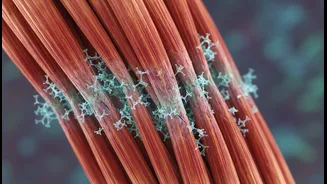
The message from the science is clear: while every workout counts, consistency is what creates deep, lasting change. It's the difference between temporarily boosting your metabolism and fundamentally rewiring it for the better. The goal isn't to be a hero for one day but to build a habit that serves you for a lifetime. Sporadic, intense workouts without a foundation can lead to soreness and strain without providing the long-term architectural changes that protect against age-related decline. Focusing on a regular, sustainable routine allows your muscles, tendons, and ligaments to adapt gradually and robustly. It’s the cumulative effect of all those individual workouts that truly holds the power to reshape your health from the inside out.